






Wearable health sensors usually need a battery, an external power supply or a separate energy-harvesting system to keep working.
New materials research suggests that part of that power problem may be reduced by turning the body’s own mechanical movements into an electrical signal.
A study published in Nature Communications on 23 September 2026 reports a soft, skin-compatible eutectogel sensor that generates its own electrical response when pressure is applied.
The material achieved a reported pressure sensitivity of 60 mV kPa−1 and was used in proof-of-concept demonstrations to monitor pulse waveforms and electrocardiograms.
The researchers report that the recorded physiological signals showed fidelity comparable to commercial sensors used as references.
The device does not create unlimited electrical power. Instead, it converts mechanical pressure into a measurable electrical signal through the movement of ions inside the material.
That makes it a self-powered sensor in the sense that the sensing signal itself is generated by mechanical deformation rather than by an externally powered transducer.
Wearable sensors face a power problem
Wearable bioelectronics can measure heart rhythm, pulse, movement, respiration and other physiological signals.
But making these devices small, soft and comfortable while also supplying reliable power remains difficult.
Batteries add weight and bulk. They also need charging or replacement and can limit how thin or flexible a device can become.
For sensors intended to remain in close contact with skin, the material must also tolerate bending, stretching, sweat and repeated movement without losing performance.
One possible solution is to design sensors that generate an electrical response directly from the physical force being measured.
The new study focuses on a mechanism known as piezoionics.
Piezoionics turns pressure into ionic movement
Piezoionic materials contain mobile ions.
When the material is compressed or deformed, positive and negative ions can move differently through the structure.
This unequal movement creates a voltage difference that can be measured electronically.
The approach is attractive for wearable sensors because human physiology already produces small mechanical forces.
A pulse changes pressure at the skin. Breathing moves the chest. Muscles and joints deform surrounding tissue.
If a material can translate those forces directly into electrical signals, some sensing functions can operate without an external power source driving the transduction process.
Existing soft materials have important weaknesses
Hydrogels and soft elastomers are already widely studied for wearable electronics.
Their softness can help them conform to the irregular surface of the human body.
However, the researchers note several recurring limitations in existing piezoionic systems.
Some produce relatively weak electrical output. Others lose water or change performance under different environmental conditions.
Biocompatibility can also become a problem when the ionic liquids or additives that improve conductivity are not suitable for prolonged contact with biological tissue.
The new material was designed to address these problems together rather than optimise only one property.
The sensor is built from a deep eutectic solvent and PVA
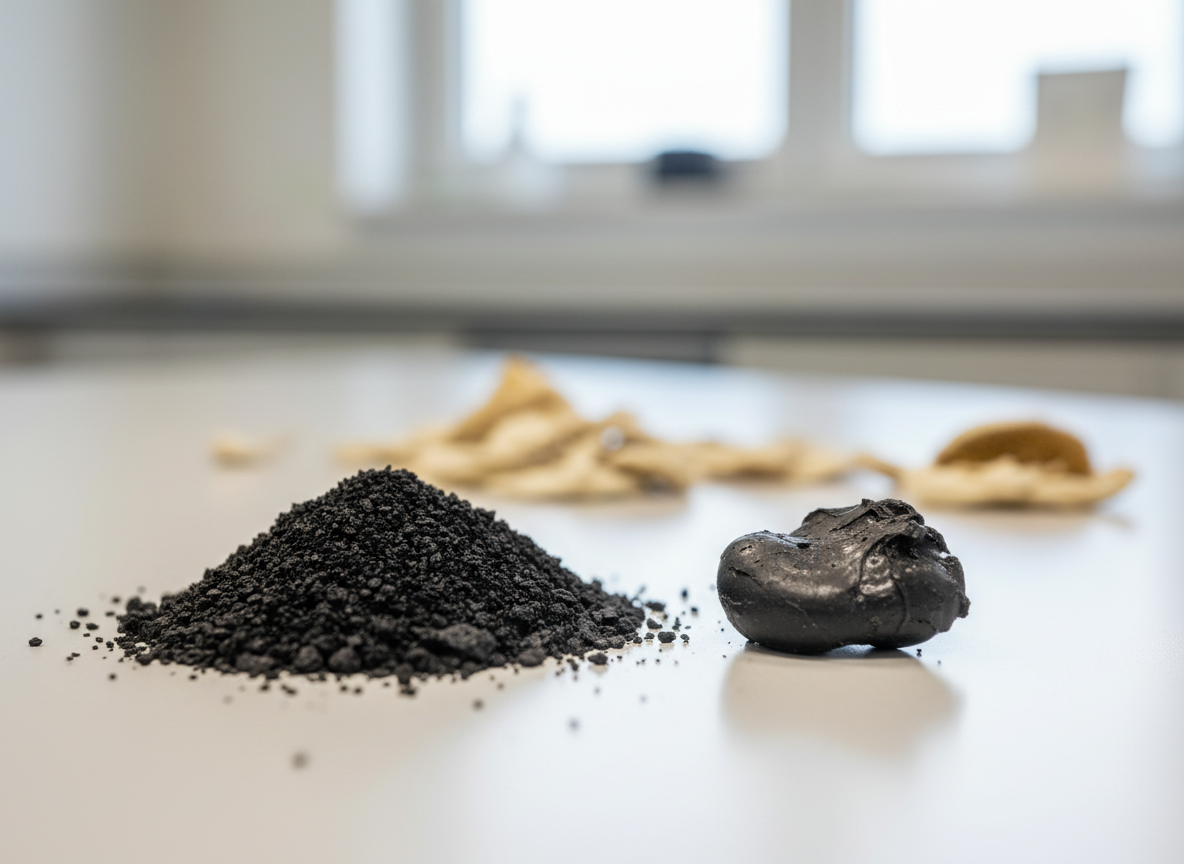
The researchers developed a eutectogel made from polyvinyl alcohol, or PVA, combined with a deep eutectic solvent.
The solvent consisted of choline chloride and glycerol.
Deep eutectic solvents are mixtures whose components interact strongly enough that the combined material can remain liquid at temperatures where the individual components would not behave in the same way.
Embedding the solvent inside a polymer network creates a soft solid-like material that can retain ionic conductivity while remaining mechanically stable.
The researchers refer to the resulting material as a DES-PVA eutectogel.
The material was engineered so positive and negative ions move differently
The central engineering idea involved controlling hydrogen bonds inside the gel.
According to the study, these interactions restrict the movement of positively charged choline ions more strongly while allowing negatively charged chloride ions to move more rapidly.
That imbalance becomes important when pressure is applied.
Because the two ion types respond differently to deformation, charge separation develops more effectively across the material.
The resulting voltage can then be measured as the sensing signal.
Rather than simply increasing the number of mobile ions, the researchers therefore engineered how selectively different ions could move.
Pressure sensitivity reached 60 mV per kilopascal
The reported piezoionic sensitivity reached 60 mV kPa−1.
This means the voltage response changed substantially as pressure on the material changed.
High sensitivity matters for physiological monitoring because many signals generated by the body are small.
A pulse, for example, produces subtle mechanical deformation at the skin rather than a large force.
A sensor that only responds strongly to large pressure would therefore miss much of the information needed for continuous health monitoring.
The new eutectogel was sensitive enough for the researchers to demonstrate several body-signal measurements.
The material was tested for biocompatibility
Wearable materials must do more than produce strong electrical signals.
They also need to be safe enough for contact with biological tissue.
The researchers conducted in vitro biocompatibility assays on the eutectogel.
They report that the material showed excellent biocompatibility under those laboratory tests.
This is encouraging, but in vitro biocompatibility is not the same as proving long-term safety on human skin.
Extended wear can introduce additional issues including sweat exposure, repeated friction, skin sensitivity and degradation of the device over time.
Those questions would require longer-duration human testing.
The sensor captured pulse waveforms
One practical demonstration involved pulse monitoring.
The rhythmic expansion of an artery creates small changes in pressure at the skin surface.
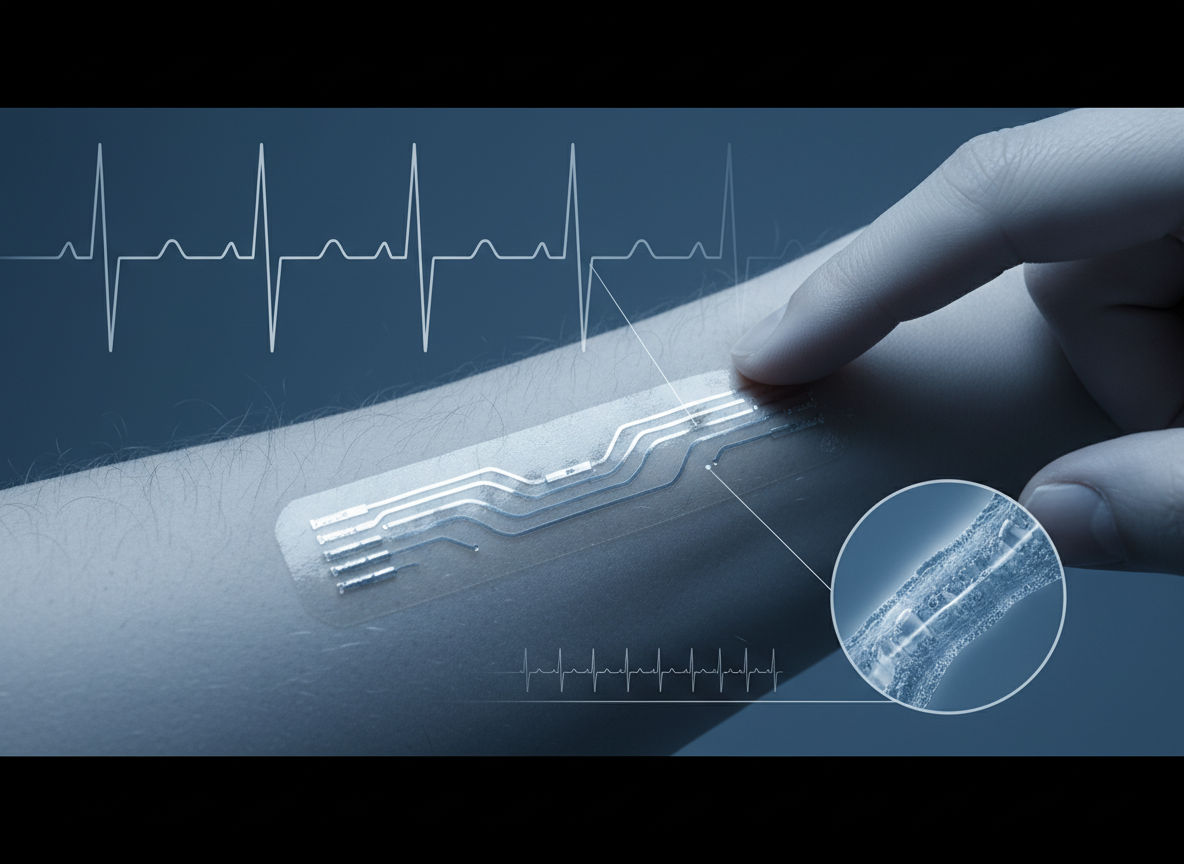
Placed over an appropriate measurement point, the eutectogel converted those pressure changes into an electrical waveform.
A pulse waveform contains more information than simply heart rate.
Its shape can reflect the timing and propagation of pressure waves through the cardiovascular system.
The study demonstrates that the material can capture these small mechanical fluctuations continuously without requiring an externally powered pressure sensor.
The researchers also recorded electrocardiograms
The device was also used for electrocardiogram monitoring.
An ECG records the electrical activity associated with each heartbeat.
The researchers report that the eutectogel platform captured ECG signals with fidelity comparable to commercial sensors used for comparison.
This demonstrates that the material can function as more than a simple pressure indicator.
Its ionic and electrical properties allow it to operate as an epidermal interface for multiple physiological signals.
However, the study does not establish that the system is ready to replace medically approved ECG equipment.
“Comparable to commercial sensors” has a specific meaning
The comparison with commercial sensors is one of the most eye-catching parts of the study.
It should be interpreted carefully.
The researchers demonstrated similar signal fidelity under their experimental conditions.
That does not mean the eutectogel has undergone the same validation, manufacturing controls, durability testing or regulatory assessment as established medical devices.
A commercial clinical sensor must work across different users, skin conditions, movement patterns and long periods of use.
The new material is still at the research-prototype stage.
Self-powered does not mean battery-free electronics disappear entirely
The phrase “self-powered” can create a misleading picture if interpreted too broadly.
The sensing material produces its own electrical signal from mechanical deformation.
But a complete wearable product may still require electronics to amplify, process, store or transmit that signal.
Wireless communication, displays and onboard computing all consume energy.
The advantage is therefore not necessarily the elimination of every power source in a future wearable device.
It is that the sensing mechanism itself does not need an external electrical supply to generate the primary signal.
Soft materials could improve comfort and contact with skin
Traditional rigid sensors can struggle to maintain stable contact with a moving body.
Skin stretches, curves and shifts during ordinary movement.
A soft sensor can deform with the surface rather than separating from it.
Better conformability can reduce motion artefacts and improve comfort, particularly for devices intended to be worn for long periods.
Eutectogels may also offer environmental advantages over water-rich hydrogels because their solvent systems can be less vulnerable to drying.
That is one reason the material class is attracting interest in wearable electronics.
The study is mainly a materials-engineering demonstration
The most important limitation is the stage of development.
This was not a clinical trial designed to diagnose disease or compare health outcomes between patients using different monitoring systems.
The central contribution is the design of the eutectogel and the demonstration that it can produce useful physiological signals.
Further studies would need to assess long-term durability, repeated use, signal consistency across different people and real-world performance during movement.
Manufacturing at scale would introduce additional questions around reproducibility, cost, packaging and integration with electronics.
Long-term skin use still needs to be established
A wearable material can perform well for a laboratory demonstration without necessarily being ready for continuous everyday use.
Real skin is exposed to sweat, oils, soaps, clothing friction, sunlight and frequent changes in temperature and humidity.
Repeated attachment and removal can also affect both the sensor and the skin.
For medical applications, researchers would additionally need to determine how reliably the device performs across different skin types, body locations and health conditions.
The present study establishes the material’s promise rather than answering all of these deployment questions.
Why the result matters for wearable health technology
Wearable health devices are moving toward smaller, softer and more continuous forms of monitoring.
That direction creates pressure to reduce batteries, cables and rigid components.
A soft material that simultaneously conforms to skin, tolerates biological contact and generates its own sensing voltage addresses several of those goals at once.
The new eutectogel does not solve every engineering problem involved in wearable medicine.
But it demonstrates how material design at the molecular level can improve the quality of a physiological signal at the device level.
In this case, controlling how different ions move through a hydrogen-bonded polymer network allowed ordinary body pressure to become a measurable electrical output.
The bigger lesson is that the sensor material can become part of the power system
Conventional sensor design often treats sensing and power as separate problems.
One component detects the signal while another provides the energy needed to detect it.
Piezoionic systems blur that distinction.
The same deformation that carries physiological information also creates the electrical response used to measure it.
That could make future wearable sensors simpler, thinner and more adaptable to the body.
The challenge now is to show that the promising laboratory performance can survive the messier conditions of everyday life.
Source Information
Study Title: Biocompatible piezoionic eutectogel sensor for self-powered physiological monitoring
Authors: Bo Wu, Xuejie Liu, Zhiheng Zeng, Bolong Li, Haoyu Fang and Derek Ho
Journal: Nature Communications
Published: 23 September 2026
Institution: City University of Hong Kong and the Hong Kong Centre for Cerebro-cardiovascular Health Engineering
Method: The researchers created a choline chloride–glycerol deep-eutectic-solvent/PVA eutectogel, characterised its piezoionic response and ion-transport mechanism, conducted in vitro biocompatibility assays, and demonstrated wearable monitoring of physiological signals including pulse waveforms and ECG.
Main finding: The eutectogel achieved a reported piezoionic sensitivity of 60 mV kPa−1 and generated self-powered physiological signals. Pulse and ECG demonstrations showed signal fidelity reported as comparable to commercial reference sensors, while in vitro assays supported the material’s biocompatibility.
DOI: 10.1038/s41467-026-77390-7