







Researchers have developed a genome-wide method that can identify which genes bacteriophages need to reproduce while also providing a rapid route for engineering these bacterial viruses. The approach, called phage Tn-seq, combines Tn5 transposon mutagenesis, anti-CRISPR selection and deep sequencing to create dense maps of viable and non-viable genetic insertions across phage genomes.
The study, published in Nature Microbiology on 25 September 2026, tested the method across diverse double-stranded DNA bacteriophages, including a nucleus-forming jumbo phage and phages carrying unusually modified DNA. The researchers report that the resulting gene-essentiality assignments agreed with independent evidence from structural proteomics and conservation of core phage genes.
Why bacteriophage genes matter
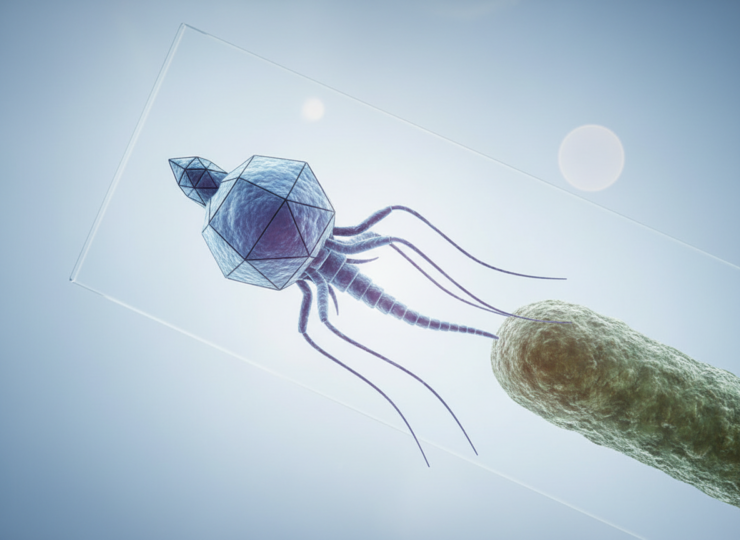
Bacteriophages, commonly called phages, are viruses that infect bacteria. Their ability to kill bacterial cells has renewed interest in phage therapy and other antimicrobial applications, particularly as antibiotic resistance increases. Yet phage genomes often contain genes whose functions remain poorly understood, making it difficult to determine which regions can be altered without preventing the virus from replicating.
A genome-wide map of essential genes can help distinguish genetic regions that tolerate modification from those that are indispensable. This is important both for understanding fundamental phage biology and for efforts to engineer phages with useful genetic cargo.
How the researchers mapped essential genes
The researchers developed phage Tn-seq around the Tn5 transposon, a mobile DNA element that can insert into genomes. They coupled transposon mutagenesis with anti-CRISPR-based selection and deep sequencing. Insertion sites recovered from viable phages reveal genomic positions that can tolerate disruption, while regions depleted of insertions provide evidence that the affected genes or sequences are required for successful phage replication under the experimental conditions.
The method was applied to multiple phages with markedly different biological characteristics. These included JS26 and the nucleus-forming jumbo phage PCH45. The study also demonstrated transposon insertion in phages with hypermodified DNA, showing that the approach was not limited to a single conventional phage genome type.
Essentiality maps agreed with independent biological evidence
Phage Tn-seq generated genome-wide essentiality maps for the tested viruses. The classifications were consistent with structural proteomics and with conservation of core genes, two independent sources of evidence that can indicate whether a gene performs an important viral function.
The insertion data contained information beyond a simple essential or non-essential classification. Biases in where transposons were recovered allowed the researchers to predict transcriptional direction and identify genomic regions that are injected early into bacterial cells or are highly expressed during infection.
The method also enabled rapid phage engineering
The researchers used modified transposons to introduce new genetic cargo into phages within a few days. Demonstrated applications included producing phages carrying fluorescent labels and alternative anti-CRISPR proteins.
They also created an orthogonal transposon system incorporating an artificial intelligence-designed anti-CRISPR protein. This enabled the generation of phage double mutants, illustrating how the platform can move from functional screening to more complex genome engineering.
What the findings could mean
The work provides a single experimental framework for asking two closely related questions: which parts of a phage genome are essential, and where can researchers insert new DNA without destroying viral viability? That combination could make it easier to investigate poorly characterised phage genes and to design modified phages for research, biotechnology or future antimicrobial applications.
The inclusion of a nucleus-forming jumbo phage is particularly notable because jumbo phages have large, complex genomes and unusual replication biology. Demonstrating genome-wide mutagenesis in such a virus suggests that the method can operate across substantial biological diversity rather than only in small, genetically tractable laboratory phages.
Important limitations
Gene essentiality is conditional. A gene classified as essential in a particular bacterial host and laboratory environment may not have the same status in another host strain or ecological setting. Transposon insertion can also be influenced by sequence preferences, genomic accessibility and the position of an insertion within a gene.
The study demonstrates a versatile research and engineering platform rather than a clinical phage therapy. Additional work would be required to establish how engineered phages produced with this approach perform in disease models, how stable introduced cargo remains over repeated replication, and how safety and host-range considerations would be managed in therapeutic applications.
Source Information
Study: Defining the essential genome of diverse phages with phage Tn-seq
Authors: Natalie Kyte, Manuela Fuchs, Leah M. Smith and colleagues
Journal: Nature Microbiology
Published: 25 September 2026
DOI: 10.1038/s41564-026-02486-1