






For decades, businesses have built teams because difficult problems usually benefit from more than one kind of expertise.
New research suggests generative artificial intelligence may change that calculation.
In a randomised field experiment involving 791 professionals at Procter & Gamble, employees working alone with generative AI produced innovation proposals of comparable quality to those created by traditional two-person teams working without AI.
The effect was not small. Individuals using AI improved solution quality by approximately 9.6% compared with people working alone without it, while AI-assisted teams improved by around 10.2%.
But the most interesting finding for businesses is not that AI made employees more productive.
It is that AI appeared to provide some of the benefits companies traditionally employ another person to obtain.
791 professionals worked on real business problems
The study, published in Organization Science, involved experienced commercial and research-and-development professionals at Procter & Gamble.
Rather than giving participants artificial puzzles, researchers worked with the company to develop a one-day product-development exercise based on real, longstanding business challenges from P&G’s own units. The strongest ideas were good enough to potentially enter the company’s actual innovation pipeline.
Participants were randomly allocated to four groups.
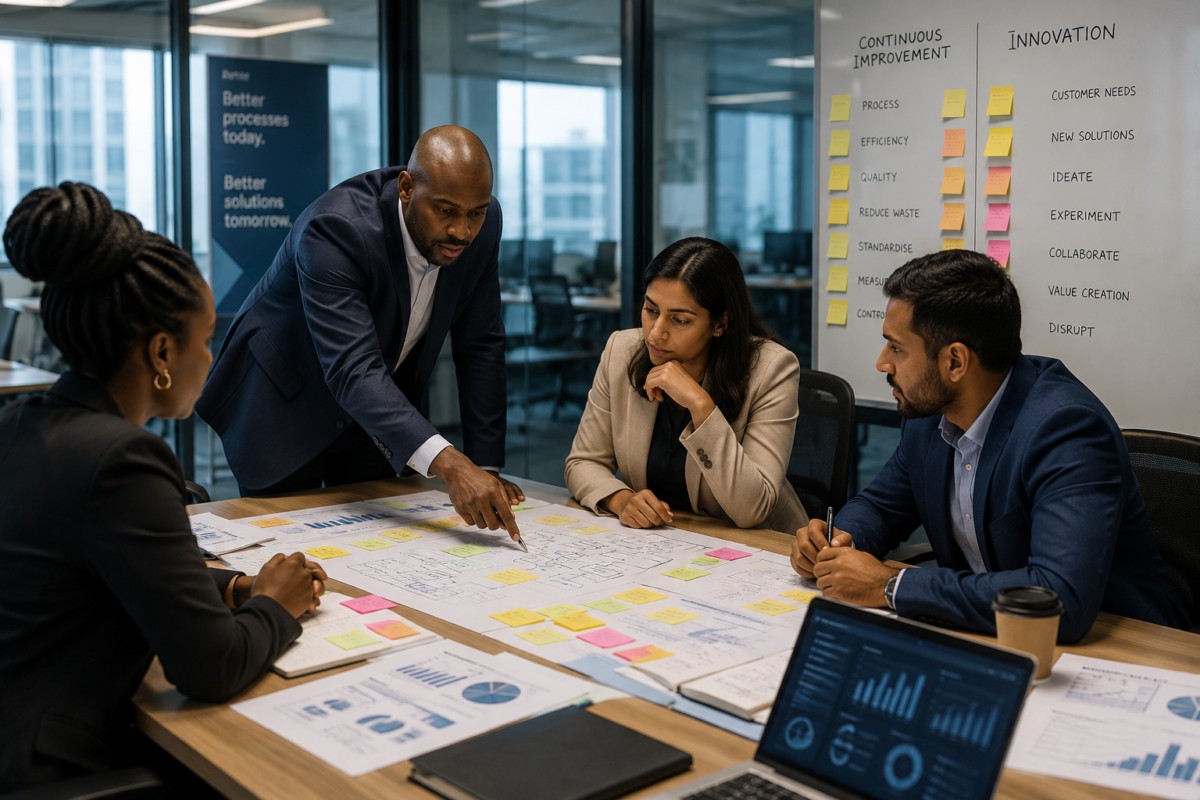
Some worked alone without AI. Others worked in two-person teams consisting of one commercial and one R&D professional. A third group worked individually with AI, while the final group combined a two-person human team with AI.
The AI system was based on GPT-4 through Microsoft Azure, and employees in the AI groups received a one-hour training session on how to use it for consumer-goods tasks.
This allowed the researchers to separate two effects that businesses increasingly need to understand: what is gained by adding another person, and what is gained by adding AI?
AI closed much of the teamwork gap
Working with another person helped.
Two-person teams without AI produced significantly higher-quality solutions than individuals working alone, confirming the traditional advantage of combining human expertise.
Then AI changed the comparison.
Individuals with AI recorded a 0.37 standard-deviation improvement in solution quality, while teams with AI improved by 0.39 standard deviations relative to the individual-without-AI baseline. Most importantly, the quality of work produced by an individual using AI was statistically comparable to that produced by a two-person human team without it.
That does not mean one employee with ChatGPT can replace two employees across an organisation.
The experiment examined a specific type of early-stage innovation work.
But it does raise a more difficult management question than whether AI saves employees a few minutes.
If AI can provide some of the additional perspective and knowledge traditionally obtained by assembling a team, businesses may eventually need to reconsider how teams themselves are designed.
AI also weakened the walls between departments
The researchers found another effect that may prove equally important.
Without AI, employees tended to think within their professional specialities.
Commercial professionals generated more market-oriented proposals. R&D specialists produced more technically focused ideas.
With AI, that distinction largely disappeared. Both groups produced a more balanced mix of technical and commercial solutions.
This matters because organisational silos are expensive.
Companies employ specialists because deep expertise creates value, but specialisation also creates boundaries. Engineers may understand what is technically possible without fully appreciating the market. Commercial employees may understand customers without knowing what can realistically be developed.
Businesses usually solve this by creating cross-functional teams.
The P&G experiment suggests AI may provide another route by helping individual employees reach beyond their own professional knowledge.
It did not turn marketers into engineers or engineers into marketers.
It made the boundaries around their thinking less restrictive.
The best results still came from humans plus AI
There is an important reason businesses should resist interpreting the findings as an argument for smaller teams everywhere.
When researchers looked specifically at the best ideas, the combination of human teamwork and AI stood out.
AI-assisted teams were 9.2 percentage points more likely to produce a solution ranked in the top 10% than the control group, where only 5.8% of solutions reached that level. The researchers describe this as roughly tripling the likelihood of producing a top-decile outcome.
The effect for individuals using AI was positive but not statistically significant.
That suggests two different business cases may be emerging.
For ordinary knowledge work, AI may allow an individual to capture some benefits that previously required a second employee.
For unusually important work, where the company is searching for exceptional rather than merely good results, combining multiple humans with AI may still be the stronger configuration.
Cost efficiency and maximum performance may therefore require different team designs.
There was also a warning sign
AI did not improve every part of the innovation process.
Participants using AI appeared to become somewhat worse at identifying which of their own ideas were the strongest.
The researchers suggest that employees may have internalised AI-assisted ideas less deeply, or that the system’s tendency to respond supportively may have made critical evaluation more difficult. Despite this, the improvement in the quality of ideas was large enough for AI-assisted participants to perform better overall.
That distinction is important for managers.
Generating a good proposal and recognising that it is the best proposal are not the same capability.
Businesses adopting generative AI may therefore need stronger review processes precisely because employees can produce more sophisticated work.
The South African opportunity is team design
For South African businesses, the most immediate lesson is not to replace employees with AI.
It is to examine where scarce expertise is currently being used simply because another employee lacks access to it.
Many organisations depend on specialists who become bottlenecks. Analysts wait for technical teams. Product employees wait for legal input. Commercial teams require data specialists to answer questions before they can proceed.
Generative AI will not remove the need for specialised professionals, particularly where decisions carry financial, regulatory or safety consequences.
But it may reduce how frequently those specialists need to be involved in routine stages of work.
That creates a different type of productivity gain.
The employee does not necessarily work faster because AI writes something for them.
They work more independently because AI allows them to cross part of an expertise boundary that previously required another person’s time.
AI may change the unit of work
There are clear limitations.
The experiment was conducted inside one large consumer-goods company and focused specifically on early-stage product innovation. Participants were also relatively inexperienced with AI, and the researchers caution against assuming the same results will automatically appear in established teams or other types of work.
But the study points towards a bigger organisational change.
Businesses have spent much of the generative-AI era asking how the technology changes an individual’s productivity.
The next question may be more consequential.
If one employee equipped with AI can sometimes access the breadth of thinking previously obtained from a small team, then AI does not merely change how people complete tasks.
It begins to change how businesses decide who needs to work together in the first place.
Source Information
Study Title: The Cybernetic Teammate: A Field Experiment on Generative AI and Teamwork
Journal: Organization Science
Published Online: 12 June 2026
Participants: 791 Procter & Gamble professionals
DOI: 10.1287/orsc.2025.20702