







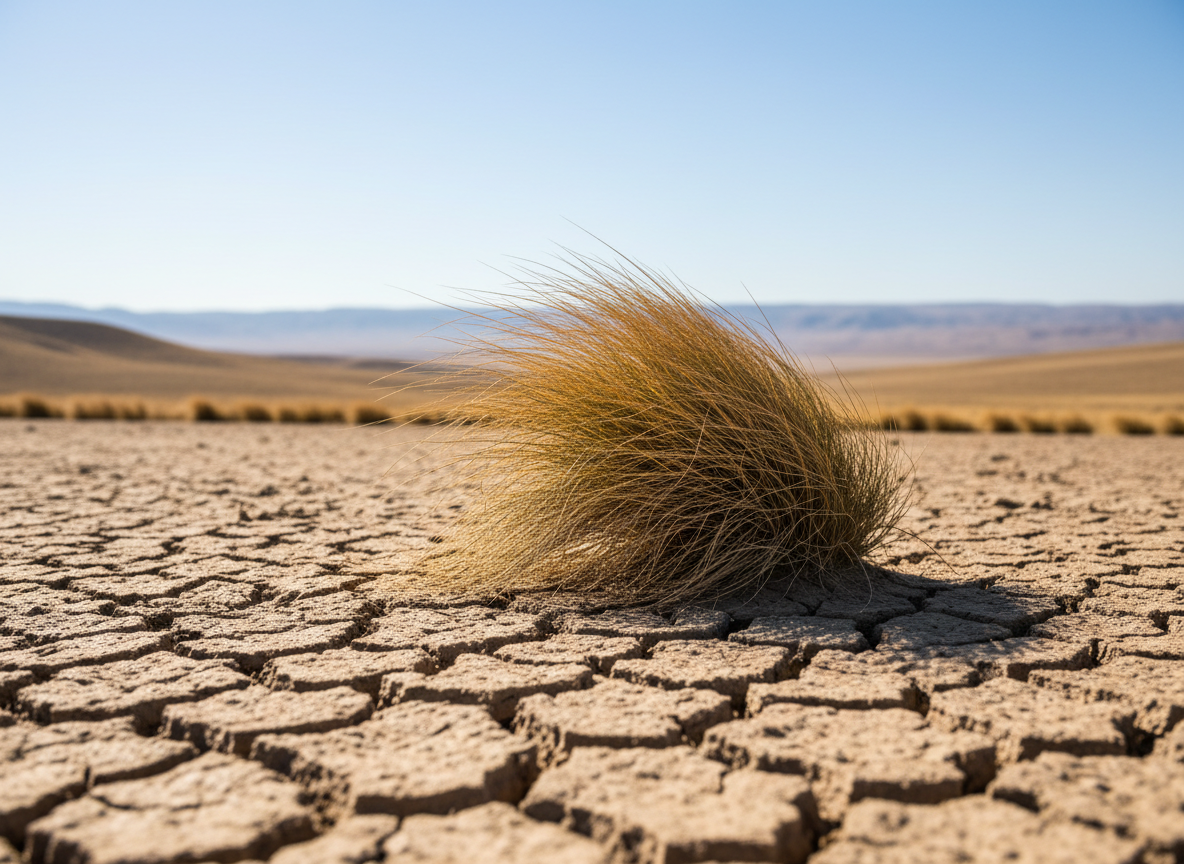
When the atmosphere becomes unusually capable of pulling moisture from soils, vegetation and surface water, the immediate cause is not the same everywhere. A global analysis spanning four decades has found that extreme atmospheric drying is often triggered by strong winds in dry regions, unusually intense sunshine in humid tropical regions, and combinations of warmth and radiation at higher latitudes.
The distinction matters because atmospheric evaporative demand, or AED, influences drought development, crop water requirements, vegetation stress and wildfire risk. Rising temperatures are increasing the background level of atmospheric drying across much of the planet, but the weather anomaly that pushes a particular region into an extreme event can be quite different from the factor driving that long-term trend.
Researchers at Brown University examined daily meteorological conditions from 1986 to 2025 and developed a counterfactual machine-learning framework to separate those two processes. Their results, published in Earth’s Future, show why a single explanation for extreme atmospheric drying can miss important regional differences.
A drying atmosphere is not simply a hotter atmosphere
AED describes the atmosphere’s potential capacity to remove water from the land surface under prevailing weather conditions. It is different from actual evaporation because it measures atmospheric demand rather than the amount of water that is available to evaporate.
The researchers calculated AED using the FAO-56 Penman-Monteith framework, which combines air temperature, humidity, solar radiation and wind speed. Those four variables interact physically. Hotter air can raise saturation vapour pressure, sunlight supplies energy for evaporation, humidity affects the vapour gradient between the surface and atmosphere, and wind transports moisture away from the surface.
That interaction creates an attribution problem. Changing one variable while holding all others fixed can generate weather combinations that would rarely occur in reality. Temperature and solar radiation, for example, are correlated in the study data at roughly 0.6. Treating them as independent could therefore exaggerate or obscure their individual contributions.
To address this, Bingjie Zhao, Abrielle Mannino and Christopher Horvat used an adversarial random forest to learn the joint distribution of the meteorological variables. Rather than using the machine-learning model to predict AED directly, they used it to generate physically plausible counterfactual weather states. This allowed them to ask what happens to an extreme event when one meteorological driver is replaced while the relationships among the remaining conditions are preserved.
Forty years of weather reveal a widespread upward push
The primary analysis used 40 years of daily ERA5-Land data from 1986 through 2025. The global land surface was divided into equal-area hexagons of about 58,000 square kilometres, with Antarctica excluded. The researchers also used GLDAS-2.1 data from 2000 to 2025 as an alternative global dataset and repeated the attribution at 49 European climate stations across six countries with 40 complete years of observations.
The long-term picture was striking. AED increased across 89.5% of the global land area assessed. In 59.7% of land areas, that positive trend was statistically significant at p < 0.01. Significant decreases occurred in only 2.8% of the analysed land area, including parts of India, Southeast Asia and tropical Pacific islands.
The highest average AED values exceeded 6 millimetres per day in major hot deserts such as the Sahara, Arabian Peninsula and interior Australia. At high latitudes, average values fell below 1.5 millimetres per day, while the equatorial humid tropics were around 3.3 millimetres per day.
Yet the factor responsible for the long-term rise was more uniform than the weather responsible for individual extremes. A complementary Shapley-value analysis showed that rising air temperature dominated the long-term trend across most regions. In other words, warming is providing a broad background push toward greater atmospheric water demand.
What pushes the atmosphere into an extreme depends on where you are
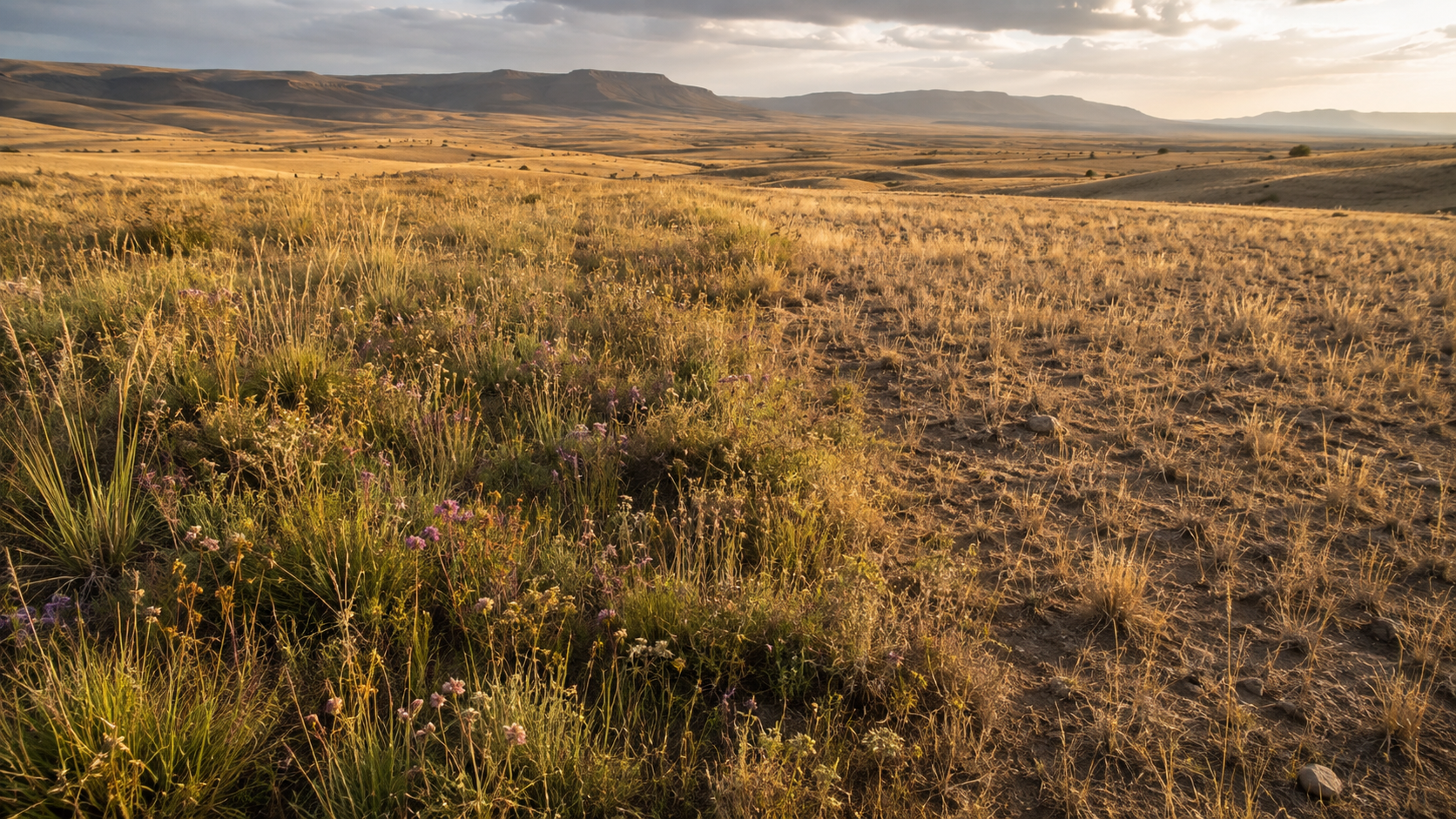
The immediate triggers were much more geographically organised. Across many arid and semi-arid areas, including North Africa, the Middle East, Central Asia, western North America and interior Australia, wind speed emerged as the dominant trigger of extreme AED.
This is not because temperature is unimportant in drylands. These regions already tend to have large vapour pressure deficits and strong solar forcing as part of their normal climate. When the air is already dry, stronger winds can rapidly increase turbulent transport and remove moisture more efficiently. The wind anomaly can therefore be the final trigger that pushes atmospheric demand into its local extreme range.
Humid tropical regions behaved differently. There, unusually strong shortwave solar radiation under clearer skies was often the dominant trigger. Moist tropical air normally suppresses part of the aerodynamic contribution to evaporative demand. A burst of extra solar energy can temporarily relax that limitation and sharply increase the energy available for evaporation.
Temperature played a larger event-scale role across much of Europe, northern Eurasia, eastern North America and parts of East Asia. In colder and high-latitude environments, extreme AED often required warm anomalies together with enhanced radiation because the normal climate is more strongly limited by available energy.
Southern Africa appears within this broader global pattern as a region where atmospheric demand is already relatively high, while parts of the region show a stronger role for shortwave radiation in triggering extremes. That distinction is relevant for drought and agricultural monitoring because a warming trend alone may not identify the weather variable that signals an acute drying episode in a particular location.
Why humidity was rarely the single dominant trigger
Humidity might appear to be the obvious candidate for extreme atmospheric dryness, but it rarely emerged as the primary trigger. The researchers point to both statistical and physical reasons.
Humidity showed relatively low day-to-day variability compared with temperature, radiation and wind. Its physical effects can also pull AED in competing directions. Drier air increases the vapour pressure gradient and strengthens the aerodynamic component of evaporation, but moister air can increase downward longwave radiation and add energy at the surface. That makes humidity’s net contribution less consistently one-directional than the other drivers.
The timing of the variables added another clue. Temperature and vapour pressure showed longer persistence, making them more similar to slowly changing background-state variables. Wind and shortwave radiation had shorter persistence times, which is consistent with their role as transient triggers capable of pushing conditions rapidly into an extreme.
The result changes how extreme drying can be interpreted
The central contribution of the study is the separation between a long-term push and a short-term trigger. Climate warming can raise the baseline probability of atmospheric drying stress without being the dominant meteorological anomaly during every extreme event.
For drought early-warning systems, fire-weather monitoring and agricultural water planning, this means regional trigger mechanisms deserve attention alongside temperature trends. A dryland system may become more vulnerable as temperatures rise, while a wind event provides the immediate escalation. A humid region may experience the same warming background but cross its extreme threshold during an unusually clear and sunny period.
The researchers tested the robustness of the attribution by changing the meteorological dataset, humidity representation, extreme-event threshold and random-forest resampling parameters. They compared ERA5-Land with GLDAS-2.1, tested relative humidity and dew-point temperature alternatives, varied the extreme threshold from the primary 99th percentile to the 98th and 99.5th percentiles, and evaluated the method against observations from 49 ground stations.
Those checks strengthen confidence in the broad regional patterns, but they do not remove every limitation. Reanalysis products combine observations with numerical models and can carry region-specific biases. Attribution also depends on the definition of an extreme and on how meteorological variables are represented. At high latitudes, where background AED is low, relatively small absolute changes can alter which variable is identified as dominant. The framework identifies meteorological contributions to atmospheric demand rather than directly measuring resulting soil moisture loss, crop damage or wildfire occurrence.
The findings therefore should not be read as evidence that one weather variable causes all drought or fire events within a region. Instead, they show that the atmosphere’s capacity to dry the land has distinct regional trigger regimes. As warming continues to raise the background level of atmospheric demand across much of the world, knowing what supplies the final push may become increasingly important.
Source Information
Study Title: Meteorological Triggers of Regionally Extreme Atmospheric Evaporative Demand Across Global Land: Attribution With Adversarial Random Forests
Authors: Bingjie Zhao, Abrielle Mannino and Christopher Horvat
Journal: Earth’s Future
Published: 23 September 2026
Data: Daily ERA5-Land meteorological data from 1986 to 2025, with GLDAS-2.1 and 49 ECA&D stations used for robustness and observational evaluation
Method: FAO-56 Penman-Monteith atmospheric evaporative demand calculations combined with adversarial-random-forest counterfactual attribution and Shapley-value trend attribution
Main finding: Rising temperature dominated the long-term increase in atmospheric evaporative demand across most regions, while extreme events were triggered by different short-term weather anomalies depending on regional climate, particularly wind in many drylands and shortwave radiation in humid tropical regions.
DOI: 10.1029/2026EF009156