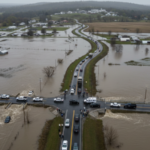







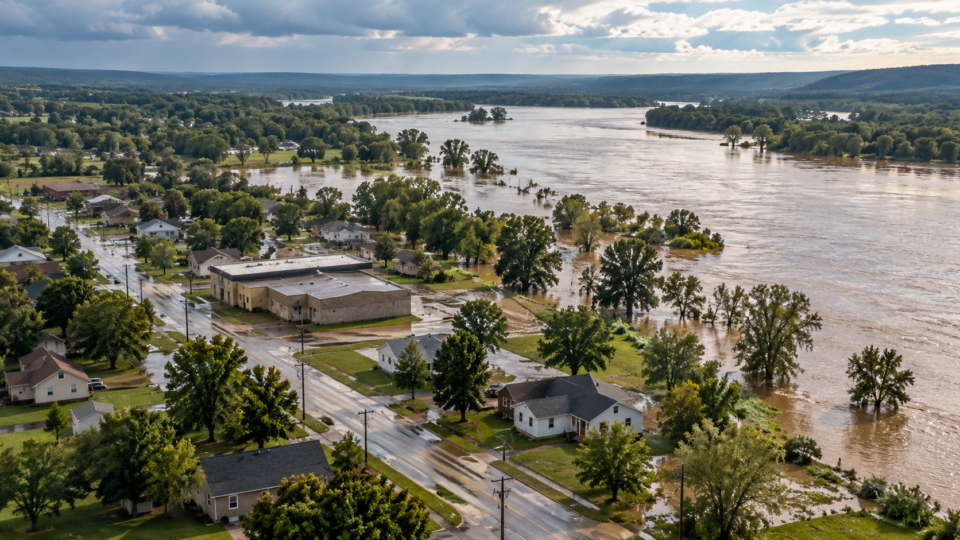

Flooding can damage homes, roads, water supplies and community facilities long before residents receive financial help to recover. For federally recognised Tribal Nations in the United States, one potential source of protection is the National Flood Insurance Program (NFIP). Yet a peer-reviewed study published in October 2026 reports that just 27 of 574 federally recognised Tribal Nations participated in that federal programme. That is approximately 4.7%, leaving 547 nations without recorded participation in the programme at the time covered by the research.
The study, led by Lily L. Kraft and colleagues in npj Environmental Social Sciences, examined flood exposure, disaster records, participation in the NFIP and the contents of 57 Tribal hazard mitigation plans. Its central message is not that Tribal governments are unaware of flooding. Rather, the researchers found evidence of serious flood hazards alongside barriers to one specific federal insurance mechanism. Flood exposure and programme participation should not be confused with whether an individual home is insured.
Why flood insurance access matters
Ordinary homeowners insurance in the United States generally does not cover flood damage. Separate flood policies can help households and businesses recover from inundation, while public infrastructure and community services may require different forms of assistance. The NFIP is a federal programme that makes flood insurance available in participating communities, subject to its rules and coverage limits. Participation also involves floodplain-management obligations. This creates a complicated decision for sovereign Tribal governments, whose administrative resources, land-tenure systems, planning priorities and relationships with federal agencies vary substantially.
A low participation rate is therefore not a simple measure of household indifference to risk. It may reflect legal, institutional, economic and capacity constraints. Some residents may obtain other insurance or assistance, while some communities may use flood-risk reduction strategies that do not depend on the NFIP. The study’s statistic concerns Tribal Nation participation in the federal programme, not the percentage of Tribal residents who lack all flood protection.
How the researchers investigated the gap
The authors combined several forms of evidence rather than relying on a single questionnaire. They examined records of historical river flooding and compared the geography of those events with Tribal lands. They reviewed federal programme information to identify participating Tribal Nations. They also analysed 57 Tribal hazard mitigation plans, documents that identify hazards, vulnerabilities and potential responses in specific communities.
The research assessed exposure associated with three historical flood events, using these events to illustrate the kinds of physical risks that can affect Tribal lands. These case studies should not be read as a complete national inventory of every flood experienced by every nation. Likewise, the 57 mitigation plans are a subset of Tribal plans, not a census of all 574 federally recognised nations.
Combining physical flood evidence with planning documents is valuable because the two sources answer different questions. Flood records describe where water reached during particular events. Hazard plans describe what governments recognise as threats, what assets may be vulnerable and what actions they prioritise. Programme records show administrative participation in one insurance system. None of those sources alone measures household-level insurance take-up, expected annual flood losses or the effectiveness of every local flood defence.
The numerical finding: 27 of 574
The headline result is stark. The researchers identified 27 participating Tribal Nations among 574 federally recognised nations. Dividing 27 by 574 gives about 4.7%, or fewer than one in twenty. The remaining 547 nations were not identified as participants in the programme. That difference indicates limited reach of the federal participation framework, but it cannot establish why each individual nation does or does not participate.
These are counts of sovereign Tribal Nations, not counts of people, houses or insurance policies. Tribal Nations vary enormously in population, geography, land holdings and flood exposure. A nation-level percentage should therefore not be presented as the percentage of Tribal households lacking coverage. It also does not establish that every nonparticipating nation faces the same level of hazard.
What the hazard plans add
The 57 mitigation plans provide context missing from programme statistics. Flood hazards can threaten transport routes, drinking-water infrastructure, housing, cultural resources and public services. For communities with limited alternative road access or dispersed infrastructure, a flood may cause disruption far beyond the immediate area submerged.
Plans are especially important because they show that flood management includes more than purchasing insurance. Governments can identify vulnerable sites, improve warning systems, plan evacuation routes, protect critical facilities and consider land-use or drainage measures. Insurance can help with some financial losses, but it cannot prevent a bridge from washing out or protect a culturally important place from physical damage.
Hazard plans are also uneven evidence. They are produced under different conditions, may be updated at different times and may differ in their level of detail. Their inclusion in a research sample does not imply that all proposed measures have been funded or completed. A documented risk is not automatically a quantified probability of loss.
Why federal participation may be difficult
Participation in the NFIP requires administrative decisions and compliance with programme rules. For Tribal governments, those decisions occur in the context of sovereignty and distinctive governance arrangements. Land status, jurisdiction, capacity to administer floodplain requirements and access to technical expertise can complicate participation. The researchers’ findings highlight the importance of examining these structural factors instead of treating low uptake as a failure of awareness.
Affordability matters as well. Even when a programme is available, a household may struggle with premiums, deductibles or uncertainty about whether its property qualifies. Insurance may be less useful to someone who cannot afford the policy or whose most serious losses fall outside coverage limits. The study’s national participation figure does not itself measure these household financial constraints, so they should be considered plausible policy questions rather than directly quantified outcomes of the research.
Implications for public policy
The findings suggest that flood resilience policy should distinguish at least three objectives: reducing physical exposure, enabling recovery financing and making federal programmes administratively accessible to sovereign Tribal governments. Expanding insurance participation without addressing the underlying flood hazard would leave important risks in place. Conversely, investment in protective infrastructure without a workable recovery mechanism can still leave households financially vulnerable after a major event.
More tailored technical support, clearer coordination between federal agencies and Tribal governments, and attention to programme requirements could help identify where existing arrangements are a poor fit. Such reforms should be developed with Tribal governments rather than imposed on them. The study does not demonstrate that any particular policy change would increase participation by a specified amount, and it does not provide a cost-benefit ranking of competing interventions.
What the research cannot establish
Several distinctions limit interpretation. First, the participation count is not a measure of insurance coverage for individual residents. Second, the three historical flood events provide evidence about particular hazards, not a complete forecast of future flood frequency. Third, the 57 mitigation plans are informative but do not represent every Tribal Nation equally. Finally, observational records cannot establish that administrative barriers alone caused nonparticipation or that joining the NFIP would eliminate disaster losses.
Climate change may intensify heavy precipitation and flood hazards in some locations, but the local consequences depend on river systems, land use, infrastructure and other conditions. Those broader concerns strengthen the case for better risk assessment; they should not be used to imply that the study directly projected future flood losses for all 574 nations.
The broader lesson
The gap between documented hazards and participation in a federal protection programme raises a practical question: are public risk-management systems designed around the institutions and needs of the communities expected to use them? The study shows why participation figures must be interpreted alongside sovereign governance, exposure and local planning. Better flood resilience will depend on both physical protection and recovery tools that communities can realistically access and administer.
Source Information
Original research: Peer-reviewed study of flood risk and National Flood Insurance Program participation among federally recognised US Tribal Nations.
Authors: Lily L. Kraft and colleagues.
Journal: npj Environmental Social Sciences.
Publication date: 7 October 2026.
Study design: Observational analysis combining federal flood insurance participation records, three historical flood events and 57 Tribal hazard mitigation plans.
Principal reported count: 27 of 574 federally recognised Tribal Nations participating in the National Flood Insurance Program.
Research source: The peer-reviewed journal publication; DOI should be checked against the publisher record before adding a direct DOI link.