



A storm’s economic impact is not the same as its wind speed
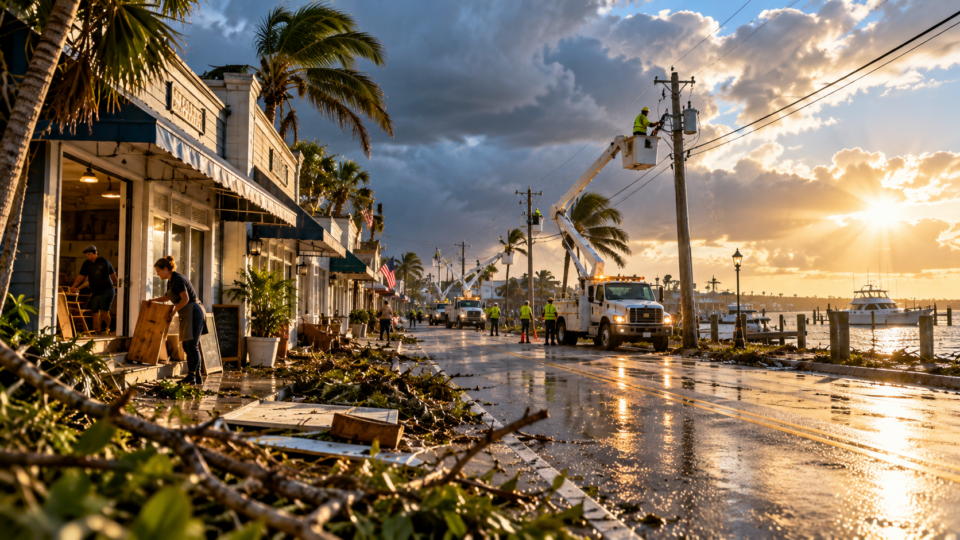
When a hurricane reaches the coast, its economic consequences begin before the strongest winds arrive. Residents leave, shops close, and ordinary purchases become difficult.
Measuring those changes has traditionally been difficult because official economic statistics are rarely published every day at neighbourhood level.
A new study in Nature Communications offers a much closer view of the interruption and the return of commercial activity.
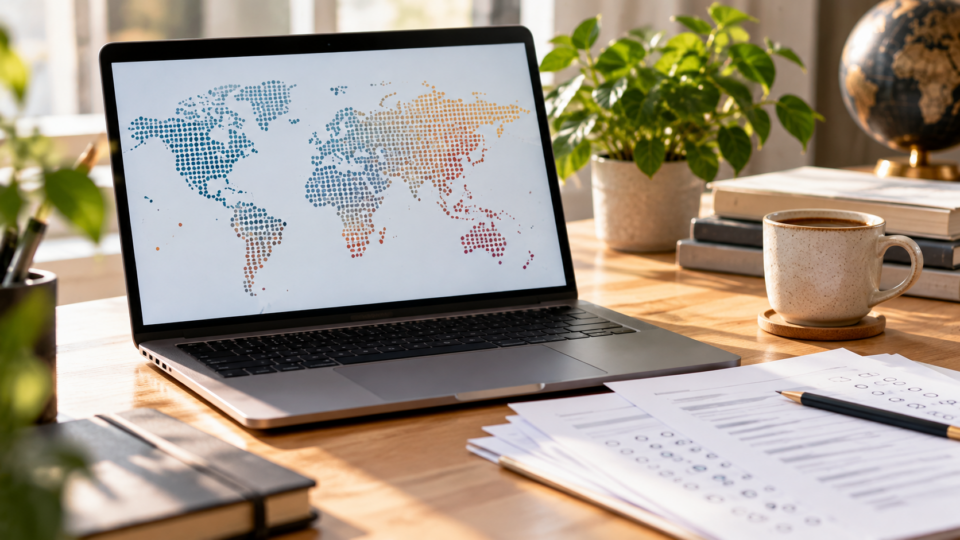
Researchers examined daily payment transactions in 7,987 United States ZIP codes affected by 21 Atlantic hurricanes between 2017 and 2024.
Their headline finding was that the storms caused lost sales equivalent to about two ordinary trading days.
Sales among surviving businesses generally returned to pre-hurricane levels within approximately ten days.
That result is not a claim that hurricane damage, household hardship or the economic consequences of permanently closed businesses disappear within ten days.
What the researchers actually measured
The study, published on 17 October 2026, was conducted by Sumit Agarwal, Smarajit Paul Choudhury, Mingxuan Fan and Leora Klapper.
The team used aggregated and anonymised transaction information made available through the Mastercard Economics Institute.
The data allowed them to examine both merchant sales and consumer spending at a daily frequency.
Merchant sales describe transactions received by businesses in an area, whereas consumer spending follows purchases made by consumers.
Those perspectives can reveal different aspects of the same disruption, particularly when residents travel or businesses temporarily shut.
Using ZIP codes provided a more detailed geographical picture than state-level or national economic reports.
The researchers analysed transactions around storm events and compared activity with normal conditions to estimate disruption and recovery.
Because these are electronic transactions, they do not provide a complete census of every cash purchase or informal economic activity.
Twenty-one hurricanes across eight years
The dataset covered 21 Atlantic hurricanes occurring between 2017 and 2024.
That period included storms affecting different communities, commercial sectors and infrastructure systems.
Using multiple hurricanes helped the team compare patterns instead of treating one unusually damaging storm as representative of every event.
The geographic coverage of 7,987 ZIP codes also allowed the researchers to examine how disruption varied from place to place.
However, a large number of geographic observations should not be confused with an equally large number of independent storms.
Places exposed to the same hurricane can share weather, evacuation orders and infrastructure failures.
The analysis therefore provides detailed evidence about the events included in the sample, rather than a guarantee about every future storm.
The study’s focus was short-run commercial transactions, not a complete accounting of the storms’ lifetime economic damage.
What two days of lost sales means
The researchers estimated losses equivalent to approximately two days of typical sales.
That figure summarises the short-run reduction in transaction activity associated with the hurricanes studied.
It does not mean every affected business closed for precisely two days.
Some businesses may have remained open, while others could have been unable to trade for substantially longer.
Likewise, a loss equivalent to two days of sales does not establish a particular amount of lost profit.
Businesses incur costs, and sales revenues are not the same as earnings.
The estimate also should not be interpreted as the total financial damage caused by a hurricane.
Destroyed buildings, replacement equipment, uninsured losses, disrupted employment and long-term relocation are separate dimensions of disaster impact.
Why the ten-day recovery finding needs care
The study reports a return to pre-hurricane sales levels within about ten days among surviving businesses.
That suggests a substantial amount of ordinary commerce can resume relatively quickly after the initial disruption.
Yet an aggregate recovery can conceal large differences between individual firms and neighbourhoods.
A shop that permanently closes may no longer contribute to the measured activity of surviving businesses.
Another business might experience a temporary increase in purchases as residents replace supplies or begin repairs.
Such changes can alter the composition of spending even when the overall total appears normal again.
The ten-day result is therefore best understood as a short-run transaction recovery measure.
It should not be presented as proof that affected communities have fully recovered socially, physically or financially.
Consumers did not simply spend elsewhere
One question the researchers examined was whether disrupted spending shifted to other locations or sales channels.
In principle, a customer unable to visit a local shop could travel to another town or place an online order.
If that happened extensively, lower sales in the directly affected area might be offset by gains elsewhere.
The study found limited offsetting substitution across locations and channels.
That matters because an apparent local loss might otherwise represent spending moved to another merchant rather than forgone spending.
The results suggest that a meaningful share of the disruption was not immediately compensated through alternative purchases.
However, the analysis cannot establish what every household did with money it did not spend during the storm.
Some purchases may have been postponed, abandoned or completed outside the measured observation window.
A hurricane’s category was not the best guide
Hurricanes are commonly described by categories based on maximum sustained wind speed.
Those categories are useful for communicating part of the physical hazard, but they do not describe all the ways a storm disrupts an economy.
The study found that storm category alone was a poor predictor of short-run commercial impacts.
Instead, economic disruption increased with physical damage, evacuation restrictions and infrastructure outages.
These factors affect whether people can reach shops and whether merchants can operate.
A lower-category storm can still create serious economic problems if it causes extensive flooding or prolonged service interruptions.
Conversely, a powerful storm may produce a different commercial impact depending on the communities and infrastructure it affects.
The findings caution against using a single weather classification as a complete measure of local economic vulnerability.
Infrastructure outages can extend the interruption
Electricity, telecommunications and transport are central to modern retail activity.
Businesses may need power for lighting, refrigeration, payment terminals and communications.
Even an undamaged shop can struggle to trade when its surrounding infrastructure is unavailable.
Road closures can prevent workers, customers and deliveries from reaching the premises.
Damage to utility networks may also delay reopening after the most dangerous weather has passed.
The researchers’ finding that outages were associated with greater disruption is consistent with these practical dependencies.
However, the study does not establish that a specific infrastructure upgrade would deliver a quantified economic benefit.
Testing the effect of particular investments would require additional evidence about costs, implementation and avoided losses.
Evacuation rules have economic consequences too
Evacuation restrictions can reduce the number of customers and employees present in a community.
That can depress sales before a storm makes landfall and while access restrictions remain in effect.
The study identifies evacuation-related restrictions among the factors associated with larger commercial disruptions.
That should not be interpreted as an argument against evacuations.
Evacuation decisions are intended to protect lives, and short-term sales losses are only one consideration in emergency planning.
An evacuation may prevent injuries and deaths even while reducing immediate economic activity.
The relevant policy question is how to protect residents while helping essential services and businesses resume safely.
Commercial transaction data can contribute to that discussion, but cannot determine the appropriate safety decision on their own.
Different industries face different disruptions
The researchers observed variation across industries, merchant types and sales channels.
That variation is unsurprising because businesses depend on different supply chains, facilities and customer behaviour.
Food retailers, restaurants, service providers and repair businesses may respond differently as a storm approaches and passes.
Some purchases are urgent and difficult to delay, while others can be postponed.
Online transactions may be less dependent on the physical condition of a particular shop, but they still require electricity, communications and delivery networks.
The paper’s broad conclusion is that recovery is heterogeneous rather than uniform.
It does not justify assigning a precise recovery time to every industry without examining the underlying sector-specific estimates.
For planners, this variation suggests that a single headline figure may be insufficient to identify the businesses needing the most assistance.
Why daily data provide a different perspective
Traditional disaster statistics often emphasise the cost of damaged structures, insurance claims and infrastructure repairs.
Those measures are important, but they do not necessarily show how local trading changes from one day to the next.
Daily transactions provide a complementary indicator of economic activity during the disruption and early recovery.
They can reveal a sharp decline followed by a rebound that might be obscured in monthly statistics.
Geographic detail can also help distinguish areas experiencing relatively mild disruption from places where trading remains severely constrained.
Nevertheless, transaction data measure purchases, not every aspect of welfare.
A household can face serious hardship even when total spending in its ZIP code returns to normal.
Researchers and policymakers therefore need to interpret these data alongside information on housing, health, employment and public services.
The research has implications for disaster response
Identifying where sales have fallen and where they remain depressed could help direct attention to communities with prolonged interruptions.
Such information may be useful when designing emergency support or prioritising restoration of essential infrastructure.
The study also suggests that measures of physical damage, evacuation restrictions and outages deserve attention alongside meteorological storm categories.
However, the researchers did not conduct a randomised trial of relief programmes or infrastructure investments.
The results therefore cannot prove that a particular intervention would shorten recovery by a specified number of days.
Access to near-real-time commercial data also raises questions about availability, representativeness and appropriate safeguards.
Any operational use should protect privacy and avoid overlooking people whose transactions are poorly captured.
The study offers evidence for better monitoring rather than a finished disaster-management system.
What the findings do not establish about climate change
The paper is relevant to discussions about climate-related hazards and economic resilience.
However, analysing the economic effects of 21 historical hurricanes is not the same as measuring how climate change altered those storms.
The study does not show that all future hurricanes will cause losses equivalent to two trading days.
Future exposure will depend on where storms strike, the vulnerability of local infrastructure and the distribution of people and businesses.
Changing coastal development could alter the economic consequences even without a change in a storm’s wind speed.
Likewise, adaptation investments could affect disruption and recovery.
The findings should therefore be viewed as evidence about observed short-run economic responses during the study period.
Climate projections and long-term damage estimates require additional research and modelling.
Important limitations of payment data
Aggregated electronic transaction data are useful because they are timely and geographically detailed.
Yet they do not capture every transaction, particularly cash-based purchases and activities outside participating payment systems.
The businesses represented in the data may differ from businesses not covered by the source.
Permanent closures are especially important when interpreting a recovery measure based on surviving firms.
An area can regain its previous level of recorded spending even if some individual businesses never reopen.
The study’s results also reflect US economic conditions and the Atlantic hurricanes included between 2017 and 2024.
They should not automatically be transferred to other countries, where payment habits, infrastructure and emergency responses differ.
These limitations do not invalidate the results, but they define the questions the evidence can answer.
What other countries can learn cautiously
Countries exposed to severe storms and flooding may benefit from understanding how commerce responds during the first days after a disaster.
The study demonstrates one approach to measuring disruption using high-frequency economic information.
South African researchers and planners could explore whether similar data are available and representative in local settings.
However, differences in banking access, informal trade and local infrastructure would need careful consideration.
An analysis based only on electronic payments could underrepresent communities where cash remains important.
Local adaptation would also require a clear definition of recovery that goes beyond merchant revenue.
Any comparison should distinguish temporary interruption from permanent economic losses and household hardship.
The central transferable lesson is methodological: more frequent data can reveal disruptions that conventional reporting may miss.
The bigger picture of economic resilience
The study presents two findings that are easy to confuse: a sharp immediate interruption and a relatively quick rebound in recorded sales among surviving businesses.
Both can be true while severe physical and social damage remains.
The estimated loss of roughly two days of normal sales describes an average short-run transaction effect across the analysed events.
The return to baseline within about ten days describes recovery in the measured commercial activity, not universal recovery.
Physical damage, evacuations and infrastructure outages were more informative about the disruption than storm category alone.
Limited substitution suggests that the interrupted spending was not simply redirected to nearby areas or online channels.
Together, these findings improve understanding of the first phase of economic recovery after hurricanes.
They also show why a community’s recovery should never be judged by a single number.
Source Information
Original research: Real-time economic disruption and recovery from Atlantic hurricanes across the US.
Authors: Sumit Agarwal, Smarajit Paul Choudhury, Mingxuan Fan and Leora Klapper.
Journal: Nature Communications.
Publication date: 17 October 2026.
Methodology: Observational analysis of aggregated and anonymised daily payment transaction data across 7,987 US ZIP codes exposed to 21 Atlantic hurricanes between 2017 and 2024.
Research DOI: 10.1038/s41467-026-78686-4.
Disclosure: Mastercard Economics Institute supplied controlled access to transaction data; the study received World Bank Research Support Budget funding. One coauthor was employed by Mastercard Economics Institute, as disclosed in the paper.