Most participants completed an eight-week mindfulness-based vitality programme in a small South Korean study. Self-reported well-being improved, but the trial cannot establish that the programme caused those changes.
What researchers studied
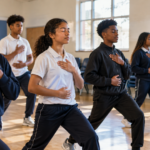
Researchers investigated whether a mindfulness-based vitality promotion programme could be delivered acceptably in a lifelong-learning setting for community-dwelling adults in South Korea. They enrolled 35 participants in an eight-week programme with 90-minute sessions. The single-arm mixed-methods study collected self-report questionnaires before and after participation, along with semi-structured interviews. Feasibility was assessed using retention and attendance, while acceptability included participant satisfaction. Because everyone received the programme, there was no randomly assigned comparison group.
What they found
Of the 35 enrolled people, 31 completed the programme, a retention rate of 88.6%. Average attendance was 6.37 of the eight sessions. The researchers reported statistically significant pre-to-post improvements in integrative vitality and well-being, alongside reductions in self-reported depression, fatigue and anxiety. They did not find statistically significant changes in pain, sleep disturbance, digestive symptoms, anger or mindfulness. These are within-group changes over time, not evidence that the intervention outperformed usual care or another activity.
What it means
The results suggest the programme was feasible for this particular learning setting and sufficiently acceptable for most enrolled participants to remain involved. The combination of attendance information, questionnaires and interviews gives researchers a basis for refining the sessions and designing a larger controlled evaluation. For public-health practitioners, the study highlights the distinction between showing that people can take part in a programme and proving that it improves health. Both questions matter before scaling a behavioural intervention.
Important limitation
The sample was small and participants were recruited from one context, limiting generalisability. Without a control group, improvements could reflect expectations, regression to the mean, other life changes or the passage of time. Outcomes relied substantially on self-report, and longer-term persistence of any benefits remains uncertain.
Source Information
Study: Feasibility and acceptability of a mindfulness-based vitality promotion program in a lifelong learning setting: a single-arm mixed-methods study
Authors: Seok-In Yoon, Hui-Yeong Park, Jae-Hong Yoo, Sun-Yong Chung and Jong Woo Kim
Journal / Source: Frontiers in Public Health
Published: 28 October 2026