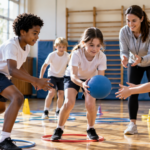





Students in three Ecuadorian schools generally rated a five-day coastal environmental education programme positively, especially its games.
What researchers studied
The study surveyed 185 pupils aged 12 to 17 in three schools in Manta, Ecuador, after the LemonSea Ecuador programme.
The five-day experience brought questions about familiar urban coastal pollution into classrooms through mapping, digital materials, experiments and games.
Rather than measuring environmental outcomes, researchers asked pupils about perceptions of experiential learning, collaboration and game-based activities.
An expert-reviewed questionnaire included activity preferences and an open-ended explanation.
The team compared responses across age, gender and school and analysed written reasons for preferred activities.
What they found
Average ratings were favourable across the three learning dimensions, with games receiving the strongest evaluations.
Students frequently selected Lemon Map, Lemon Oil and Lemon Clean among preferred activities.
Their explanations referred to enjoyment and gaining knowledge about local environmental problems.
Exploratory comparisons indicated differences by school and higher ranks among older pupils.
The study did not find clear evidence of gender differences, while very small numbers in the non-binary group limited interpretation.
Missing responses reduced complete-dimension sample sizes to between 166 and 177.
What it means
The findings highlight the appeal of using nearby, recognisable environmental issues as material for school learning.
A familiar coastline can provide a concrete context for discussing pollution rather than relying exclusively on distant ecosystems.
Maps, practical activities and games may make an environmental issue easier for students to discuss and remember.
However, favourable ratings are evidence of student reception, not proof that environmental knowledge, behaviour or long-term achievement improved.
The research offers a local example for educators designing activities, not a universal effectiveness estimate.
Important limitation
This was a cross-sectional perception survey administered after a short programme.
There was no randomized comparison group or independently measured before-and-after learning outcome.
The three participating schools and one coastal city limit generalization to other places.
Unadjusted comparisons across age and schools may reflect other differences between participating pupils.
Self-reported enjoyment can be affected by social expectations and recent exposure to activities.
The researchers also noted missing questionnaire responses and very small numbers in one gender subgroup.
Source Information
Study: Student perceptions of a five-day LemonSea intervention bringing the urban coast into school in Ecuador
Authors: Patricia Henríquez-Coronel, Angel Torres-Toukoumidis, María Angélica Henríquez-Coronel and Juan-Pablo Trampuz
Journal / Source: Frontiers in Education
Published: 20 November 2026