








Plant diversity appears to become most valuable when grasslands face their harshest conditions. New research found that the productivity benefit of biodiversity became strongest during extreme drought in already dry grasslands, suggesting that ecological variety may provide a form of natural resilience when water becomes scarce.
Drought does not affect every plant in the same way.
One species may struggle as the soil dries. Another may have deeper roots, use water at a different time or continue growing under conditions that stop its neighbours.
Put enough different species together, and those differences can begin to matter.
A new global analysis published in Nature Ecology & Evolution has found that plant diversity provided its strongest boost to ecosystem productivity during extreme drought in more arid grasslands.
The result suggests something important about environmental resilience: biodiversity may become more useful precisely when conditions become more difficult.
Researchers compared 75 biodiversity experiments
The researchers combined data from 75 long-running biodiversity experiments involving grasslands and forests across different climates.
Some experiments had been operating for only two years. Others provided more than two decades of observations.
Rather than simply comparing diverse ecosystems with less diverse ones, the researchers examined how the productivity advantage associated with plant diversity changed as sites experienced drought, prolonged dry periods and extreme heat.
They also considered whether the underlying climate of an ecosystem mattered.
It did.
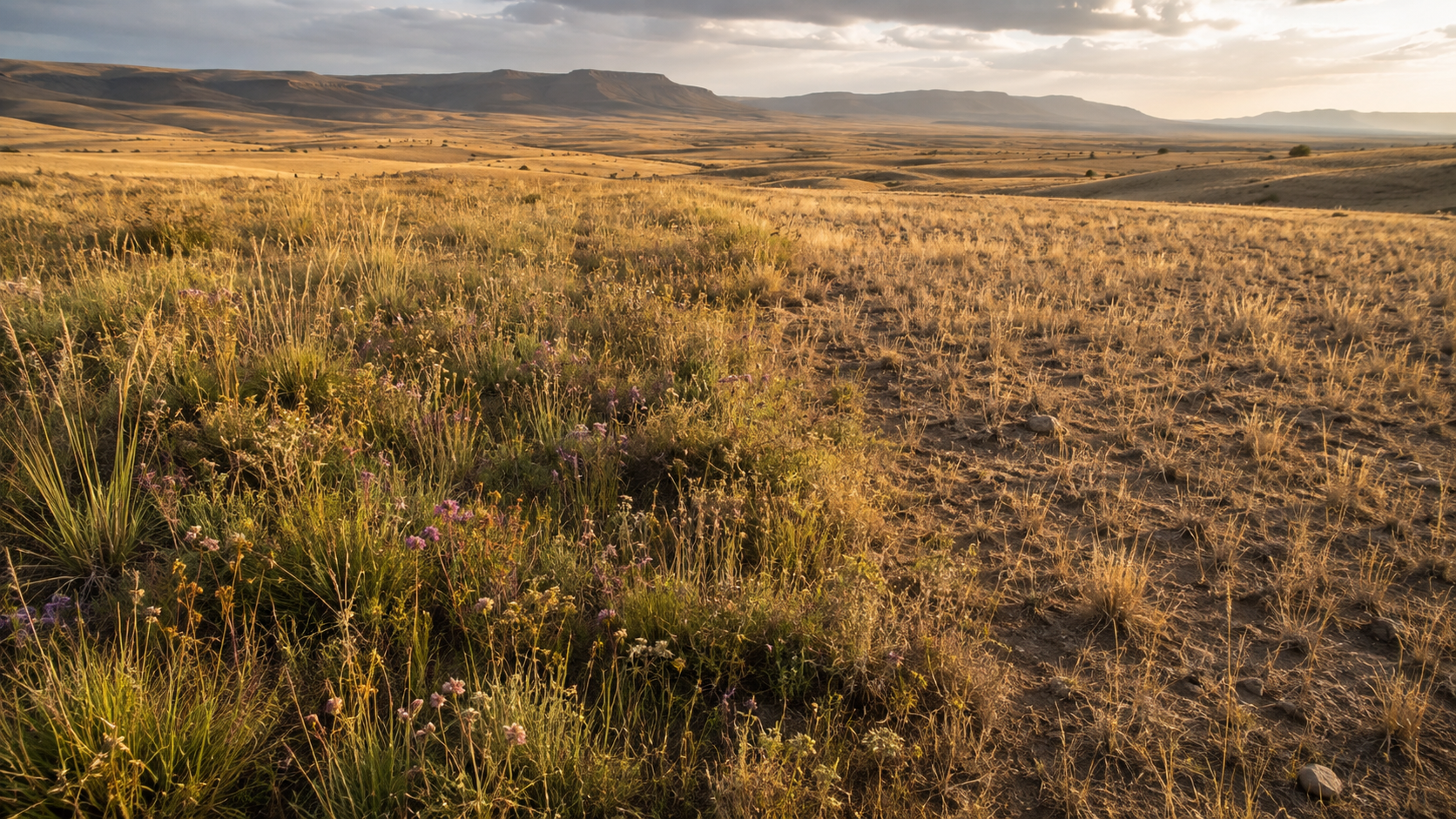
In grasslands that were already relatively dry, longer periods without rain strengthened the productivity benefit associated with having more plant species.
The same pattern was not clearly detected in forests.
Different plants can help a grassland use limited resources
The explanation appears to lie partly in what ecologists call complementarity.
Different plant species do not necessarily compete for water, nutrients and space in exactly the same way.
Some develop deeper roots. Others concentrate closer to the surface. Plants may grow at different times, tolerate different conditions or interact in ways that make resources available to neighbouring species.
A diverse grassland can therefore spread its ecological risk across plants with different strategies.
Under ordinary conditions, those differences may provide a modest advantage.
During severe drought, they can become considerably more useful.
The researchers found that these complementary effects became stronger as drought duration increased in more arid grasslands. In wetter grasslands, productivity was more likely to depend on the presence of particularly productive species.
That distinction matters because it suggests biodiversity does not protect every ecosystem through the same mechanism.
Heat alone did not produce the same pattern
The study also produced an important qualification.
Extreme heat did not create the same clear relationship between biodiversity and local environmental conditions.
The researchers found no consistent evidence that the productivity benefit of diversity changed with aridity when ecosystems experienced unusually hot conditions.
Soil nutrient conditions also did not significantly alter biodiversity’s effect during the climate extremes examined.
Water appears to be the more important constraint.
Extreme heat can certainly damage vegetation, particularly when high temperatures coincide with dry soils and strong atmospheric demand for moisture. But in this analysis, prolonged water shortage was where the relationship between diversity and grassland productivity became particularly visible.
This matters in South Africa’s grasslands
The finding has obvious relevance to South Africa, although it should not be treated as direct evidence about local grasslands.
South Africa’s Grassland Biome stretches across much of the central plateau and occurs in eight of the country’s nine provinces. It supports biodiversity, livestock production, agriculture and important water-producing landscapes.
These are not empty spaces between forests and farms.
Grasslands are functioning ecosystems, and the variety of plants within them can influence how those systems respond to environmental pressure.
South Africa is also giving greater attention to the condition of its rangelands. The Department of Forestry, Fisheries and the Environment used Desertification and Drought Day in June 2026 to emphasise the role of healthy rangelands in food security, water regulation, biodiversity conservation and climate adaptation.
The new research adds another reason to think carefully about what is lost when diverse grassland is simplified or degraded.
A landscape containing many plant species may have ecological options available to it that a less diverse landscape does not.
South African ecosystems were underrepresented
There is an important limitation before applying the findings locally.
Most of the grassland experiments included in the analysis were located in Europe and North America.
Asian grasslands, tropical grasslands, very dry ecosystems and Southern Hemisphere systems were poorly represented or absent.
That means researchers cannot simply assume that a South African Highveld grassland will respond exactly like an experimental grassland in Europe.
The forest evidence was also less extensive than the grassland data, which may partly explain why the researchers found weaker patterns there.
More experiments in African and Southern Hemisphere ecosystems are needed to determine how widely the relationship holds.
Biodiversity may be most valuable when conditions are worst
Conservation is often discussed in terms of how many species can be protected.
This study points towards another dimension.
Diversity can also affect how an ecosystem functions.
A grassland containing several species with different ecological strategies has more ways to respond when conditions change. Under severe drought, those differences may help vegetation continue producing biomass when individual species struggle.
That does not make diverse grasslands drought-proof.
It does suggest that simplifying them may remove some of the resilience they already possess.
As drought becomes a more important environmental pressure in dry regions, protecting biodiversity may therefore be about more than preserving what lives in a landscape.
It may also help preserve what that landscape can still do when the rain stops.
Source Information
Study Title: Biodiversity effects under climate extremes intensify with aridity in grasslands but not forests
Authors: Takehiro Sasaki et al.
Journal: Nature Ecology & Evolution
Published: 15 July 2026
DOI: 10.1038/s41559-026-03130-1