






A new way to look for an often hidden condition
High blood pressure can develop without obvious symptoms, leaving people unaware of a condition that increases their risk of stroke, heart disease and kidney damage.
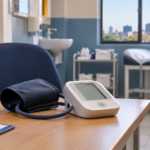
Conventional diagnosis still relies on validated cuff-based measurements, often repeated or taken over a full day.
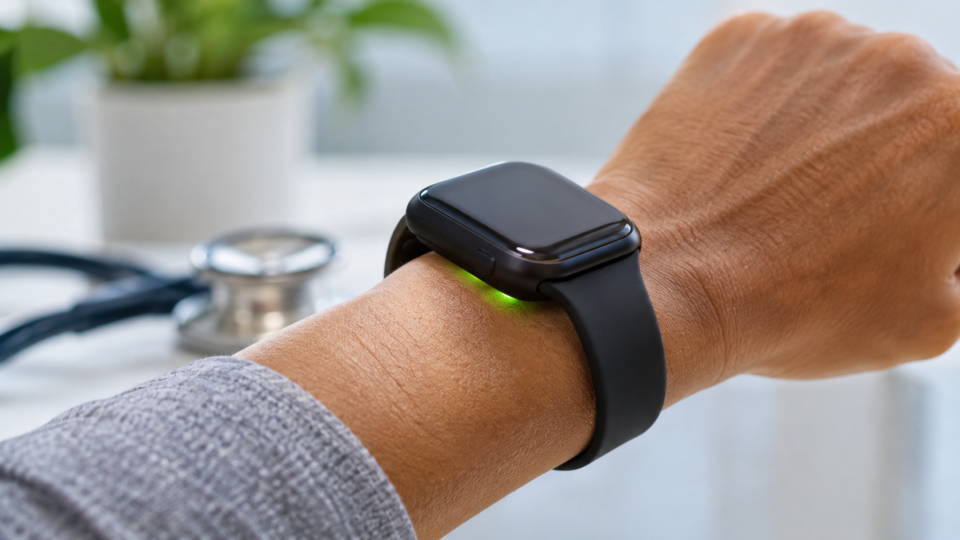
Researchers have now tested whether the light sensor and motion sensor in a consumer smartwatch could identify people who should seek those established measurements.
Their aim was not to replace a blood-pressure cuff or produce an exact pressure reading.
It was to provide an opportunistic signal that someone might have hypertension while wearing an ordinary device in daily life.
What the researchers reported
A Nature paper published on 5 November 2026 describes a prospective, multicentre validation study involving 196 participants who did not have known cardiovascular disease and were not taking antihypertensive medication.
The research team included scientists at Google Research and clinical collaborators.
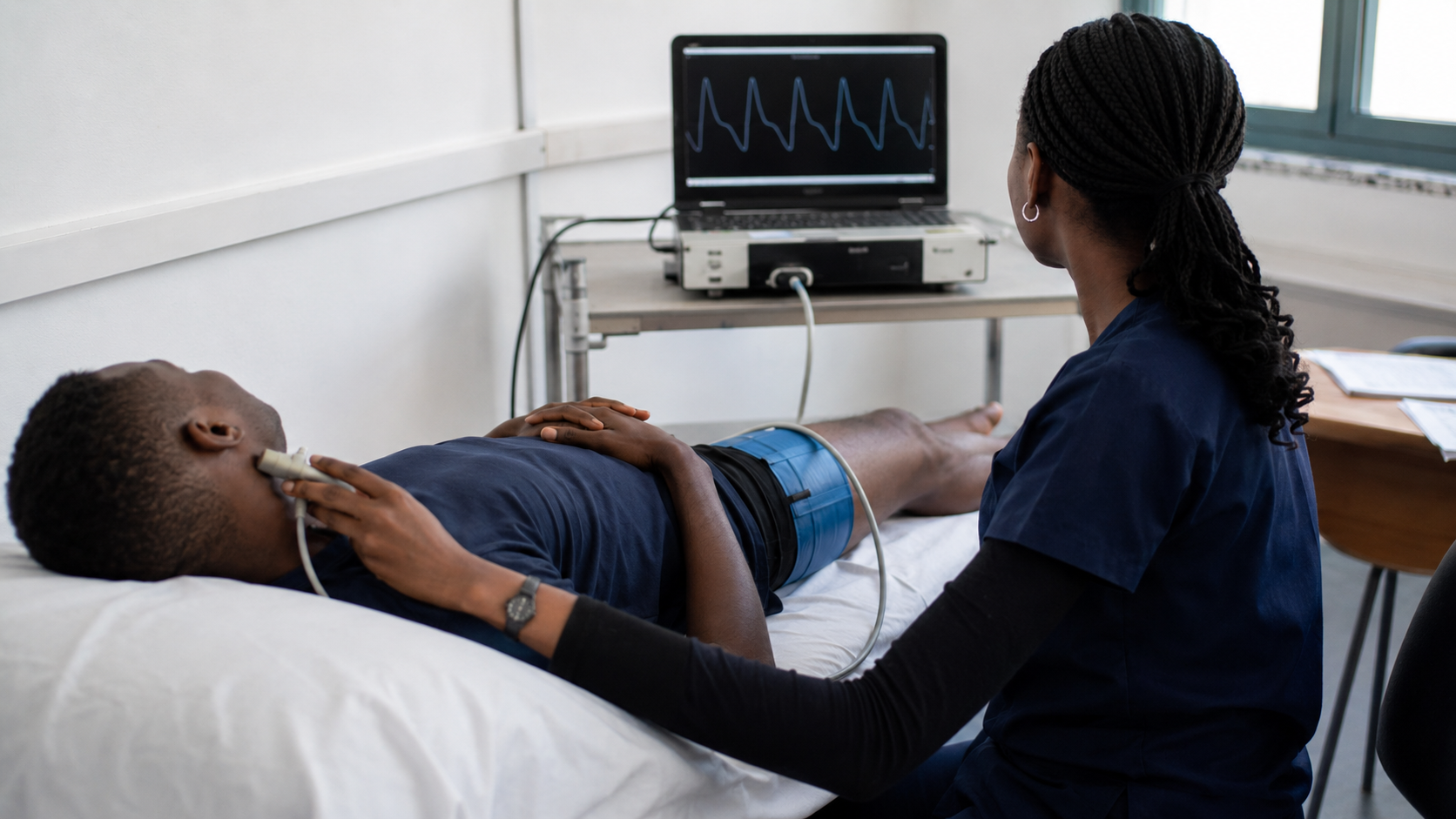
They compared a smartwatch algorithm with 24-hour ambulatory blood-pressure monitoring, a reference method that takes repeated cuff readings across everyday activities and sleep.
The algorithm analysed photoplethysmography, which measures light-related changes associated with blood volume at the wrist, together with accelerometer information about movement.
It did not require individual cuff calibration.
Why the sensors are relevant
Photoplethysmography, often abbreviated PPG, is already widely used in wrist-worn devices to estimate pulse and related physiological signals.
It works by illuminating tissue and measuring changes in reflected or transmitted light.
Those changes are influenced by the circulation, although they are not equivalent to a direct pressure measurement.
Movement matters because activity and contact between a watch and skin can alter the optical signal.
Combining the light waveform with accelerometer data may help an algorithm interpret patterns that are difficult to evaluate from either sensor alone.
The study therefore concerns pattern recognition in physiological signals, not a miniature conventional pressure gauge.
The seven-day test
Participants wore the device during seven days of real-world monitoring.
The researchers then assessed whether the algorithm could identify hypertension defined against ambulatory cuff monitoring.
This matters because a single office reading can be affected by temporary circumstances, and blood pressure changes through the day.
The reference standard was designed to provide a more complete picture than one isolated measurement.
The study also compared performance with initial office blood-pressure screening.
It was a validation exercise, not a randomised trial of whether watch alerts prevent strokes or lead to better treatment adherence.
The key performance figures
The smartwatch approach achieved a reported sensitivity of 65.8%, with a 95% confidence interval from 54.0% to 76.3%.
Sensitivity describes the proportion of people with hypertension who were correctly identified.
The specificity was 90.0%, with a 95% confidence interval from 83.2% to 94.7%, describing the proportion without hypertension who were correctly classified.
The reported positive predictive value was 80.6%, with a 95% confidence interval from 68.6% to 89.6%.
These figures are encouraging for a screening signal, but they also show that the system missed a substantial share of cases.
How it compared with office screening
In the same study, initial office screening had sensitivity of 55.3%, specificity of 90.0% and positive predictive value of 77.8%.
On the reported point estimates, the watch algorithm identified a larger proportion of people with hypertension while matching the office screen’s specificity.
However, readers should not interpret those percentages as proof that a watch is superior to every clinical screening pathway.
The comparison was with initial office screening in this particular study, not with repeated guideline-based assessment.
Confidence intervals also show uncertainty, and clinical practice involves far more than one classification decision.
What sensitivity means in practice
Imagine one hundred people who truly have hypertension under the study’s reference definition. A sensitivity near 66% suggests that roughly two-thirds might be flagged, while about one-third could be missed.
That is a simplified illustration rather than the actual study count, but it captures an important risk. A person should not treat a reassuring watch result as evidence that their blood pressure is normal.
Conversely, an alert does not itself diagnose hypertension.
Screening works best when positive signals lead to reliable confirmation and when people understand that a negative result cannot exclude the condition.
Why positive predictive value changes
The reported positive predictive value describes the proportion of watch-positive participants who truly had hypertension in the study sample.
It depends not only on sensitivity and specificity but also on how common hypertension is among the people being screened.
In a population where hypertension is rarer, a larger share of alerts could be false positives even if the device’s technical performance remains similar.
In higher-risk populations, the predictive value could be different again.
It would therefore be misleading to promise that four out of five alerts are correct for every age group, country or smartwatch user.
Potential benefits for prevention
A watch is worn in circumstances where a person would not normally visit a clinic.
That creates an opportunity to prompt an otherwise healthy-feeling individual to arrange a proper blood-pressure assessment.
If the signal is accurate enough and the follow-up pathway is accessible, some undiagnosed cases might be found earlier.
The possible benefit lies in the connection between a low-friction alert and a reliable health service.
The study does not establish how many additional diagnoses, treatment starts or prevented cardiovascular events would occur if the algorithm were deployed at scale.
The clinical boundary
A cuff remains essential for diagnosis and clinical decisions. A clinician may consider repeat office readings, home measurements or ambulatory monitoring, along with symptoms, medication, medical history and cardiovascular risk. A smartwatch alert should be viewed as a reason to check, not as a prescription or a substitute for consultation.
Similarly, a lack of alerts is not a reason to stop routine screening.
People who have symptoms requiring urgent medical attention should not wait for a wearable to detect a problem.
These boundaries are particularly important because the study specifically excluded people with known cardiovascular disease or antihypertensive medication.
What remains uncertain
The sample included 196 people, which is useful for initial prospective validation but not enough to settle performance across every population.
Real-world accuracy could vary with device model, wrist fit, movement patterns, skin characteristics, age, coexisting illness and medication use.
The abstract reports aggregate performance rather than establishing that every subgroup benefits equally.
Researchers would need larger independent studies, transparent subgroup assessments and evidence of reliable clinical follow-up before making broad public-health claims.
The seven-day monitoring period also does not tell us whether performance remains stable over months or years.
Relevance for South Africa
Hypertension screening is relevant wherever people may live for years without recognising elevated blood pressure.
In South Africa, an opportunistic watch alert could complement existing services for people who already own compatible devices, but access to wearables is unequal.
An intervention that reaches mainly affluent users may leave high-risk underserved communities untouched.
Clinical access after an alert also matters: a signal has limited value if the person cannot obtain confirmation or treatment.
Research Today has separately reported on AI-supported eye screening, illustrating how technology must be evaluated alongside the healthcare pathway in which it operates.
Other lessons from digital health
A useful distinction is between detecting a statistical pattern and improving a patient’s health.
The first can be measured through sensitivity and specificity against a reference standard.
The second requires evidence about behaviour, access, diagnosis, treatment and ultimately clinical outcomes.
For context, Research Today has covered AI models that improved detection while increasing false alarms.
The same general trade-off is relevant here: alerts can help identify risk, but excessive false reassurance or unnecessary follow-up can undermine their value.
Evaluation must consider both kinds of error.
What a stronger next study would test
A larger study could recruit participants across multiple countries and deliberately include people with a broader range of cardiovascular risk, skin tones and daily activities.
It could compare watch-guided screening with existing community screening pathways, assess how often people act on alerts, and measure confirmed new diagnoses.
Longer follow-up could determine whether screening changes blood-pressure control and cardiovascular outcomes.
Researchers could also evaluate how users interpret negative results and whether repeated notifications cause anxiety or alert fatigue.
These questions would help translate an algorithmic performance result into evidence about practical health benefit.
The significance of the finding
The study suggests that familiar consumer sensors contain more clinically useful information than a pulse reading alone.
Combining optical and motion signals with machine learning produced a hypertension screening signal that compared favourably with a single initial office screen in this validation sample.
Yet the accuracy is imperfect, the participants were selected, and the system has not been shown to replace established diagnostic methods.
Its most plausible role is to encourage confirmatory cuff-based assessment among people who might otherwise remain unaware of risk.
Whether that opportunity translates into better population health remains a question for future trials.
A cautious conclusion
Consumer smartwatches could become another route into blood-pressure screening, especially when they encourage people to seek proper assessment.
The reported 65.8% sensitivity and 90.0% specificity are meaningful findings, not a guarantee that the watch can diagnose or rule out hypertension.
The strongest interpretation is that a promising screening approach has been prospectively evaluated against ambulatory monitoring in 196 people.
For patients, clinicians and policymakers, the next step is to test whether the alerts are fair, understandable, actionable and ultimately beneficial outside the research setting.
Until then, cuff measurements remain central.
Source Information
Study title: Opportunistically Detecting Signs of Hypertension on a Consumer Smartwatch
Authors: Paolo Di Achille, Lawrence Cai, Jiang Wu, Mingwu Gao, Bhavna Daryani, Jonathan Wang, Utkarsh Khanna, Ho Ko, Anupam Pathak, Mark Malhotra, Shwetak Patel, Jacqueline B. Shreibati, Stephen P. Juraschek, Pramod Rudrapatna, Matthew Thompson, and Ming-Zher Poh
Journal: Nature
Publication date: 5 November 2026
Study design: Prospective multicentre diagnostic-validation study against 24-hour ambulatory blood-pressure monitoring
Sample or scope: 196 participants without known cardiovascular disease or antihypertensive medication; seven days of real-world smartwatch monitoring
Key finding: Watch algorithm sensitivity 65.8%, specificity 90.0% and positive predictive value 80.6% for hypertension detection against ambulatory monitoring