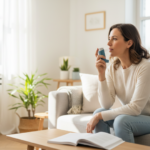
A five-minute daily reflection exercise may strengthen how confidently people believe they can cope with difficult experiences. In a small German randomised trial, university students who reflected on six emotional resources reported a larger increase in what researchers call flexibility mindset than students assigned a neutral daily question.
The difference remained evident two weeks after the three-week programme ended. But the study did not show that the exercise reduced anxiety, stress or depressive symptoms more than the comparison activity, making the distinction between confidence about coping and actual mental health outcomes essential.
Published on 12 October 2026 in Frontiers in Psychology, the experiment involved 44 university students. Its findings offer preliminary evidence that coping-related beliefs can change, while leaving questions about durability, clinical benefit and the ingredients of the exercise unanswered.
What is a flexibility mindset?
A flexibility mindset refers to the belief that a person can and will find a way to manage a difficult situation. It combines confidence, realistic optimism and a willingness to respond to challenges rather than give up when one approach fails.
This differs from assuming that one coping technique always works. A useful response to a difficult examination might be to make a study plan, while coping with bereavement or an uncontrollable event may require acceptance, connection or a different form of support.
Researchers distinguish this motivational belief from regulatory flexibility, the broader ability to read a situation, choose among coping responses and monitor whether the chosen approach is working. Feeling able to adapt is not identical to demonstrating that ability in real life.
The new trial therefore measured self-reported flexibility mindset, not objective coping performance during a crisis. That narrower outcome matters when interpreting the promising result.
How the randomised experiment worked
Researchers recruited 44 German university students aged 18 to 35. Recruitment used social media, university participation systems and personal referrals, and people reporting neurological or psychiatric disorders were excluded.
After a baseline questionnaire, automated randomisation allocated 23 students to the emotion-focused intervention and 21 to an active control group. Participants were not told which of the two assignments was considered the intervention.
Both groups were asked to complete daily reflections for three weeks. Assessments took place before the exercises, immediately afterward and again two weeks later, providing a short window to test whether any changes persisted.
The intervention group received six prompts each day. They were encouraged to recall personal experiences of authentic pride, awe, flow, gratitude, relaxation and vicarious joy, then pay attention to the feelings and bodily sensations connected with those memories.
Each emotion was to be experienced consciously for at least 15 seconds. The researchers estimated that the full set of questions would take around five minutes, although they did not record how long participants actually spent.
The active control group answered one neutral question each day about the places they had visited. This provided a comparison involving regular self-reflection, but it did not match the six-question exercise for length, emotional focus or effort.
All 44 students completed the immediate post-intervention assessment, although one intervention participant had a missing flexibility-mindset score at that point. At the two-week follow-up, 22 intervention students and 20 control students remained.
The researchers retained available observations from all 44 randomised participants in their main mixed-effects models. That approach helps avoid discarding a person's earlier responses simply because one later assessment is missing.
The main result: a larger increase in coping confidence
The emotion-focused group showed a statistically significant rise in flexibility mindset relative to the neutral-reflection group. The overall group-by-time interaction was F(2, 81.64) = 5.19, with p = 0.008.
The intervention group's model-estimated average score rose from 28.43 at baseline to 32.41 after three weeks and 33.03 at follow-up. The active control group's corresponding averages were 30.29, 28.71 and 29.98.
These values came from a six-item scale in which participants rated their responses to a difficult personal event. Higher scores indicated stronger beliefs about being able to handle adversity, not necessarily better outcomes when facing it.
Within the intervention group, the estimated increase from baseline to the end of the programme was 3.97 points. The 95% confidence interval ranged from 1.36 to 6.59, and the adjusted p-value was 0.007.
From baseline to the two-week follow-up, the increase was 4.60 points, with a 95% confidence interval of 1.99 to 7.21 and p = 0.002. No statistically significant change was detected in the control group at either interval.
The researchers reported within-group standardised effects of d = 0.91 immediately after the programme and d = 1.05 at follow-up. These effect sizes describe change within the intervention group, not the effect of the exercise compared with control.
How much greater was the change than in the control group?
The between-group comparison provides a more direct test of the intervention. From baseline to the end of the programme, the increase in flexibility mindset was 5.55 points greater in the emotion-focused group than in the control group.
The confidence interval for that difference ran from 1.80 to 9.30 points, with a Holm-adjusted p-value of 0.013. This comparison accounts for the fact that the two groups began with somewhat different average scores.
At the two-week follow-up, the between-group difference in change was 4.90 points. Its confidence interval was 1.12 to 8.68 points, with an adjusted p-value of 0.023.
The group-by-time finding remained statistically significant when the models also accounted for age and gender. A sensitivity analysis correcting across six outcome interactions produced an adjusted p-value of 0.045 in the full sample.
However, that more conservative significance result was not stable across every analysis that removed one participant at a time. With only 44 students, small changes in the data can matter, even when the main result looks substantial.
Positive feelings were associated with flexibility mindset
The researchers also examined whether people with higher flexibility-mindset scores reported more positive emotions. Across both randomised groups, higher scores were associated with greater positive affect after accounting for baseline measures and assignment.
Immediately after the programme, the adjusted association was b = 0.055, with a 95% confidence interval from 0.009 to 0.101 and a Holm-adjusted p-value of 0.021. The corresponding regression included 43 participants.
At follow-up, the association was b = 0.063, with a confidence interval from 0.020 to 0.106 and adjusted p = 0.010. The follow-up model included 42 participants.
The full regression models explained 22% of variation in positive affect at the first assessment and 36% at follow-up. Those percentages describe the complete models, not the unique contribution of flexibility mindset alone.
The associations were measured at the same time as the emotional outcomes. They cannot establish whether greater coping confidence produced positive feelings, whether positive feelings supported coping confidence, or whether both reflected other factors.
Mental health symptoms fell in both groups
The study also tracked self-reported depressive symptoms, anxiety and stress. All three declined over the study period when researchers analysed changes common to both groups, but the experiment did not establish an extra benefit of the emotion-focused exercise for those symptoms.
Across both groups, the estimated reduction in depressive symptoms from baseline to follow-up was 1.70 points. The confidence interval was 0.65 to 2.76, and the adjusted p-value for that comparison was 0.005.
Anxiety scores fell by an estimated 2.52 points from baseline to follow-up across conditions. The confidence interval was 1.53 to 3.50, with p below 0.001 after the reported adjustment.
Stress scores fell by an estimated 2.59 points over the same interval. The confidence interval was 1.32 to 3.85, also with p below 0.001.
Importantly, tests comparing the two groups' symptom trajectories did not show statistically significant differences. The reported interaction p-values for depressive symptoms, anxiety, stress and negative affect were all at least 0.117.
Negative affect, a separate measure of unpleasant emotional states, also showed no statistically significant overall time effect after correction. Its adjusted p-value was 0.131.
The decline in symptoms could reflect daily reflection shared by both groups, changes during the university term, statistical variation or other influences. Without a no-activity comparison, the study cannot attribute those improvements to either exercise.
Why the six emotional resources were selected
The programme drew on the idea that useful coping is supported by a range of emotional experiences, rather than constant positivity. Pride may reinforce a sense of personal effectiveness, while awe can broaden perspective when daily problems feel overwhelming.
Flow refers to becoming deeply engaged in an activity. Gratitude encourages attention to valued experiences, relaxation offers moments of calm, and vicarious joy involves sharing in another person's happiness.
The combination was intended to balance confidence and striving with acceptance and social connection. A person facing a setback may benefit from remembering a previous achievement without pretending that every difficulty can be controlled.
The researchers did not directly measure whether the six targeted emotions increased during the intervention. They therefore cannot identify which emotional resource, if any, was responsible for the observed change in mindset.
A related Research Today report on helping others and health examined a different question in older adults. Neither study establishes that one particular positive emotion is a universal treatment.
What the findings could mean in practice
A short exercise that can be completed at home or on a phone may appeal to universities and workplaces looking for accessible ways to support psychological resources. The trial offers an initial reason to test whether daily reflection can influence beliefs about coping.
It does not yet justify claims that the programme prevents mental illness, improves clinical recovery or makes people objectively more resilient. Those outcomes were not established by this experiment.
The comparison with a neutral daily question is useful because both groups had a structured task. Still, six emotionally engaging prompts are not equivalent to one simple memory prompt, so the study cannot isolate the effect of emotional content from additional attention and effort.
Any practical programme would need to consider whether people find the exercises helpful, burdensome or emotionally uncomfortable. Remembering a difficult life event, as participants did during assessment, may not feel equally manageable for everyone.
The findings are better understood as an early test of a motivational idea than as a recommendation to replace counselling or established care. Professional support remains important when someone faces persistent or severe psychological distress.
Important limitations of the study
The sample was small and consisted of German university students, many of them women. The findings may not generalise to older adults, people with clinical diagnoses, other cultures or individuals experiencing severe adversity.
The trial was not prospectively registered, and its outcome hierarchy and analysis plan were not fixed in a public record before data collection. This increases the importance of independent replication, particularly when several outcomes and comparisons are tested.
Participants' daily completion of the exercises was not systematically monitored. Researchers therefore could not establish how many sessions people completed or whether greater adherence was associated with larger improvements.
All outcomes were self-reported. The German version of the event-specific flexibility-mindset scale had acceptable internal consistency in this sample, but it had not undergone a separate independent validation study before use.
Participants were asked to recall a difficult personal experience at each assessment. The researchers did not confirm that they used the same experience each time, so changes in the event being considered may have influenced their responses.
The intervention and control conditions differed in the number and complexity of prompts. More time spent reflecting, stronger expectations or greater emotional engagement could have contributed to the observed differences.
Follow-up lasted only two weeks beyond the three-week programme. A significant effect at that point does not show that coping beliefs remain stronger over months or years, or that they translate into better decisions under pressure.
The researchers also disclosed a relevant commercial connection: Dirk W. Eilert founded an academy that provides training including the intervention, and co-author Philipp Mensah works there. The disclosure does not invalidate the results, but it reinforces the value of independent testing.
What researchers need to test next
A larger preregistered trial could compare the six-emotion exercise with a control activity matched for duration, number of prompts and level of attention. That design would better separate emotional content from the general effects of spending more time reflecting.
Recording adherence would allow researchers to determine whether the exercise was actually performed as prescribed. Measuring pride, awe, flow, gratitude, relaxation and vicarious joy directly could help identify which experiences changed.
Longer follow-up would show whether improvements persist without continued practice. Researchers could also test behavioural coping, decision-making during stressful tasks and responses to real-life challenges instead of relying only on questionnaires.
The most defensible conclusion is narrow but interesting: in a 44-student randomised trial, daily emotion-focused reflection produced larger gains in self-reported flexibility mindset than a neutral daily question. Whether those gains become lasting, practical resilience remains untested.
Source Information
Original study: Enhancing flexibility mindset: a randomized controlled trial using daily emotion-focused self-reflection
Authors: Dirk W. Eilert, Lola-Gia Schaper, Frauke Meyer, Anne Weigand, Philipp Mensah, Austin Barkhorn and George A. Bonanno
Journal: Frontiers in Psychology, volume 17, Emotion Science
Publication date: 12 October 2026
Study design: Randomised controlled longitudinal trial with an active control group
Sample: 44 German university students, 23 intervention and 21 active control
Intervention: Three weeks of daily emotion-focused reflection, with a two-week follow-up
Data collection: November 2025 to January 2026
Conflict of interest: One author founded, and another is employed by, an academy offering training that includes the intervention