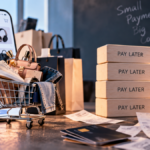
Buy now, pay later services promise a simple bargain: take a product home today and divide the bill into smaller instalments. A new study suggests the most important risk signal may not be how often consumers use them.
Among 708 active users, people reporting greater financial anxiety were more likely to describe repayment problems and spending on non-essential purchases. Anxiety was not significantly associated with how frequently they used the payment method.
That distinction matters because transaction volume is an easy measure for lenders to track. Whether customers pay reliably, and what they use credit to buy, may tell a more consequential story.
The findings appeared on 12 October 2026 in Frontiers in Psychology. Researchers Chenchen Ma, Mei Ge, Mingqiu Gu and Ziran Ding analysed survey responses from 890 adults, including 182 who did not use the payment option.
The study is observational, not an experiment. It cannot establish that anxiety causes missed payments, that digital credit causes anxiety, or that changing an app design would prevent default.
Nevertheless, the results offer a detailed view of a consumer-finance problem often reduced to whether people understand interest rates and repayment schedules.
Different kinds of credit risk
Buy now, pay later, or BNPL, allows shoppers to spread purchases across scheduled payments. Depending on the provider and terms, late payment can bring additional costs or collection consequences.
Using the service frequently is not necessarily evidence of distress. A customer may pay every instalment on time, while someone making fewer purchases may already be struggling with obligations.
The researchers separated four dimensions of behaviour: frequency of use, dependence on the payment method, use for non-essential consumption and repayment problems.
This approach avoids treating every instalment purchase as equally risky. It also recognises that payment habits can look similar on the surface while reflecting very different circumstances.
Financial anxiety was defined as worry and distress about personal finances, rather than a clinical anxiety diagnosis. The survey assessed it with six questions on a five-point response scale.
Another six questions assessed a tendency to make impulsive purchases. That measure concerns a reported disposition to buy spontaneously, not an independently observed moment of lost self-control.
The researchers also tested basic financial knowledge with three questions covering compound interest, inflation and investment diversification. These are useful concepts, but they do not cover every aspect of digital credit.
The separate measures allowed the team to ask whether worry was associated with general use, problematic outcomes or both, and whether impulsivity and financial knowledge altered those associations.
How the research was conducted
The researchers received 950 initial online survey responses and retained 890 after consent, attention, response-time, missing-data and other quality checks. The reported retention rate was 93.68%.
Of those retained responses, 708 came from active BNPL users and 182 from non-users. Most detailed repayment and purchasing analyses were restricted to the active users.
The sample was relatively young. There were 298 respondents aged 18 to 25 and another 266 aged 26 to 30. Together, these groups represented 63.37% of participants.
Women accounted for 446 responses, men for 422, and 22 participants preferred not to disclose their gender. The sample included students, employed adults, freelancers and people without work.
Participants reported their own payment habits and financial feelings. Researchers did not independently match responses to bank statements, credit bureau records or verified missed-payment histories.
Financial anxiety averaged 3.13 out of five among active users, with a standard deviation of 0.84. Impulsive buying tendency averaged 3.08, with a standard deviation of 0.83.
On the three-question financial knowledge test, active users averaged 1.65 correct answers. Correct-answer rates were 63.1% for compound interest, 53.0% for inflation and 48.4% for diversification.
The models controlled for gender, age, education, occupation and income. The researchers used linear and logistic regression, mediation analysis, bootstrap resampling and robustness checks.
These adjustments help distinguish the measured relationships from some demographic differences. They do not remove all confounding factors or turn a one-time survey into causal evidence.
Anxiety did not predict more frequent use
The most striking negative result concerned usage frequency. Among active users, financial anxiety had an almost zero simple correlation with frequency, reported as less than 0.001 with p = 0.995.
After demographic adjustment, the coefficient linking anxiety to usage frequency was 0.004, with p = 0.924. This provided no statistically significant evidence of an association.
Dependence on BNPL for a larger share of spending was similarly unconvincing. The adjusted coefficient was 0.041, with p = 0.306, also above conventional significance thresholds.
These results contradict the assumption that financially anxious people necessarily use instalment payments more often. A single measure of usage can miss important differences.
The researchers did find that users and non-users differed in reported anxiety, with a statistically significant group comparison. That difference alone does not show which came first.
People worried about money might seek instalment credit. Equally, managing multiple future payments could contribute to worry, or both might reflect a third factor.
The stronger contribution lies in distinguishing everyday use from specific repayment and spending patterns rather than portraying the payment product itself as uniformly harmful.
Repayment problems followed a different pattern
Financial anxiety was positively associated with the survey delinquency measure. In the adjusted regression, the unstandardised coefficient was 0.146, with p < 0.001.
The model initially explained 0.8% of variation in delinquency using demographic controls. Adding financial anxiety increased explained variation to 2.42%, an additional 1.62 percentage points.
That increase was statistically significant but small in practical terms. Anxiety was associated with repayment difficulties, yet it explained only a modest portion of differences between respondents.
A significant coefficient does not mean financial anxiety is a powerful standalone screening tool or a reliable way to predict an individual customer behaviour.
Simple correlations pointed in the same direction. Anxiety and delinquency had a correlation of 0.128, statistically significant but weak.
Financial anxiety and impulsive buying tendency showed a stronger positive correlation of 0.356. These self-reported characteristics tended to occur together in the surveyed group.
The outcome was a four-category self-reported delinquency scale, not a verified default rate. The coefficient cannot be translated into a percentage-point increase in real-world missed payments.
The researchers repeated key analyses using an ordered logistic model, which better reflects ranked delinquency categories. They reported that the broad direction of the findings remained consistent.
Non-essential purchases showed a clearer divide
The analysis examined whether instalment credit was used for essential purchases or for non-essential, pleasure-oriented spending. The distinction covered intended purchase purpose, not its price alone.
Financial anxiety was positively associated with the odds of choosing a non-essential spending scenario. The adjusted logistic model reported an odds ratio of 2.078, with p < 0.001.
An odds ratio of roughly two means modelled odds were about twice as high for each one-unit increase in the anxiety measure, holding the included demographic variables constant.
Odds are not the same as probability. The result does not mean anxious consumers are twice as likely to default, because this model concerned spending categories.
In the descriptive grouping, non-essential purchases accounted for 55.6% of the low-anxiety group allocation and 79.9% of the high-anxiety group allocation.
That was a difference of 24.3 percentage points. It is an observed contrast within the survey, not evidence that reducing anxiety would produce an equally large change.
Modelled probabilities told a related story. Across the anxiety scale from one to five, the estimated probability of a non-essential purchase scenario rose from 0.47 to 0.90.
The corresponding predicted delinquency score increased from 1.62 to 2.21. This is a scale score, not a percentage of customers becoming overdue.
One possible explanation is that buying desirable items can provide short-term relief when someone feels financially insecure. Researchers discuss this interpretation but did not directly test it.
An alternative is that people with particular purchasing habits, financial obligations or other unmeasured circumstances report more anxiety. The cross-sectional data cannot separate these possibilities.
The role of impulsive buying
The team investigated whether impulsive buying tendency statistically connected financial anxiety with repayment problems. Its mediation analysis used 5,000 bootstrap resamples to assess the indirect association.
The estimated total association between anxiety and delinquency was 0.1474. Of that amount, the indirect path through impulsive buying tendency was estimated at 0.0335.
That indirect component represented 22.73% of the modelled total association. Its 95% bootstrap confidence interval ran from 0.0027 to 0.0666, excluding zero.
The direct association remained statistically significant after including impulsive buying tendency. Its coefficient was 0.1139, with p = 0.013.
These figures support a statistical pattern in which anxiety, impulsive buying and repayment problems overlap. They do not demonstrate that anxiety changes personality and subsequently causes default.
Impulsive buying tendency was measured as a trait, or relatively enduring inclination. The study did not measure moment-by-moment emotional states at checkout.
The researchers discuss depleted self-control as a possible explanation, but they did not directly test that process. It would be premature to describe the proposed pathway as established fact.
Future work could follow consumers over time or observe purchase decisions under different conditions. That would help test whether changes in stress precede changes in payment behaviour.
Financial knowledge was not a clear buffer
Financial education is often presented as an answer to costly borrowing. This study asked a narrower question: did stronger basic knowledge weaken the link between impulsive buying and repayment problems?
The interaction coefficient was negative, at -0.024, but statistically non-significant, with p = 0.611. The researchers found no convincing evidence of the proposed moderating effect.
That does not mean financial literacy is useless. The three-question test measured broad concepts, not understanding of specific BNPL contracts, fees, due dates or repayment consequences.
Nor does a non-significant interaction prove education cannot help consumers. It means this dataset did not demonstrate that the measured knowledge score altered this particular association.
In simple correlation analysis, financial literacy was weakly negatively related to delinquency, with r = -0.089. That association was small and should not be overstated.
The study examined 332 respondents reporting monthly income below 5,000 renminbi. In that subgroup, the direct anxiety-delinquency coefficient was not statistically significant.
Specifically, the restricted-sample coefficient was 0.077, with p = 0.224. The financial literacy interaction also remained non-significant, with p = 0.572.
This result complicates claims that anxiety explains repayment problems equally across income groups. Material shortages and unmeasured financial pressures may matter differently for people with fewer resources.
Further comparisons of students and employed respondents suggested similar model pathways. The survey still cannot establish that relationships generalise to every population or payment market.
What the findings could mean
For lenders, the results suggest monitoring transaction frequency alone may be inadequate. A customer who rarely uses instalment credit can still have difficulty meeting repayment dates.
Repayment history, affordability, overlapping obligations and clear information about upcoming payments remain relevant indicators. The study does not validate a commercial risk-scoring model.
The authors propose adding pauses, deliberate confirmation steps and clearer information to digital checkout experiences. These are potential interventions, not tested solutions in this research.
Using psychological signals in credit decisions would raise questions about privacy, fairness and whether distressed customers could be penalised. The paper does not resolve those governance questions.
For consumers, the distinction is between making a purchase affordable and merely making its first payment smaller. Instalments do not reduce the total price of an item.
A useful personal check is whether every future instalment can be met from expected income after essentials and existing obligations. That matters whether a purchase is necessary or discretionary.
Buying while stressed may be worth reconsidering, although this study does not prove that waiting would change an outcome.
The findings are relevant to South Africa digital retail and credit as a question for local testing. They should not be treated as estimates of South African consumer behaviour.
Local researchers would need verified repayment data, representative samples and information about domestic product terms before drawing conclusions about risk in the South African market.
Important limitations
The research relied on a single online survey, so the order of events remains unknown. Anxiety could contribute to debt problems, debt problems could increase anxiety, or both could reinforce each other.
Participants reported their own habits, and investigators did not independently verify repayment records. Memory errors, social desirability and different interpretations of questions could affect the measures.
The sample was not presented as a probability sample of all consumers. Its relatively young and educated composition limits how confidently results can be extended to older or less connected populations.
Although models adjusted for several demographic characteristics, they could not account for every influence. Sudden expenses, household support, existing debts and mental health conditions may shape outcomes.
Statistical mediation cannot establish a causal chain when the proposed predictor, mediator and outcome are measured at the same time. The authors acknowledge this limitation.
The narrow financial literacy measure is another concern. Knowing answers to three questions does not necessarily capture the ability to compare BNPL terms or manage multiple due dates.
Some statistically significant relationships were small. The increase in explained delinquency variation after adding anxiety was only 1.62 percentage points, leaving most variation unexplained.
A stronger next step would combine representative longitudinal surveys with verified payment records and carefully evaluated checkout interventions. That could reveal whether particular design choices reduce harm.
The evidence supports a precise conclusion: among surveyed BNPL users, financial anxiety aligned more closely with non-essential spending and repayment difficulties than with frequency of use.
Consumer credit risk cannot be understood from transaction counts or knowledge scores alone, and associations in a survey should not be mistaken for proof of cause.
Source Information
Study title: The psychology of digital credit: the association of financial anxiety and impulsive traits with “buy now, pay later” delinquency
Authors: Chenchen Ma, Mei Ge, Mingqiu Gu and Ziran Ding
Journal: Frontiers in Psychology, Personality and Social Psychology section
Publication date: 12 October 2026
Study design: Cross-sectional online survey with adjusted regressions, mediation analysis and robustness checks
Sample: 890 valid respondents, including 708 active BNPL users and 182 non-users
Research context: Digital credit and BNPL consumer behaviour
Original DOI: 10.3389/fpsyg.2026.1950938
Funding: Authors reported no financial support
Conflict of interest: Authors declared no commercial or financial conflicts