

A laboratory-made activated carbon combining banana peel and olive-processing waste removed more than 97% of four test dyes under optimised conditions.
Its effectiveness fell substantially during repeated reuse, however.
What researchers studied
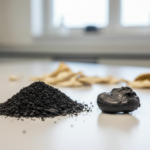
Researchers at the University of Balamand in Lebanon developed a hybrid activated carbon using two agricultural by-products: banana peel and olive pomace.
Activated carbon can bind dissolved contaminants to its surface, a process known as adsorption.
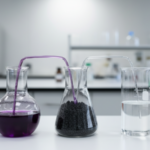
The team tested four chemically different model dyes: methylene blue, methyl orange, crystal violet and Eriochrome Black T.
They examined how dosage, acidity and contact time affected removal, then studied adsorption capacity, model fit and regeneration.
The work was a controlled laboratory materials experiment, not a field trial at an industrial wastewater treatment plant.
The researchers also compared the hybrid with activated carbons made from the individual agricultural materials.
What they found
At a dosage of 12 grams per litre and pH 2, the hybrid removed 97.71% of methylene blue, 98.41% of methyl orange, 98.70% of crystal violet and 98.95% of Eriochrome Black T under the reported test conditions.
Measured maximum adsorption capacities differed by dye: 130.34 milligrams per gram for methyl orange, 99.70 for methylene blue, 112.42 for crystal violet and 114.52 for Eriochrome Black T.
Combining the feedstocks improved capacity for some dyes compared with the individual carbons.
The material could be regenerated and used across ten cycles, but by that stage dye removal had fallen to approximately 42%–56%.
This deterioration matters when considering operational cost and waste generation.
What it means
The research demonstrates one route for converting food and agricultural residues into a potentially useful water-treatment material.
Testing several dye structures is helpful because wastewater can contain contaminants with different chemical properties.
Yet the most effective reported conditions were strongly acidic.
Treatment systems would need to account for chemical consumption, water neutralisation and material recovery, rather than assuming laboratory removal percentages translate directly into practical savings.
A promising adsorbent must perform not only in a fresh laboratory test but also after many cycles, in mixed wastewater and at a scale that is financially and environmentally defensible.
Important limitation
The experiments used selected model dyes under controlled conditions, rather than complex real industrial effluent.
Other dissolved substances could compete for adsorption sites and change performance.
The large reduction in removal efficiency after regeneration also limits claims of long-term reusability.
Further testing is needed to establish industrial scalability, life-cycle impacts, safe handling and cost relative to existing treatment technologies.
Source Information
Study: Sustainable hybrid activated carbon from banana peel and olive pomace for efficient removal of structurally diverse dyes
Authors: Joseph Chalhoub; Cherine Saliba; Lena Inaty; Mantoura Nakad; Jean Claude Assaf
Journal / Source: Frontiers in Environmental Science
Published: 6 November 2026