




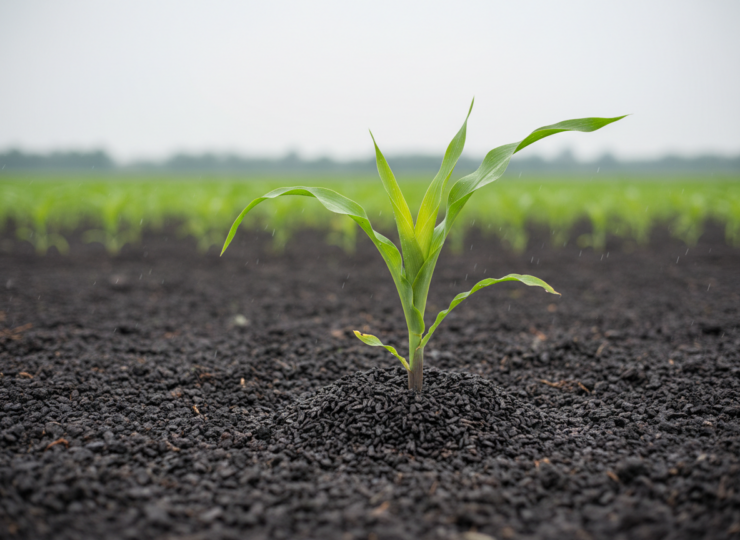



Medical education asks students to do more than remember facts. Future clinicians must connect information across subjects, question assumptions, transfer knowledge into unfamiliar cases and continue learning long after formal training ends. A new study suggests that two aspects of creative disposition, willingness to engage with challenge and curiosity, are particularly closely tied to those deeper approaches to learning.
Researchers surveyed 1,833 medical undergraduates at a medical university in Anhui Province, China. After excluding 225 incomplete or invalid questionnaires, 1,608 students remained in the analysis. The study, published in Scientific Reports on 27 September 2026, found that challenge and curiosity together emerged as the main creative-tendency predictors of deep learning after demographic characteristics were taken into account.
In the final hierarchical regression model, those two factors explained 15.3% of the variance in students’ deep learning scores. That does not mean curiosity and challenge caused deeper learning, because the study was cross-sectional. It does show that the way students approach uncertainty, exploration and difficult tasks may be meaningfully connected to how they process and apply academic knowledge.
Deep learning is more than studying harder
The term deep learning in this study refers to an educational approach, not artificial intelligence. It describes learning that involves understanding, integration, reflection and transfer rather than simply memorising material for an examination.
This distinction is especially important in medicine. A student may be able to reproduce a list of symptoms or mechanisms without being able to recognise how they interact in a patient whose presentation differs from a textbook example. Deep learning is intended to capture abilities that support movement from knowing information to using it intelligently.
The researchers highlighted several components of this broader capacity, including transfer learning, critical thinking, teamwork, learning to learn and academic spirit. Their premise was that creative tendencies may help explain why some students engage more deeply with these processes than others.
How 1,608 students were assessed
The researchers used an online cross-sectional survey and random sampling. Participants were medical students from multiple disciplines at a medical university in Anhui Province. Of 1,833 questionnaires initially collected, 225 were removed because they were incomplete or invalid, leaving an effective sample of 1,608.
Students completed a general information questionnaire, the Deep Learning Ability Scale for College Students and the Williams Creativity Aptitude Test. The creativity instrument was used to assess tendencies that include challenge and curiosity, allowing the researchers to examine whether these characteristics tracked with deeper learning behaviours.
The analysis first described students’ learning and creativity scores, then examined correlations and group differences. Hierarchical regression was used to determine whether creative-tendency factors contributed additional explanatory information after demographic variables were controlled statistically.
This matters because a simple correlation between curiosity and learning could partly reflect other differences among students. Age, place of household registration and other background characteristics can coincide with educational experiences. Entering demographic variables before the creative factors allowed the researchers to ask whether challenge and curiosity still contributed to the statistical model once those measured differences were considered.
Most students were in the average creativity range
The creativity results did not suggest that medical students were uniformly exceptional on this measure. The majority, 72.39%, scored in the average range for creative tendency. The remaining 27.61% demonstrated above-average creative potential.
What stood out was how creativity scores aligned with learning. Overall creative tendency and its component factors were positively correlated with deep learning and its component factors. Students in the high creative-tendency group also scored significantly higher than the low group on the total deep learning scale and every deep-learning subscale examined, with the reported group differences reaching statistical significance at p < 0.05.
The pattern therefore extended beyond one narrow learning behaviour. Higher creative tendency was associated with a broader profile of deeper academic engagement.
Challenge and curiosity carried the strongest signal
When the researchers moved from correlations to hierarchical regression, challenge and curiosity were the creative-tendency dimensions retained in the final model. Together they explained 15.3% of the variance in deep learning after demographic variables were controlled, and the contribution was statistically significant.
A 15.3% share is substantial enough to be educationally interesting, but it also places the result in perspective. Most of the variation in deep learning remained outside these two factors. Teaching quality, prior preparation, assessment design, motivation, workload, mental health, peer relationships, socioeconomic conditions and many other influences could contribute to how students learn.
The result is therefore better read as evidence that challenge and curiosity form part of the learning picture, not as a claim that they are the dominant explanation for academic behaviour.
Urban and younger students scored higher
The study also found demographic differences. Deep learning and creative tendency were negatively correlated with age and with the household-registration variable used by the researchers. Students with urban household registration scored significantly higher in both deep learning and creative tendency than students with rural household registration. Younger students likewise scored significantly higher than older students on both measures.
These associations should be interpreted carefully. Household registration can act as a marker for different educational and social experiences, while age differences within an undergraduate population may coincide with year of study, training demands or other unmeasured characteristics. A cross-sectional survey cannot establish why the differences appeared.
They nevertheless point to an important practical issue. If deeper learning is partly shaped by opportunities to explore, question and engage with difficulty, universities should be cautious about assuming that all students enter medical training with equal prior exposure to learning environments that reward those behaviours.
Medical students compared favourably with non-medical benchmarks
The researchers reported that medical students showed comparatively strong deep learning, particularly in transfer learning, critical thinking, teamwork, learning to learn and academic spirit. Scores in these areas were significantly higher than those reported for non-medical students in the comparison framework used by the study.
That finding fits the demands of medical curricula, where students must integrate knowledge from basic science, clinical reasoning and interpersonal practice. However, it should not be interpreted as proof that medical education itself produced the difference. Students self-select into fields, institutions differ, and comparisons across samples can reflect contextual differences as well as educational effects.
Why curiosity may matter in a clinical curriculum
Curiosity encourages learners to notice gaps in what they know and to pursue explanations rather than stopping at the first acceptable answer. In clinical education, that disposition can be valuable because symptoms rarely arrive organised according to a lecture outline. Students must ask what information is missing, which alternative explanations remain plausible and whether new evidence changes an initial interpretation.
Challenge has a related role. Difficult tasks can prompt deeper processing when students have enough support to engage with them productively. A curriculum built entirely around predictable recall may give students fewer reasons to integrate knowledge or test competing ideas. At the other extreme, difficulty without adequate guidance can simply overwhelm learners.
The study therefore supports an educational argument for calibrated challenge. Case-based learning, open questions, structured reflection, research participation and problems with more than one defensible route to an answer may create opportunities for students to exercise curiosity and tolerate uncertainty. The present data do not show that any particular intervention will improve deep learning, but they identify traits and learning orientations worth testing experimentally.
The findings are associations, not a recipe
The largest limitation is the cross-sectional design. Creativity tendencies and deep learning were measured at the same time, so temporal order is unknown. Curious students may engage more deeply with learning, deeper educational experiences may cultivate curiosity, or both may be influenced by a third factor.
The measures were also questionnaire based. Self-reported learning tendencies are useful for understanding how students describe their own approaches, but they are not the same as directly observed clinical reasoning, examination performance or long-term professional competence.
Generalisability is another constraint. Although the effective sample was large, all participants came from one medical university in Anhui Province. Medical curricula, admission systems and educational cultures vary across China and internationally. Replication across institutions and countries would show whether the same pattern holds in different settings.
Finally, the regression result leaves substantial unexplained variance. Challenge and curiosity explained 15.3% of deep learning differences in the model, meaning that they should not be treated as a comprehensive account of why students learn deeply.
What should be tested next
The next step is longitudinal and experimental research. Following students across their training could establish whether changes in curiosity or willingness to engage with challenge precede changes in learning approach. Educational trials could then test whether specific teaching designs strengthen both qualities and whether any gains translate into objective learning outcomes.
Researchers could also examine whether the relationship changes across stages of medical education. The kind of curiosity useful in an early anatomy course may differ from the questioning required during clinical rotations, where uncertainty involves real patients and decisions rather than hypothetical exercises.
For now, the study offers a useful reminder that deep learning is not only about how much material a curriculum contains. How students respond to difficult questions and whether they remain curious when the answer is uncertain may be part of what turns information into usable understanding.
Source Information
Study: The roles of challenge and curiosity in deep learning and creative tendencies among Chinese medical undergraduates
Authors: Hong-tao Song, Yu-ting Xu, Chen-lu Yao, Ting-ting Zhou, Bo-wen Liu, Xi Luo, Wenjuan Wang, Linlin Mu, Dongliang Jiao and Jing Zhang
Journal: Scientific Reports
Published: 27 September 2026
DOI: 10.1038/s41598-026-73537-0
Study design: Cross-sectional online survey of 1,608 medical undergraduates at a medical university in Anhui Province, China, analysed using descriptive comparisons, correlations and hierarchical regression.