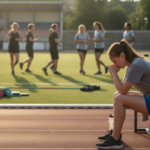
Chinese adolescents became more active before a high-stakes physical education examination, but activity declined after the test. Motivation quality was associated with whether students remained active.
What researchers studied
Researchers followed a convenience sample of 3,493 adolescents across 50 schools in China over four waves surrounding a physical education entrance examination.
The study included a Grade 8 reference cohort to help distinguish examination timing from general seasonal changes. A smaller group wore ActiGraph accelerometers to measure movement rather than relying entirely on self-reports.
Endpoint models used 336 Grade 9 students with valid device readings at both post-examination waves. Researchers also measured autonomous motivation, controlling school practices and perceptions of teacher support.
What they found
Grade 9 students’ moderate-to-vigorous physical activity increased by an estimated 14.04 minutes per day before the examination, with a reported 95% confidence interval of 11.84 to 16.24 minutes.
Afterward, the Grade 9 trajectory fell by 19.55 minutes per day more than the Grade 8 comparison trajectory.
Autonomous motivation was associated with later activity outside compulsory school periods, whereas controlled motivation was not similarly predictive. More controlling school implementation was linked to lower follow-up activity.
What it means
An examination can encourage exercise while it is approaching without necessarily creating a durable habit.
The findings suggest that how schools teach movement matters alongside whether they require students to meet a physical fitness standard.
Supporting choice, enjoyment and personal reasons for being active may be relevant to sustaining participation once grades and examination pressure disappear. The study does not establish which specific school intervention would work best.
Important limitation
The sample was not randomly selected, and the research was observational rather than a randomized test of teaching methods.
The accelerometer endpoint group was much smaller than the full enrolled sample. Activity outside compulsory periods was also used as a proxy for voluntary behaviour, not a direct measure of motivation.
The conclusions are most applicable to the examination context studied and should not be generalized automatically to all school systems.
Source Information
Study: Motivation quality and school implementation are associated with activity after high-stakes physical education testing in Chinese adolescents
Authors: Youzenan Tu, Qiuhan Zhu and Boxuan Guo
Journal / Source: Frontiers in Psychology
Published: 12 November 2026