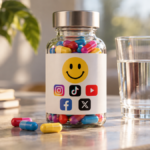








Stepping away from social media may sound like the opposite of what an online retailer wants its customers to do. A new study of fashion shoppers in the United Arab Emirates suggests the relationship may be more complicated. Consumers who reported stronger digital detox behaviour also reported less digital fatigue and greater purchase intention, while mindfulness appeared to shape how strongly those relationships emerged.
The findings do not show that asking customers to log off will make them buy more. The research was cross-sectional, based on self-reported behaviour, and cannot establish cause and effect. But it challenges a familiar assumption in digital marketing: that maximising continuous exposure and engagement is necessarily the best route to commercial outcomes.
When constant engagement becomes exhausting
Social commerce blends shopping with social media, influencer content, peer recommendations and algorithmically selected material. That creates opportunities for brands to reach consumers repeatedly, but it also creates a psychological cost. Digital fatigue describes the cognitive exhaustion, irritation and emotional strain that can develop when people face sustained information and connectivity demands.
The study, published in Humanities and Social Sciences Communications on 26 September 2026, examined whether deliberate temporary disengagement might be associated with a different consumer response. Hussein Khalifa investigated digital detox, digital fatigue, mindfulness and purchase intention within the UAE fashion retail market, where social platforms are deeply embedded in discovery and purchasing.
The central idea was a paradox. Less exposure could reduce brand visibility and opportunities to sell, but a temporary break might also restore attention and emotional resources. If exhausted consumers return with greater focus, disengagement could coexist with stronger rather than weaker purchase intentions.
The study followed 297 digitally active fashion shoppers
The researchers analysed 297 complete and valid responses from adults in the UAE who actively used social commerce platforms and had previous experience buying fashion products online. Participants were recruited using purposive convenience sampling through online survey distribution and online intercept approaches in major metropolitan areas.
The sample leaned young. About 41.8% were aged 26 to 35 and 31.0% were aged 18 to 25. Women made up 53.5% of respondents. Nearly two thirds, 63.0%, held a bachelor’s degree, while 22.9% had a master’s degree or higher. Private-sector employees accounted for 38.7%, students for 34.0%, and entrepreneurs or self-employed respondents for 27.3%.
Digital exposure was substantial. Some 48.1% reported spending two to four hours a day on social media and another 30.0% reported more than four hours. Online fashion shopping was also routine: 41.8% shopped online two or three times per month and 32.3% did so once a month.
The questionnaire used adapted measures of digital detox, digital fatigue, mindfulness and purchase intention. A 30-person pilot led to minor wording and sequencing changes. The main analysis used structural equation modelling in AMOS, followed by mediation and moderation testing with the PROCESS macro. For the mediation analysis, 5,000 bootstrap resamples were used to estimate confidence intervals.
Detox was strongly associated with lower fatigue
The clearest statistical relationship connected digital detox with digital fatigue. Higher detox scores were associated with substantially lower fatigue, with a standardised coefficient of β = -0.64, t = -15.82 and p < 0.001.
Digital fatigue, in turn, was negatively associated with purchase intention. The coefficient was β = -0.29, t = -6.21 and p < 0.001. In practical terms, respondents who reported greater exhaustion from digital engagement also tended to report less willingness to purchase through the social-commerce environment.
Digital detox also had a positive total association with purchase intention, although this relationship was much smaller than the detox-fatigue link. The total effect was β = 0.12, t = 2.51 and p < 0.05.
The mediation analysis helps explain why that smaller total relationship matters. The indirect effect from digital detox to purchase intention through reduced fatigue was 0.08, with a 95% bootstrap confidence interval from 0.045 to 0.163. Because the interval did not include zero, the authors interpreted digital fatigue as a significant partial mediator.
This does not mean a detox intervention was experimentally shown to reduce fatigue. Rather, the pattern in the survey was consistent with the proposed pathway: people reporting more deliberate digital disengagement also reported less fatigue, and lower fatigue was associated with stronger purchase intention.
Mindfulness changed the pattern
The study then asked whether mindfulness, defined around present-focused and non-judgmental awareness, altered these relationships. It did.
The interaction between digital detox and mindfulness was statistically significant, β = 0.03, t = 2.67, p < 0.01, with a 95% confidence interval from 0.01 to 0.05. Among respondents with high mindfulness, the simple slope linking detox with purchase intention was 0.27, SE = 0.07, p < 0.001. Among those with low mindfulness, the slope was only 0.04, SE = 0.06, and was not statistically significant.
Mindfulness also moderated the relationship between fatigue and purchase intention. The fatigue-by-mindfulness interaction was β = -0.03, t = -2.48, p < 0.05, with a 95% confidence interval from -0.05 to -0.01.
In one simple-slope comparison, digital fatigue was negatively associated with purchase intention among low-mindfulness respondents, with a slope of -0.21, SE = 0.08 and p < 0.01. At high mindfulness, the slope was -0.05, SE = 0.07 and no longer statistically significant. A second-stage moderation analysis showed the same broad pattern, although fatigue remained significant at both levels: -0.26 at low mindfulness and -0.12 at high mindfulness.
The useful interpretation is not that mindfulness eliminates digital fatigue. Instead, the association between fatigue and purchasing intentions appeared weaker among people scoring higher on mindfulness, while the positive detox-purchase relationship was more pronounced in that group.
Why this matters for social-commerce strategy
Digital marketing often treats attention as a resource to capture repeatedly. Notifications, influencer posts, recommendations, flash promotions and personalised content are designed to keep consumers inside the commercial environment. The study raises a different possibility: attention that has been exhausted may be less commercially useful than attention that has been allowed to recover.
That does not provide evidence for brands deliberately forcing customers offline. It does suggest that engagement quality deserves consideration alongside engagement quantity. Platform experiences that reduce unnecessary repetition, give consumers greater control over notifications, avoid excessive promotional pressure and make re-entry easy may be compatible with both well-being and commercial goals.
The mindfulness result adds another layer. Consumers do not respond identically to the same digital environment. Self-regulation and attentional style may help determine whether stepping away translates into more deliberate re-engagement. A universal marketing strategy built around constant exposure may therefore miss meaningful differences in how consumers cope with overload.
The evidence is suggestive, not causal
Several limitations are important. First, the study measured all major variables at one point in time. It cannot establish that digital detox caused lower fatigue or that lower fatigue subsequently caused stronger purchase intention. Reverse or reciprocal relationships are possible. People who already feel less fatigued or more in control may report different detox habits.
Second, participants were recruited through purposive non-probability sampling. The 297 respondents should not be treated as representative of all UAE consumers, let alone consumers in other countries. The focus on fashion social commerce further narrows generalisability.
Third, the measures were self-reported. Purchase intention is not the same as an observed transaction, and reported digital detox is not the same as device-logged time away from platforms. The authors recommend future work combining surveys with platform analytics, purchase histories and observed digital behaviour.
The authors also note that the model’s R² values were fairly low, meaning substantial variation in fatigue and purchase intention remained unexplained. Factors such as trust, perceived value, influencer authenticity, personality, promotional intensity and platform design may add explanatory power.
Finally, the research did not separate brief micro-detox behaviours, such as avoiding notifications before sleep, from longer periods away from social media. Those forms of disengagement may have different psychological and commercial consequences.
A more useful question than how long consumers stay online
The study’s strongest contribution may be to complicate the idea that more digital engagement is always better. In this sample, the association between detox and purchase intention was partly tied to lower fatigue, and mindfulness changed the strength of key relationships.
For researchers, the next step is experimental and longitudinal evidence that can test whether deliberate breaks actually change subsequent behaviour. For marketers, the immediate lesson is narrower: time spent online is not a complete measure of a healthy customer relationship. How consumers feel when they return may matter too.
Source Information
Study: How digital detox influences purchase intention in social commerce: the mediating role of digital fatigue and the moderating role of mindfulness
Author: Hussein Khalifa
Journal: Humanities and Social Sciences Communications, volume 13, article 1633
Published: 26 September 2026
DOI: 10.1057/s41599-026-09113-8
Study design: Cross-sectional survey of 297 adult social-commerce fashion shoppers in the United Arab Emirates, analysed using structural equation modelling, mediation and moderation analysis.