



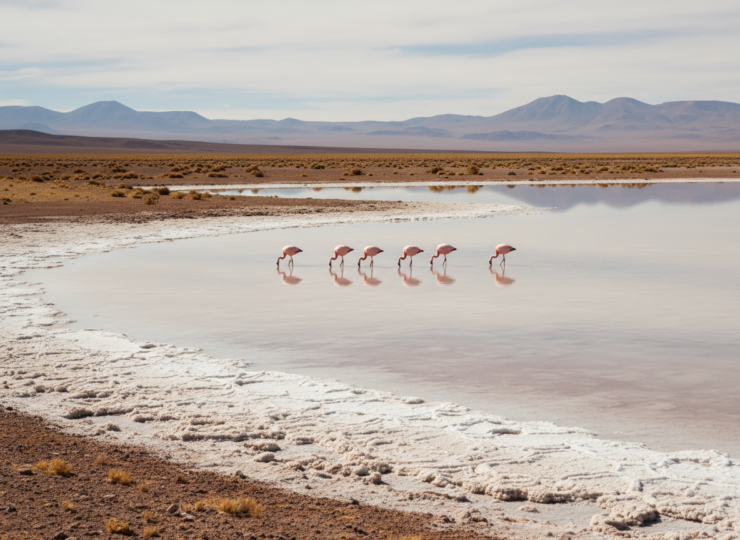

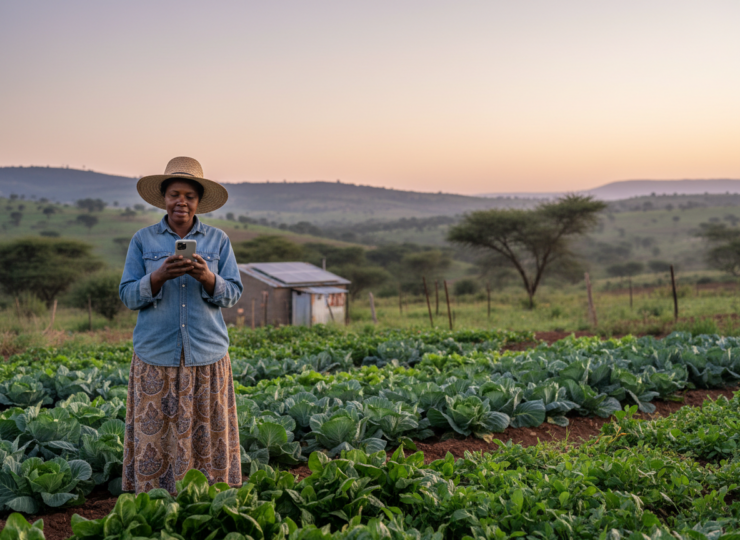

Saline lakes are often treated as ecological outliers: too salty for drinking water, frequently too harsh for conventional fisheries, and commonly located in dry landscapes far from major political and economic centres. A new global study suggests that this framing misses much of what these ecosystems actually do.
Researchers assembled information from 85 saline lakes around the world and documented 200 species classified by the International Union for Conservation of Nature as threatened or near threatened. More than half of those species were birds. The same lakes supported a broad range of cultural, provisioning and regulating services, including recreation, tourism, salt extraction, biomass harvest and scientific research.
The findings, published in Nature Communications, challenge the assumption that saline lakes have comparatively little conservation or functional value. They also expose a measurement problem. Many of the services that matter most, such as dust suppression, microclimate regulation, microbial productivity and the maintenance of distinctive genetic resources, are difficult to quantify and therefore easy to leave out of conventional assessments.
A global look at ecosystems that are easy to overlook
Saline lakes are not a minor component of the world’s inland waters. The researchers note that they account for more than 45% of global lake water volume and about 23% of global lake surface area. In this study, a saline lake was defined as having a long-term mean salinity above 1 gram per litre and being separated from the marine environment by a physical barrier that restricts species migration.
These systems can be exceptionally sensitive to changes in their water balance. Most have no surface outflow, meaning that water levels depend heavily on the relationship between inflow and evaporation. Water extraction, altered rainfall, warming and land-use change can therefore translate into large changes in lake level and salinity.
That sensitivity is visible in well-known cases such as the Aral Sea, Great Salt Lake, Lake Urmia and the Dead Sea, but the new study asks a broader question: what is lost when saline lakes are degraded, and are existing conservation priorities capturing that value?
How the researchers built the dataset
The quantitative dataset came from an international survey of saline-lake researchers. The questionnaire contained 71 questions spanning ecosystem characteristics, conservation status, threatened species, ecosystem services and threats. To enter the main analysis, a survey had to answer a core set of 37 compulsory questions. Eighty-five complete lake surveys met that requirement.
The final sample included 27 soda lakes, 40 inland sulphate and chloride lakes, and 18 coastal seawater lakes. Salinity ranged from 1 gram per litre to 375 grams per litre, giving the researchers a wide spectrum of environments rather than a narrow sample of extremely salty lakes.
The team also used a separate expert-consultation process involving 67 saline-lake researchers from 20 countries, split almost evenly by sex at 34 men and 33 women. Experts first contributed ideas through a virtual collaborative exercise. Thirty-two then joined an online plenary session, followed by parallel breakout discussions, to identify management challenges and develop recommendations.
This design combines structured quantitative information with specialist knowledge. It is useful for a global ecosystem type for which consistent monitoring data are scarce, but it also means the study should not be read as a statistically representative census of every saline lake on Earth.
Two hundred threatened species, and birds dominate the list
Across the 85 lakes, researchers recorded 200 threatened or near-threatened species that critically rely on the lakes. An individual lake supported an average of five such species, while the median was three.
Birds accounted for 53% of the threatened species in the dataset. That matters because a conservation assessment focused only on animals living permanently in the water would miss much of the ecological role of these systems. Saline lakes can function as feeding areas, nesting sites and migration stopovers for terrestrial and semi-terrestrial species moving through otherwise dry landscapes.
The study also found a clear relationship with salinity. The number of red-listed species supported by each lake declined as salinity increased, with the association statistically significant at p < 0.001. Salinity was the only predictor retained in the model with the lowest Akaike information criterion.
That result does not mean the saltiest lakes are unimportant. The opposite becomes apparent when diversity is examined across lakes rather than within a single lake. Highly saline systems often hosted distinctive species assemblages. Lake Krasnovishnevoye in Russia, Lake Urmia in Iran and Seagull Lake in Australia each have average salinities above 100 grams per litre, yet each supported at least two endangered species not found in any other lake in the dataset.
The species accumulation curve also showed little sign of levelling off even after all 85 lakes were included. In practical terms, adding more saline lakes kept adding different threatened species. This high between-lake diversity means that protecting a few apparently species-rich sites cannot necessarily substitute for conserving a wider network of distinctive systems.
The biodiversity count is probably incomplete
There is another reason to interpret the 200-species total cautiously. Global red-listing is much more advanced for groups such as birds, mammals and fish than it is for many invertebrates and microorganisms.
The researchers recorded almost 500 dominant plankton species across the lakes, yet none appeared on the threatened-species list used in the analysis. Some are endemic to ecosystems already under substantial pressure. Saline lakes also contain diverse microbial communities that are poorly represented by conventional conservation metrics.
The result is an important distinction: the study counts documented red-listed dependence, not total biological value. A lake with relatively few formally threatened species may still preserve unusual ecological communities, genetic adaptations and microbial functions that have barely been characterised.
The services people receive are broader than fish and fresh water
The researchers assessed 11 categories of ecosystem services. Cultural services were especially widespread. Scientific research, defined here as more than 20 Web of Science papers focused on a lake, was recorded for 88.4% of the lakes. Tourism and recreation were reported for 83.7%.
Provisioning and regulating services occurred less uniformly but covered a diverse range of activities. Fisheries were reported for 19.8% of lakes, non-fish biomass harvesting for 24.4%, salt mining for 25.6%, and wastewater discharge for 41.9%. The authors stress that listing a service does not automatically mean the activity is environmentally beneficial. Intensive extraction or use can itself become a source of ecological pressure.
This is particularly important for saline lakes because economic use and conservation can be tightly linked to the same water balance. Extracting minerals, diverting inflows or using surrounding land more intensively may generate short-term value while weakening the hydrological conditions that sustain the lake.
Some of the most important benefits are hidden
The study’s most consequential argument may be about what its own quantitative table cannot capture. Saline lakes can regulate regional microclimates, suppress dust generation, recycle nutrients, exchange gases, sequester carbon and support highly productive microbial communities.
These functions can become visible when a lake deteriorates. As exposed lakebeds dry, winds can mobilise salt-rich dust and other particles, creating risks for nearby ecosystems and human communities. The water body itself therefore provides a service simply by preventing its basin from becoming a source of airborne material.
Microbial communities represent another poorly measured source of value. Organisms adapted to extreme salinity can produce compounds with potential commercial applications and possess unusual metabolic capabilities. The authors argue that these communities should be valued partly for functions that science has not yet discovered, much as poorly characterised biodiversity in other ecosystems can hold future ecological or technological importance.
Climate change, land use and resource extraction rank closely as threats
When experts ranked pressures on saline lakes, no single threat dominated. Climate change received 28% of votes, land-use change 24%, and over-utilisation of natural resources 22%.
The closeness of those figures reinforces the study’s management message. Saline-lake decline is not simply a climate problem or a water-extraction problem. Multiple pressures interact through the catchment, and interventions aimed at only the lake shoreline may miss the processes actually controlling its future.
The researchers therefore propose five broad principles: catchment-wide management, recognition of alternative ecological states and connections among lakes, long-term monitoring of delayed and lake-specific responses, meaningful stakeholder engagement, and adaptive management that can change as climatic and ecological conditions shift.
The time dimension is particularly important. The paper cites evidence that hydrological changes in the Great Salt Lake catchment took around 15 years to express their full ecological impact. A management decision can therefore appear harmless for years before its consequences become obvious.
Why the findings matter for conservation policy
Conservation systems often work best when ecological value can be expressed through familiar indicators: species counts, protected-area status, fish production or measurable economic benefits. Saline lakes expose the limits of that approach because many of their functions cross the boundary between aquatic and terrestrial ecosystems and many benefits are indirect.
The study suggests that policy assessments should look beyond the number of aquatic species living in a lake. Migratory birds, terrestrial wildlife, microbial communities, dust suppression, cultural uses and the uniqueness of individual lakes can all change the conservation calculation.
It also argues against assuming that one management template can be transferred from lake to lake. Salinity, ion composition, hydrology, natural variability, groundwater connections and biological communities differ substantially among systems. The appropriate baseline may itself change over time as climate conditions move lakes away from their historical states.
Important limitations keep the results in perspective
The researchers acknowledge several constraints. The 85 lakes were assembled through expert participation rather than probability sampling, and researchers are more likely to study lakes with unusual biodiversity, aesthetic appeal or conservation importance. Forty-three percent of lakes in the dataset were Ramsar sites, indicating that formally recognised wetlands are strongly represented.
The high prevalence of research as an ecosystem service is also partly built into the sampling process. Lakes represented by specialists are, by definition, more likely to have attracted scientific attention.
Threatened-species counts inherit biases in global conservation assessment, especially the weaker coverage of invertebrates and microorganisms. Meanwhile, several regulating and supporting services could not be included quantitatively because comparable measurements do not exist across lakes.
Finally, the study is observational and descriptive. Associations such as the decline in threatened-species richness with salinity should not be interpreted as a controlled experiment showing that salinity alone causes conservation value to fall. Lake size, geography, research intensity and many ecological factors can shape what is recorded.
A broader definition of what makes a lake valuable
The central contribution of the research is not that every saline lake is exceptionally species-rich. It is that species richness within a single lake is an incomplete way to judge these ecosystems.
Across 85 lakes, the researchers found threatened species, distinctive communities and multiple forms of human value that conventional assessments can miss. Some services are visible in tourism receipts or harvested products. Others become obvious only when a lake disappears, dust begins to blow from its exposed bed, migratory stopovers vanish or a unique microbial community is lost.
For conservation planners, that makes saline lakes a useful test of a broader principle. What is easiest to count is not always what matters most.
Source Information
Study: The overlooked conservation values of saline lakes
Journal: Nature Communications, volume 17, article 9456 (2026)
Study design: Global expert survey of 85 saline lakes, quantitative analysis of threatened species and ecosystem services, and replicated expert consultation involving 67 saline-lake researchers from 20 countries.
Source: https://doi.org/10.1038/s41467-026-76684-0