





More than three decades after the 1994 Genocide against the Tutsi, reconciliation in Rwanda remains an active process shaped by community engagement, psychosocial healing and persistent trauma, according to new peer-reviewed research.
The study, published in Humanities and Social Sciences Communications on 25 September 2026, examined how genocide survivors, former prisoners and local leaders understand the pathways that support practical reconciliation and the barriers that continue to make social reconstruction difficult.
Community mechanisms supported rebuilding
Researchers Emmanuel Biracyaza, Samuel Habimana and Susanne Montgomery found that participants repeatedly described grassroots initiatives, traditional justice mechanisms and psychosocial programmes as important contributors to reconciliation. These processes created opportunities for dialogue, accountability, coexistence and the gradual rebuilding of relationships within communities affected by genocide.
The researchers emphasised that reconciliation was not described as a single event or a completed outcome. Instead, participants portrayed it as a dynamic and non-linear process in which progress could coexist with continuing psychological distress, mistrust and unresolved grief.
The study included survivors, former prisoners and community leaders
The qualitative study was conducted in Nyamagabe District in Rwanda. Researchers carried out 32 semi-structured interviews and three focus-group discussions during a data-collection period from 15 February to 31 July 2023.
The individual interview component included five genocide survivors, five ex-prisoners and five local leaders. The focus groups included seven survivors and ex-prisoners together, five survivors in a separate group and five former perpetrators in another group. The researchers then analysed the interview and discussion material inductively using thematic analysis.
This design allowed the researchers to compare perspectives from people occupying different positions in Rwanda’s post-genocide social environment. Rather than measuring reconciliation with a numerical scale, the study examined how participants described lived experiences, relationships, institutional support and continuing obstacles.
Psychological difficulties remain a barrier
Despite evidence of social rebuilding, participants described continuing anxiety, trauma-related distress, shame, social mistrust and unresolved grief. The study also identified intergenerational trauma as an important concern, indicating that the psychological consequences of genocide can extend beyond those who directly experienced the violence.
Limited access to psychosocial services was another recurring barrier. The authors argue that reconciliation cannot depend only on formal political or justice processes when individuals and families continue to experience psychological difficulties that affect their ability to rebuild trust and relationships.
This distinction is important because visible coexistence does not necessarily mean that psychological recovery is complete. The findings suggest that social cohesion and mental health support need to develop alongside one another if reconciliation is to remain sustainable.
Reconciliation was described as practical rather than purely symbolic
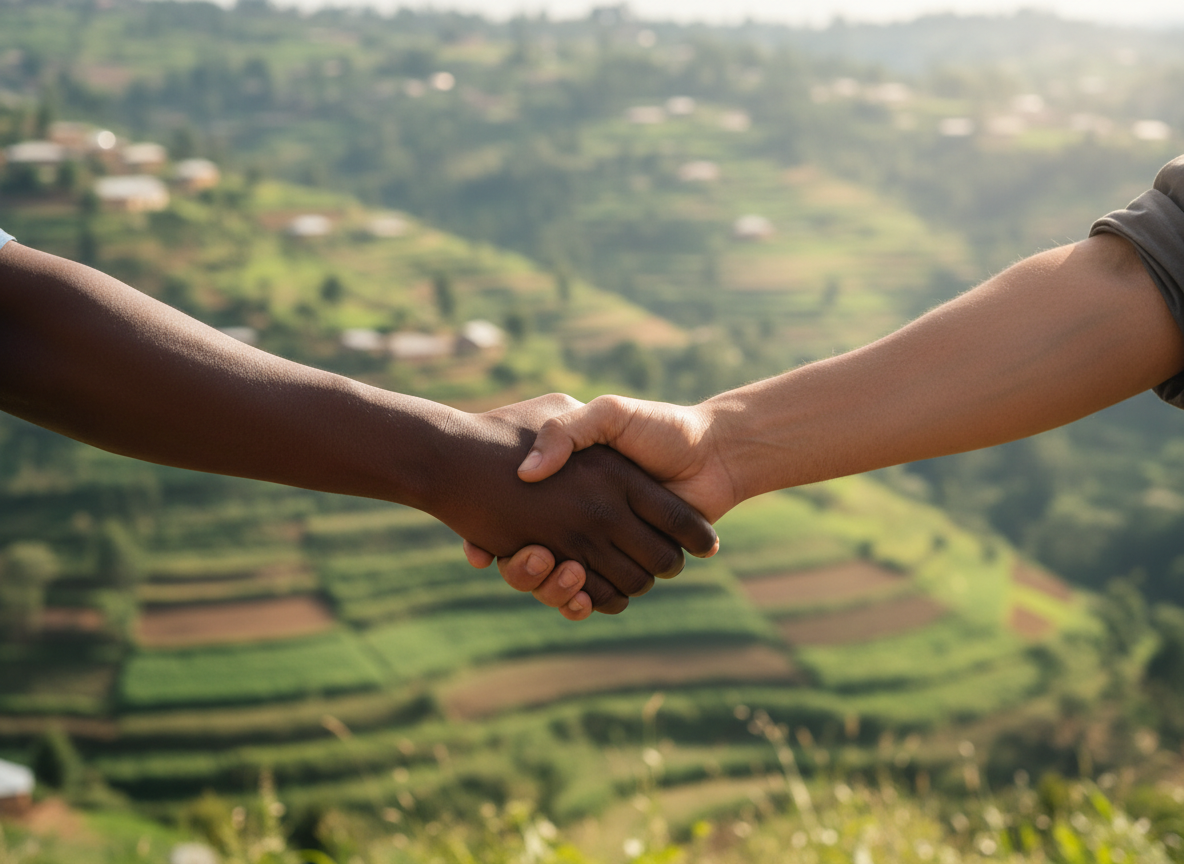
A central theme of the research is practical reconciliation. Participants’ accounts indicate that reconciliation involves repeated social interactions, participation in community processes, identity reconstruction and the difficult work of living alongside people connected to past violence.
The researchers found that government-supported and community-based programmes can reinforce this process, particularly when they combine psychosocial support with opportunities for dialogue and participation. Traditional justice mechanisms were also identified as part of the broader social infrastructure through which communities have attempted to address accountability and rebuild relationships.
What the findings mean
The study suggests that long-term reconciliation policy should treat psychological recovery, social trust and community participation as interconnected rather than separate objectives. The authors call for sustained collaboration among policymakers, mental health professionals, peacebuilders and researchers.
For post-conflict societies more broadly, the findings highlight why reconciliation programmes may need to continue long after formal justice processes have ended. Community institutions can create conditions for rebuilding, but unresolved trauma and inadequate access to psychosocial care may continue to limit progress for years or generations.
Important limitations
The research is qualitative and geographically focused. Its participants came from Nyamagabe District, so their experiences should not be treated as statistically representative of Rwanda’s entire population. The study was designed to explore experiences and mechanisms in depth rather than estimate how common particular views are nationally.
The findings also depend on participants’ retrospective accounts of highly sensitive experiences. Social desirability, memory and willingness to discuss trauma or reconciliation may influence what people disclose. In addition, the research does not establish that any individual programme caused improved reconciliation or psychological recovery.
These limitations mean the study is best interpreted as evidence about how reconciliation is experienced and understood by the participants, rather than as a national estimate of reconciliation outcomes.
Source Information
Study: Three decades on: pathways and barriers to practical reconciliation and psychosocial reconstruction in Rwanda after the genocide against the Tutsi
Authors: Emmanuel Biracyaza, Samuel Habimana and Susanne Montgomery
Journal: Humanities and Social Sciences Communications
Published: 25 September 2026
DOI: 10.1057/s41599-026-09215-3
Study type: Qualitative study using semi-structured interviews and focus-group discussions