








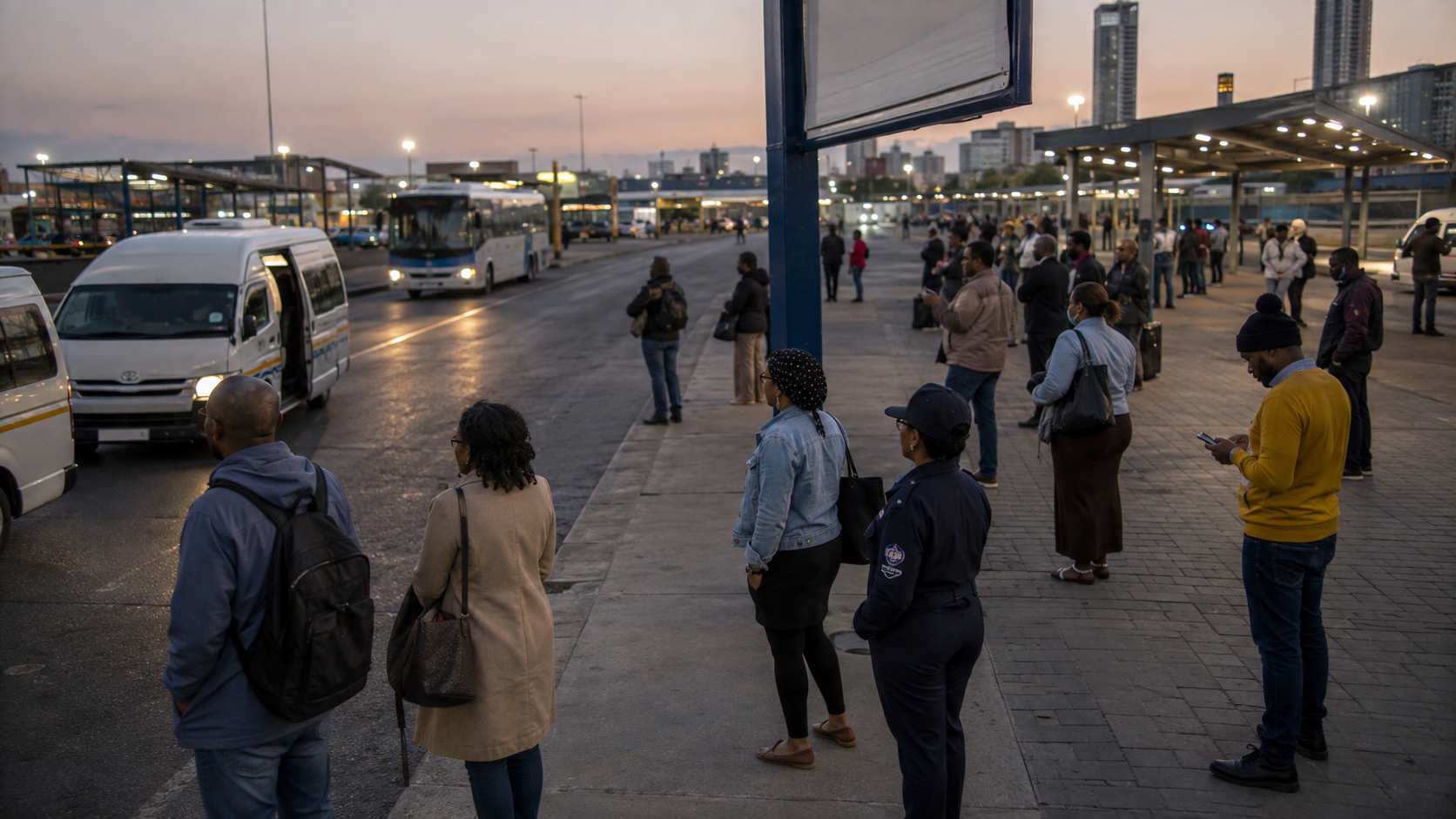
A daily commute is rarely only about reaching a destination.
For many passengers, it also involves deciding where to stand, which route feels safer, whether to travel after dark and who might help if something goes wrong.
These small calculations are not shared equally.
A new South African study suggests that women feel less safe than men at several stages of public-transport journeys. Yet it also identifies a less visible problem: commuters may believe that other people are more accepting of inappropriate behaviour than they really are.
That mistaken belief could help unacceptable conduct appear more socially normal than it actually is.
Published in Travel Behaviour and Society, the research surveyed approximately 1,000 male and female public-transport users across South Africa. Participants answered questions about their travel behaviour, safety concerns, experiences of harassment, willingness to report incidents and beliefs about what other commuters considered acceptable.
Safety Shapes How People Travel
The researchers found that women were more likely than men to avoid trains and buses because of concerns about accessibility and safety.
This matters because public transport affects more than mobility. It influences whether people can reach employment, education, healthcare, childcare and other essential services.
When a commuter avoids a route because it feels unsafe, the consequences may include a longer journey, a more expensive alternative or an opportunity that becomes impractical to pursue.
Women’s travel patterns can also involve several connected trips rather than a simple journey between home and work. A person may need to travel between work, school, childcare, shops and home within the same day, increasing both the cost and complexity of transport.
A transport system can therefore be technically available while remaining less usable for some passengers.
Why Incidents May Go Unreported
The study also examined whether passengers felt able to report violence or harassment.
Women were more likely to say that they would feel comfortable reporting an incident to female security personnel rather than male security personnel.
At the same time, a comparatively larger share of women gave reasons such as believing that nothing would change or fearing further victimisation by authorities when explaining why incidents might not be reported.
This helps explain why official reports may not capture the full scale of the problem.
Underreporting is sometimes interpreted as an absence of incidents. In reality, it can reflect a lack of trust in the reporting process, uncertainty about how officials will respond or a belief that reporting will create more difficulty without producing meaningful action.
Improving safety therefore requires more than installing a complaint channel. Passengers must believe that the channel is accessible, respectful and capable of producing a response.
What People Think Others Believe
The study’s most distinctive finding concerned social norms.
A social norm is a belief about what other people usually do or consider acceptable. These beliefs can influence behaviour even when they are inaccurate.
Both male and female respondents tended to overestimate how tolerant other commuters—particularly men—were of sexual harassment and unwanted advances on public transport.
In one set of responses, women estimated that 63% of men would agree that women carried responsibility for taking precautions against harassment. Male respondents estimated that 55% of other men would agree. The actual level of agreement among men in the survey was lower, at 49%.
The difference does not mean that concerning attitudes are absent. Even the measured levels remain significant.
It does suggest, however, that commuters may perceive greater social acceptance of these attitudes than the survey actually found.
When people believe that a behaviour is widely tolerated, those who disapprove may remain silent, while those considering the behaviour may feel that others are unlikely to challenge them.
Correcting the Perception
The researchers argue that this gap could provide a possible policy opportunity.
Public campaigns often tell people that harassment is wrong. A different approach could also communicate that most fellow commuters reject it.
Messages might emphasise that unwanted advances are not an ordinary or broadly accepted part of public transport and that passengers are not alone in disapproving of them.
Research in other settings has suggested that correcting mistaken beliefs about social approval can influence behaviour. However, this South African study did not test whether such a campaign would reduce harassment. That remains a proposal for future investigation rather than a demonstrated outcome.
Any norm-based campaign would also need to form part of a wider safety response. Communication cannot replace dependable security, trained personnel, accessible reporting systems, appropriate infrastructure and accountability when complaints are made.
What the Study Cannot Establish
The research was based on an online questionnaire distributed in April and May 2024. It records participants’ reported experiences, attitudes and perceptions rather than independently observing conduct during journeys.
The results may therefore not capture every transport environment or all passengers who rely on informal and formal systems across South Africa.
Because the study is observational, it also cannot establish that inaccurate beliefs directly cause harassment.
It does, however, reveal an important social tension.
Many passengers may privately reject inappropriate behaviour while simultaneously believing that others are more willing to accept it. That misunderstanding can make the public environment appear less supportive than it truly is.
Safer transport depends partly on physical systems and institutional responses.
It may also depend on making society’s existing disapproval more visible.
Source Information
Study Title: Public transport, sexual harassment, and social norms: some evidence from South Africa
Authors: Carolyn Chisadza, Matthew Clance, Nicky Nicholls and Tendai Zawaira
Journal: Travel Behaviour and Society
Published Online: 21 July 2026
DOI: 10.1016/j.tbs.2026.101315