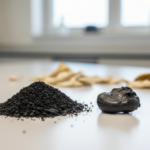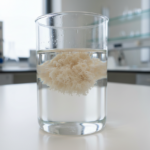









Waste human hair may offer a low-cost way to recover oil from contaminated seawater, according to new laboratory research comparing intact strands, chopped fibres and powdered hair. The experiments found that the physical form of the hair substantially changed how quickly and how much oil it could retain.
Hair rapidly captured oil from seawater
Researchers investigated whether discarded human hair could act as a natural biosorbent for lubricating oil and diesel spills. Human hair contains keratin and has a hydrophobic surface, meaning that it can attract oil while resisting water. The study focused not only on whether hair could sorb petroleum products, but also on whether changing its physical structure altered its performance.
The strongest result was observed for lubricating oil. Under the tested conditions, intact hair reached sorption efficiency of up to 98.75% within 15 minutes. The researchers reported that rapid equilibrium occurred within 15 minutes for both intact and chopped fibre configurations, with efficiencies reaching up to 98.75% and 95%, respectively.
The results were less pronounced for diesel, highlighting that the properties of the contaminating liquid matter. Lubricating oil was more viscous and adhered more readily to the hydrophobic hair surface, whereas lower-viscosity diesel spread more readily across the water and was less strongly retained.
Researchers compared three forms of waste hair
Waste hair was collected from local barbershops and cleaned with detergent before being rinsed and dried. The researchers then prepared three morphologies: intact strands approximately 2 to 4 centimetres long, chopped fibres approximately 1 to 5 millimetres long, and powdered particles between 125 and 250 micrometres.
For each experimental run, 150 millilitres of Mediterranean seawater collected at Port Said, Egypt, was placed in a 250-millilitre glass beaker. The researchers layered either lubricating oil or diesel onto the water and varied hair mass, contact time and the initial volume of oil. The experiments were conducted under static conditions without stirring or shaking.
Contact times ranged from 5 to 20 minutes. Hair dosages were varied across the experiments, while oil volumes of 20, 40, 60 and 80 millilitres were also tested. All experimental runs were repeated three times, and the authors reported standard deviations below 1% across the triplicate trials.
More hair did not always improve removal
One of the clearest findings was that adding more sorbent did not produce a simple linear improvement. With 20 millilitres of lubricating oil, 0.5 grams of intact hair achieved 90% sorption efficiency, compared with 65% for chopped fibre hair. At 1 gram, efficiency rose to 95% for intact hair and 85% for fibre hair.
When the amount of hair increased to 2 grams, however, efficiency fell to 88% for intact hair and remained at 85% for fibre hair. The researchers attributed this pattern to hair strands overlapping and clumping inside the experimental vessel. Greater packing density can shield parts of the sorbent from the oil and reduce the effective surface area available for uptake.
A similar pattern appeared for diesel. At 0.5 grams, intact hair removed 30% and fibre hair 15%. At 1.5 grams, the respective efficiencies reached 80% and 40%. Increasing the dose to 2 grams reduced the figures to 79% and 27.5%.
Chopped fibres achieved the highest sorption capacity
When maximum capacity was assessed, chopped hair fibres substantially outperformed powdered hair. Fibre hair retained as much as 7.18 grams of lubricating oil per gram of hair and 4.75 grams of diesel per gram. Powdered hair reached 2.76 grams per gram for lubricating oil and 1.85 grams per gram for diesel.
The difference was also evident in the quantity of material needed to immobilise a 20-millilitre spill. Fibre hair required 2.5 grams for lubricating oil and 3.5 grams for diesel. Powdered hair required 6.5 grams and 9 grams, respectively.
The researchers linked this advantage to structure. Chopped fibres retained an interconnected porous network in which spaces between strands acted as capillary channels. Pulverising hair into fine particles disrupted this architecture and caused the particles to pack tightly together when wet, limiting the pathways through which oil could be retained.
Performance changed as the spill became larger
The amount of oil relative to the available hair also affected efficiency. With a fixed 1-gram dose, intact hair removed 95% of lubricating oil at an initial volume of 20 millilitres, but efficiency fell to 65% when the oil volume increased to 80 millilitres. Fibre hair declined from 85% to 77.61% across the same range.
For diesel, the decline was sharper. At an 80-millilitre initial volume, sorption efficiency fell to 11.25% for intact hair and 16.65% for fibre hair. The findings indicate that a finite amount of hair has a finite number of available surface sites and capillary spaces. Once these become saturated, a growing share of the oil remains in the water.
Hair structure may matter for practical cleanup
The study suggests that different forms of hair could suit different remediation goals. Intact strands rapidly trapped oil without forming a dense sludge and may be easier to recover mechanically. The authors note that intact hair can potentially be regenerated through compression or centrifugation, allowing retained oil to be recovered while preserving the hair structure.
Powdered hair behaved differently. It formed a viscous oil-rich sludge that may help immobilise contamination but would be more difficult to collect and reuse. This trade-off means that maximising oil retention is not the only consideration. Recovery, disposal and the ability to reuse the sorbent also influence whether a material is practical outside the laboratory.
The findings remain laboratory evidence
The results should not be interpreted as evidence that loose human hair is ready for deployment during major marine spills. The experiments used small glass beakers under static laboratory conditions. Real spills involve waves, currents, wind, changing temperatures, weathered petroleum mixtures and complex recovery logistics that were not reproduced here.
The study also evaluated lubricating oil and diesel rather than the full range of crude oils and refined petroleum products encountered in environmental disasters. Although the experimental runs were repeated three times with high repeatability, large-scale field performance, lifecycle impacts, sanitation requirements for collected hair and comparative economics against commercial sorbents remain to be established.
The authors therefore recommend testing large-scale containment boom designs and conducting lifecycle cost-benefit analyses against synthetic sorbents. Further research could also examine surface modifications that improve oil selectivity and repeated reuse.
Why the research matters
Human hair is routinely discarded as waste by salons and barbershops. Converting some of that waste into a spill-response material could create a circular use for a readily available biological resource while potentially reducing dependence on non-biodegradable synthetic sorbents.
The findings also show why material form matters. Simply grinding a biological material into smaller particles does not necessarily improve its performance. In this study, preserving enough of the hair’s natural fibrous architecture was important for maintaining capillary pathways and achieving high oil uptake per unit mass.
Source Information
Study: Eco-friendly human hair as a biosorbent for the removal of Non-Aqueous Phase Liquids (NAPLs) from seawater
Authors: Ahmad M. Fathy, Mohamed A. Ayad, Tarek M. Aboul-Fotouh and colleagues
Journal: Journal of Engineering and Applied Science
Published: 25 September 2026
DOI: 10.1186/s44147-026-01223-z