







The world’s forests are losing one of their most important natural abilities: the capacity to recover from stress.
While climate change has long been associated with rising temperatures and more frequent droughts, researchers now say many forests are taking longer to bounce back after extreme events. That reduced resilience could make some ecosystems increasingly vulnerable to permanent decline.
A study published in Nature Ecology & Evolution analysed more than two decades of satellite observations to examine how forests around the world respond to repeated environmental shocks. By combining long-term vegetation data with climate records, the international research team assessed changes in forest recovery across multiple continents and climate zones.
One trend emerged consistently.
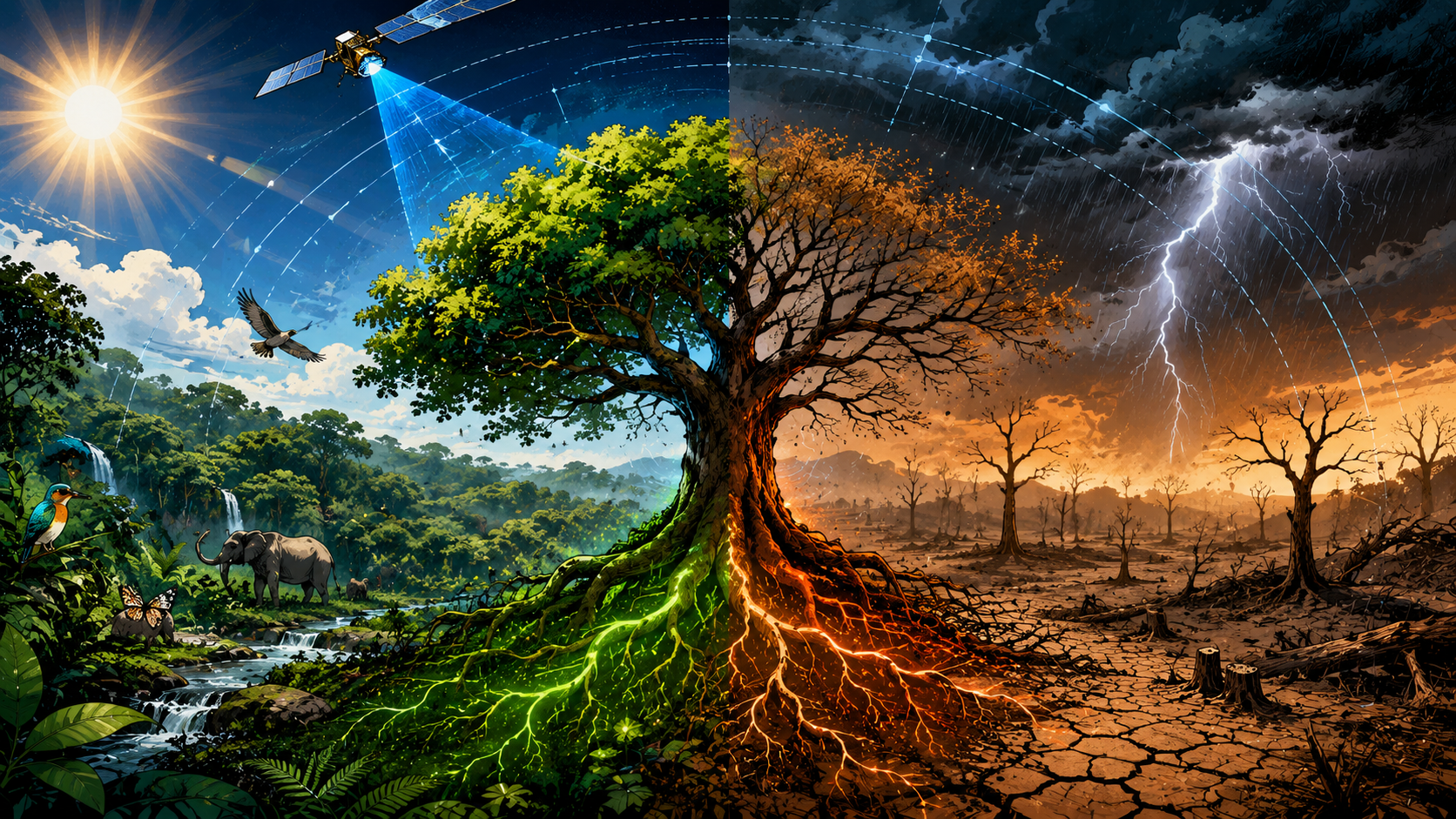
Across many regions, forests are recovering more slowly after heatwaves, prolonged droughts and other climate-related disturbances. Instead of returning quickly to their previous state, vegetation remains stressed for longer periods, suggesting ecosystems are becoming less stable over time.
The researchers explain that resilience is about more than simply surviving a drought or wildfire. Healthy forests can usually absorb disturbances and gradually return to normal. When that recovery slows, however, the likelihood of lasting ecosystem change increases.
Several factors appear to be driving the trend.
Higher average temperatures increase evaporation, leaving less water available for trees. At the same time, changing rainfall patterns and more frequent extreme weather events reduce the opportunities forests have to recover before the next period of stress arrives.
The consequences extend well beyond biodiversity.
Forests store enormous quantities of carbon dioxide, regulate local rainfall, protect soil quality and support thousands of plant and animal species. If forests become less resilient, their ability to provide these services may gradually weaken, creating feedback loops that further accelerate climate change.
For South Africa, the findings carry particular significance.
Although much of the country is naturally dominated by grasslands, savannas and shrublands, indigenous forests play an important ecological role, particularly along the Garden Route, the Eastern Cape and parts of KwaZulu-Natal. Commercial forestry operations also contribute significantly to rural economies, making long-term ecosystem resilience both an environmental and economic concern.
The study also highlights the value of satellite technology.
Rather than relying solely on field observations, researchers can now monitor ecosystem health across vast areas of the planet almost continuously. Subtle changes in vegetation recovery that would once have gone unnoticed are becoming measurable years before forests visibly deteriorate.
The authors caution that slower recovery does not mean every forest is approaching collapse. Many ecosystems continue to demonstrate remarkable resilience, particularly where biodiversity remains high and human disturbance is limited. Local conservation efforts, sustainable land management and emissions reductions can all improve long-term outcomes.
Even so, the broader pattern is difficult to ignore.
The evidence suggests climate change is not only increasing the number of environmental shocks but also reducing nature’s ability to recover from them. That combination creates a growing challenge for conservationists, policymakers and communities that depend on healthy ecosystems.
Forest decline is often imagined as something dramatic: a wildfire, widespread tree loss or large-scale deforestation.
This research points to a quieter warning.
Sometimes the first sign that an ecosystem is under pressure is not what disappears, but how slowly it begins to heal.
Source Information
Study Title: Global declines in forest resilience under increasing climate extremes
Authors: International research consortium
Journal: Nature Ecology & Evolution
Year: 2026