





Modern smartphones already recognise our faces, predict the words we’re about to type and monitor how we sleep.
Researchers now believe they could soon identify the earliest signs of illness simply by analysing how we interact with them.
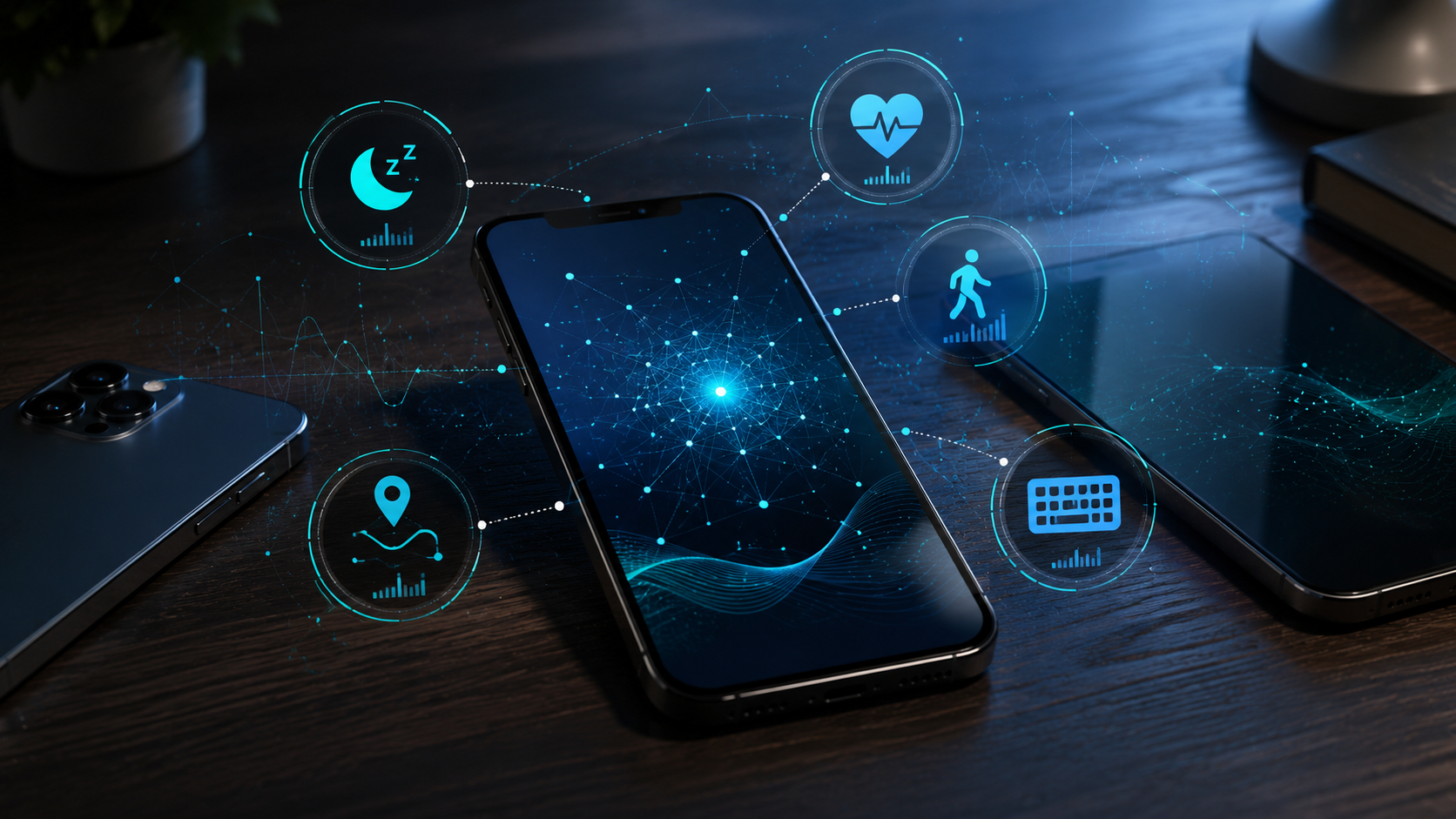
A study published in Nature Digital Medicine found that passive smartphone data—including typing behaviour, screen interactions, movement patterns and device usage—can be combined to detect subtle physiological and behavioural changes associated with declining health. Rather than relying on a single measurement, researchers trained machine-learning models to identify combinations of digital signals that often appear before people notice symptoms themselves.
The findings are significant because smartphones have become one of the few technologies that continuously accompany people throughout the day.
Unlike traditional medical devices, they require no additional effort from users. Every tap, swipe, walking pattern and period of inactivity can contribute to a richer picture of daily wellbeing.
The research team analysed millions of anonymous smartphone interactions collected over several months, comparing digital behaviour with participants’ reported health status. While no individual metric consistently predicted illness, combining multiple behavioural signals dramatically improved the system’s ability to identify periods when participants were becoming unwell.
Typing speed, for example, often slowed slightly during illness.
Daily movement became less predictable.
Sleep schedules shifted.
Screen interaction patterns changed.
Individually, these changes were small.
Together, they formed a measurable digital fingerprint.
The researchers believe these findings could eventually support earlier intervention for a range of conditions, from seasonal viral infections to chronic diseases and mental health challenges. Instead of replacing doctors, smartphones could provide an early indication that something may be changing before symptoms become severe.
The implications extend beyond healthcare.
Passive sensing could also support workplace wellbeing programmes, remote patient monitoring and elderly care, allowing healthcare providers to identify potential problems without requiring frequent hospital visits or wearable devices.
For South Africa, where access to healthcare can vary significantly between urban and rural communities, the technology presents both opportunities and challenges.
Smartphone ownership has expanded rapidly across the country, making mobile devices one of the most widely available digital platforms. If developed responsibly, passive health monitoring could improve preventative care for millions of people who rarely undergo routine health screenings.
However, the research also raises important questions about privacy.
Health-related behavioural data is among the most sensitive information a person can generate. The authors stress that any future deployment would require transparent consent, strong encryption and clear safeguards governing how data is collected, stored and shared.
The study also highlights a broader trend within artificial intelligence.
Rather than creating entirely new forms of data, AI is increasingly extracting meaningful insights from information already generated during everyday life. Advances in machine learning allow systems to identify complex patterns that would be almost impossible for humans to recognise manually.
The researchers caution that the technology remains under development.
Behaviour varies widely between individuals, meaning models must be personalised and extensively validated before they could support clinical decision-making. Factors such as travel, stress, lifestyle changes and work schedules can all influence smartphone behaviour without indicating illness.
Even so, the direction of travel is becoming increasingly clear.
The smartphone is evolving beyond a communication device.
It is becoming a sophisticated digital sensor—one capable of quietly observing the rhythms of daily life and, perhaps one day, helping us recognise when something is changing before we feel it ourselves.
Source Information
Study Topic: Passive smartphone sensing and artificial intelligence for early health detection
Journal: Nature Digital Medicine
Year: 2026