






Synthetic dyes can make industrial wastewater difficult to treat because intense colour can persist even at low concentrations, while some dye compounds and their breakdown products raise broader environmental concerns. A new laboratory study suggests that biochar made from Vachellia nilotica stems could offer a reusable adsorbent for one such contaminant, Acid Violet 17.
Researchers reporting in Scientific Reports found that the plant-derived biochar removed as much as 97.94% of Acid Violet 17 under the best tested conditions. Equilibrium modelling estimated a maximum adsorption capacity of 333.33 milligrams of dye per gram of biochar, while regeneration experiments indicated that performance declined by less than 2% across five reuse cycles.
Turning plant material into a porous adsorbent
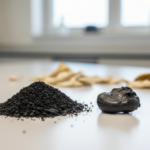
The study focused on biochar produced from stems of Vachellia nilotica, a woody species that can provide carbon-rich biomass. The researchers characterised the resulting material using techniques including high-resolution transmission electron microscopy and Brunauer-Emmett-Teller surface analysis before testing its ability to capture Acid Violet 17 from water.
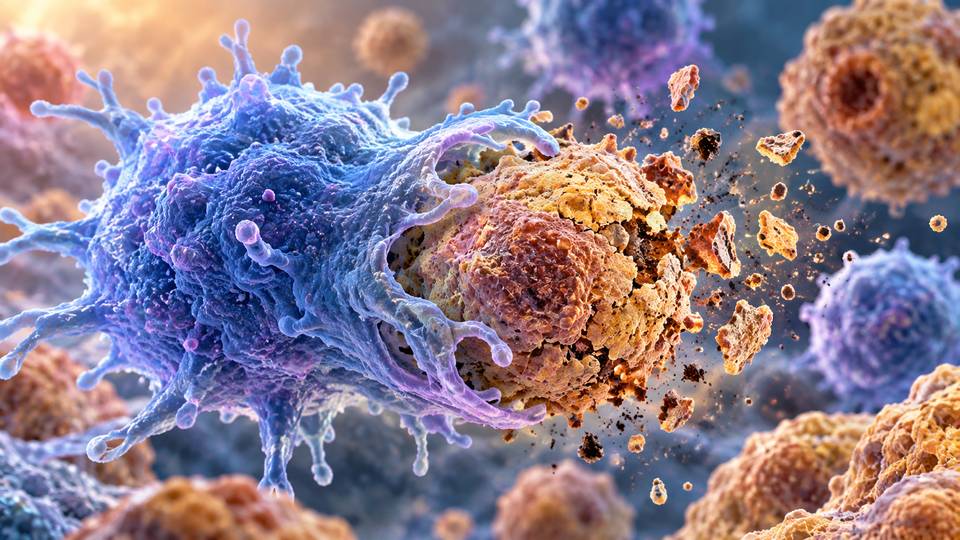
The biochar had a mesoporous, sponge-like structure. Its measured surface area was 50.92 square metres per gram, and its average pore diameter was 8.02 nanometres. Those physical characteristics matter because adsorption depends on accessible surfaces and pores where dissolved molecules can interact with a solid material.
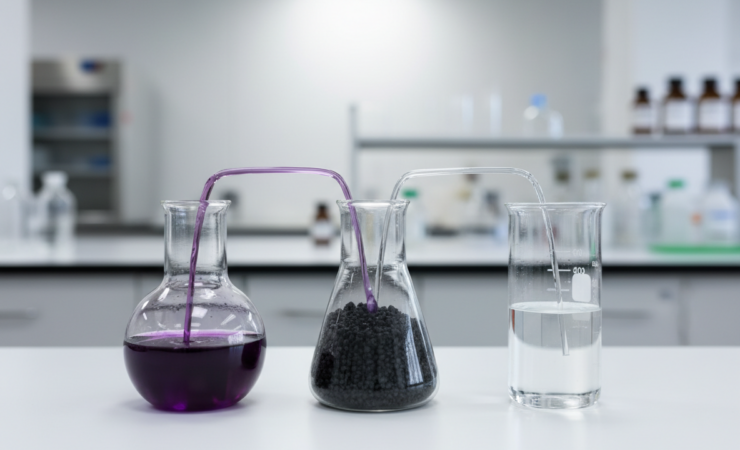
The researchers then conducted batch adsorption experiments, varying relevant operating conditions and measuring how much dye remained in solution. The strongest removal occurred at pH 6, where the biochar achieved a maximum removal efficiency of 97.94% under the experimental conditions.
The estimated capacity reached 333.33 mg per gram
Adsorption studies commonly use mathematical isotherms to describe how dissolved material distributes between a liquid and an adsorbent at equilibrium. In this study, the Langmuir model provided the best description of the equilibrium data and produced an estimated maximum adsorption capacity of 333.33 mg/g.
That number should be interpreted carefully. It is a model-derived maximum under controlled experimental conditions, not evidence that a full-scale treatment plant would necessarily remove 333.33 milligrams of Acid Violet 17 for every gram of this biochar. Real industrial wastewater can contain salts, competing organic molecules, other dyes and fluctuating pH, all of which can alter adsorption.
The adsorption kinetics were best represented by a pseudo-second-order model, with an R² of 0.995. A high model fit shows that this kinetic description closely represented the measured experimental pattern, although the model name itself should not be taken as proof of one specific chemical mechanism.
Statistical physics offered a closer look at how the dye may bind
Beyond conventional adsorption models, the team applied statistical physics modelling to investigate the arrangement of dye molecules on the biochar surface. A five-parameter double-layer model successfully described the adsorption isotherms.
The model’s steric parameter, labelled n, ranged from 0.39 to 0.42. The researchers interpreted this as evidence of a multi-docking mechanism in which Acid Violet 17 molecules tend to adopt a horizontal orientation on the biochar surface. In practical terms, the modelling suggests that a single dye molecule can interact with more than one adsorption site rather than behaving as a simple one-molecule-to-one-site system.
Thermodynamic analysis indicated that adsorption was spontaneous and endothermic. Estimated adsorption energies ranged from 22.16 to 24.48 kilojoules per mole. Taken together with the modelling, the researchers concluded that physical interactions made a substantial contribution to the binding process.
Reuse could be important for practical treatment
An adsorbent that performs well only once may still be costly or waste-intensive in real treatment systems. The researchers therefore examined regeneration over five cycles. The biochar maintained high performance, with less than a 2% loss in adsorption capacity across those cycles.
This durability is one of the study’s practically relevant findings. If similar stability can be reproduced in larger systems and with genuine industrial effluent, repeated use could reduce the amount of fresh adsorbent required and limit the solid waste generated by treatment.
The feedstock also adds a sustainability dimension. Biochar can convert biomass into a functional carbonaceous material rather than relying exclusively on more intensively manufactured adsorbents. However, the environmental balance would ultimately depend on how the biomass is sourced, how the biochar is produced, the energy required for processing and regeneration, and how captured dye is handled after treatment.
Why the laboratory results are promising but not yet a treatment solution
The results establish proof of performance in controlled experiments, but several steps separate batch adsorption tests from wastewater infrastructure. Industrial streams are chemically complex, and other dissolved substances can compete for the same adsorption sites. Flow-through treatment also introduces hydraulic conditions that differ substantially from a laboratory batch vessel.
Future work would therefore need to test the material against real textile or chemical-industry wastewater, examine continuous columns or other scalable reactor configurations, quantify regeneration costs and determine what happens to the concentrated contaminant after desorption. Long-term mechanical stability and the consistency of biochar produced from variable biomass would also matter for commercial use.
Even with those limitations, the combination of high removal efficiency, a modelled capacity above 300 mg/g and little performance loss over five regeneration cycles makes the material a useful candidate for further investigation. The study also illustrates a broader direction in water-treatment research: designing adsorbents that combine contaminant removal with renewable or waste-derived feedstocks and repeated use.
Source Information
Study: “Adsorption of hazardous Acid Violet 17 on Vachellia nilotica biochar: experimental and statistical physics modelling”
Authors: Mohammod Hafizur Rahman and colleagues
Journal: Scientific Reports
Published: 2 October 2026
DOI: 10.1038/s41598-026-73999-2