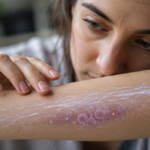










Psoriasis is usually recognised by its effects on the skin, but the inflammatory disease can carry risks that extend well beyond it. A new pilot study suggests that a dedicated cardiovascular assessment may uncover modifiable risk factors even when patients’ current skin symptoms are well controlled.
Researchers at University Medical Center Mainz in Germany examined 20 people with a history of moderate-to-severe psoriasis in a specialised cardiology outpatient clinic. Every participant had at least one established cardiovascular risk factor in addition to psoriasis, and cardiologists recommended changes to medication or lifestyle for 17 of the 20 patients, or 85%.
Why psoriasis can matter to the heart
Psoriasis is a chronic immune-mediated inflammatory disease. Although its visible manifestations occur in the skin, systemic inflammation is one reason researchers have increasingly treated cardiovascular health as part of the wider clinical picture. Moderate-to-severe psoriasis is recognised as a cardiovascular risk enhancer, while people with psoriasis can also have conventional risk factors such as obesity, hypertension, diabetes, smoking and abnormal blood lipids.
The challenge is that familiar cardiovascular risk calculators do not directly incorporate the additional risk attributed to psoriasis itself. The Mainz team therefore asked whether a dedicated interdisciplinary clinic could reveal actionable cardiovascular issues in patients already receiving specialist dermatological care.
A two-day cardiovascular assessment
The cross-sectional pilot included 20 patients recruited from a psoriasis outpatient clinic between 2022 and 2024. Participants were 15 to 69 years old and had initially moderate-to-severe psoriasis. Their median age was 43 years, with an interquartile range of 36 to 63 years, and 70% were men. Fifteen participants, or 75%, were receiving biologic therapy.
The assessment went beyond a routine office visit. Researchers recorded medical history and anthropometric measurements, measured cardiac biomarkers and a detailed lipid profile including lipoprotein(a), and performed a 12-lead electrocardiogram. Participants also underwent 24-hour blood-pressure monitoring, 24-hour ECG monitoring and transthoracic echocardiography.
The researchers calculated 10-year cardiovascular risk using SCORE2 where participants met its age requirements and the American Heart Association PREVENT model where applicable. They also examined whether current psoriasis severity, measured with the Psoriasis Area and Severity Index, tracked with calculated cardiovascular risk.
Conventional risk scores looked modest, but risk factors were common
The median estimated 10-year risk of fatal or non-fatal cardiovascular events was 3%, with an interquartile range of 2% to 6%, using SCORE2. PREVENT produced a median estimate of 2%, with an interquartile range of 1% to 7%. These values corresponded broadly to moderate and borderline calculated risk in the eligible subsets.
Yet the clinical assessment showed a substantial burden of conventional risk factors. Every participant had at least one classical cardiovascular risk factor, while 60% had at least two. Ninety percent were classified as overweight or obese, based on a body mass index of at least 25 kg/m². The cohort’s median BMI was 29 kg/m². Forty percent had a diagnosis of arterial hypertension, 25% dyslipidaemia and 15% diabetes mellitus.
Lipid testing was particularly revealing. Median LDL cholesterol was 108 mg/dl, and 12 of the 20 participants, or 60%, had LDL values of at least 100 mg/dl. Five participants, or 25%, had lipoprotein(a) concentrations above 30 mg/dl. Patients already receiving lipid-lowering treatment had significantly lower total cholesterol and LDL than untreated patients, with LDL medians of 86 versus 112 mg/dl.
Skin severity did not identify cardiovascular risk
One notable finding was what the researchers did not observe. Current psoriasis severity did not correlate with either of the two calculated cardiovascular risk scores. The Spearman correlation between PASI and SCORE2 was -0.07, with p = 0.82, while the correlation with PREVENT was 0.07, with p = 0.79.
This matters because successful treatment can leave a patient with relatively little visible or currently active skin disease without necessarily erasing the wider cardiovascular risk profile accumulated through systemic disease and conventional risk factors. In this cohort, current skin severity was therefore not a useful shortcut for deciding who warranted cardiovascular attention.
Most heart imaging and rhythm tests were reassuring
The intensive screening did not uncover widespread hidden structural heart disease. Twenty-four-hour ECG monitoring showed no relevant new arrhythmias, and most participants had normal systolic heart function. Median global longitudinal strain, an echocardiographic measure that can identify subtle myocardial dysfunction, was -18.3%, within the normal range reported by the researchers. Three participants had grade I diastolic dysfunction, while one participant with known ischaemic cardiomyopathy had reduced ejection fraction.
This pattern suggests that the immediate value of the clinic was less about discovering major silent cardiac abnormalities and more about identifying and managing modifiable cardiovascular risk before such disease develops.
Screening translated into treatment recommendations
Cardiologists recommended medication or lifestyle changes for 17 participants, representing 85% of the pilot cohort. Lipid management accounted for an important share of these interventions. Four of the five patients already taking lipid-lowering therapy received recommendations to adjust treatment. Among nine participants receiving antihypertensive medication, five were advised to modify therapy.
The result illustrates the difference between calculating risk and actively searching for treatable contributors to that risk. A person can have a relatively modest numerical 10-year risk estimate, particularly at a younger age, while still having LDL cholesterol, blood pressure, body weight or other factors that clinicians may reasonably target.
What the findings do and do not show
The study is deliberately described as hypothesis-generating. With only 20 participants from a single centre, it cannot establish how common these findings are across the broader psoriasis population, nor can it show that a specialised cardiology clinic reduces heart attacks, strokes or mortality.
Selection bias is also plausible. Patients volunteered for an additional two-day cardiovascular assessment and may have been more health-conscious than typical patients. Most were receiving systemic treatment, and the cohort was predominantly male. Several risk calculations could only be performed in subsets because the tools have age and eligibility restrictions.
The cross-sectional design also means the study offers a snapshot rather than evidence of long-term benefit. Larger prospective studies would be needed to determine which screening strategy is most efficient, whether specialised clinics outperform coordinated primary and dermatological care, and whether intervention changes translate into fewer cardiovascular events.
A case for looking beyond the skin
Despite those limitations, the pilot highlights a practical issue in chronic inflammatory disease. The visible severity of psoriasis and a standard risk score may not capture the entire prevention opportunity. In this small cohort, systematic cardiovascular assessment found enough modifiable issues that clinicians recommended some form of change for most participants.
The researchers argue that routine cardiovascular risk-factor screening by dermatologists and primary-care clinicians could help identify patients needing more targeted cardiovascular management, with specialised interdisciplinary care reserved for more complex cases. The central message is therefore not that every person with psoriasis needs extensive cardiac testing. It is that cardiovascular prevention should remain part of psoriasis care even when the skin disease appears controlled.
Source Information
Study: A specialized cardiological outpatient clinic for patients with psoriasis: results from a single-center pilot study
Authors: Lena Schnauder, Katharina S. Kommoss, Matti Schulzke and colleagues
Journal: Scientific Reports
Published: 3 October 2026
DOI: 10.1038/s41598-026-72219-1