








More than 8,000 light-years from Earth, inside a cold molecular cloud near the centre of the Milky Way, astronomers have detected something that had never previously been confirmed in interstellar space.
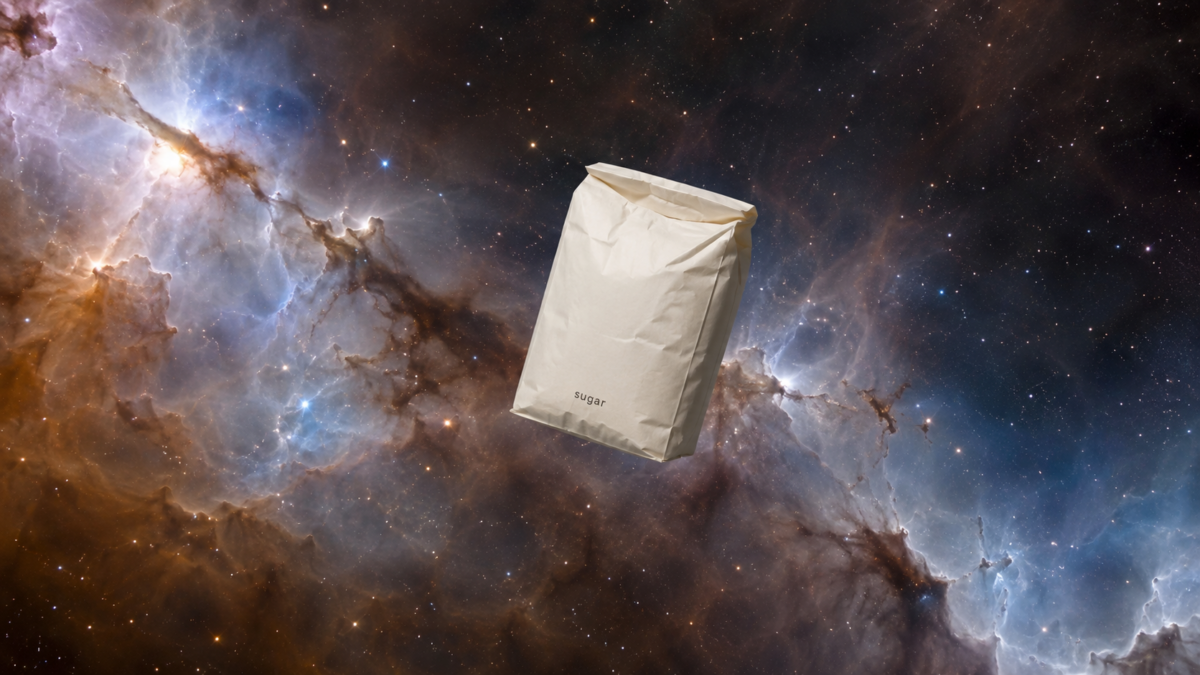
A sugar.
The molecule is called erythrulose, a four-carbon sugar containing 14 atoms. Researchers identified it in the molecular cloud G+0.693−0.027 using two large radio telescopes and an exceptionally sensitive survey of the cloud’s chemical fingerprints.
The discovery, published in Nature Astronomy, does not mean scientists have found life in space.
It demonstrates something arguably more fundamental: some of the relatively complicated chemistry associated with life can take place naturally in the freezing material between stars, long before planets even exist.
The molecule was found by listening for its fingerprint
Astronomers cannot simply photograph an individual sugar molecule floating through space.
Instead, molecules reveal themselves through spectroscopy.
As molecules rotate, they interact with electromagnetic radiation at very specific frequencies. Each molecule therefore produces a distinctive collection of spectral lines that can act much like a fingerprint.
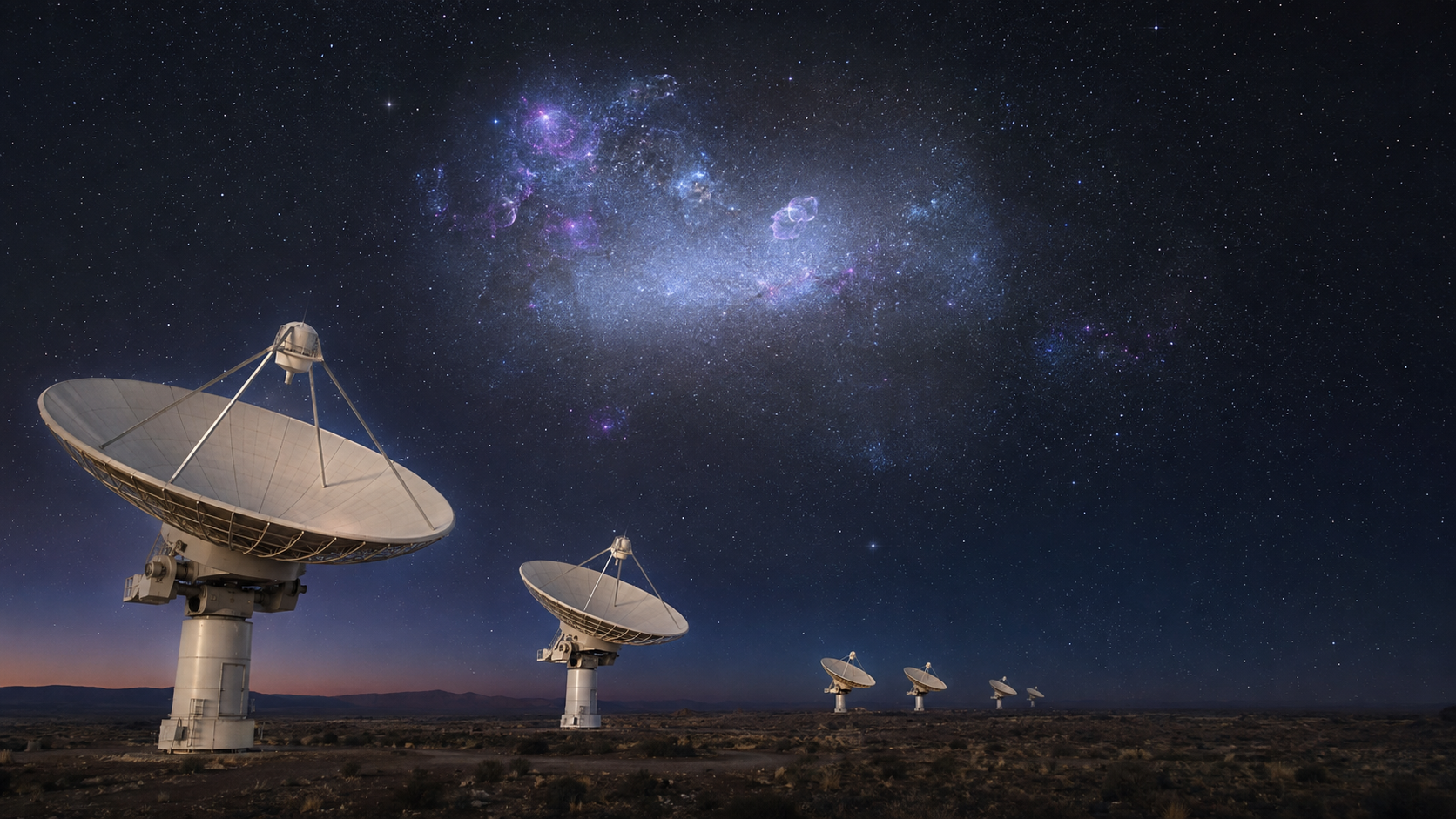
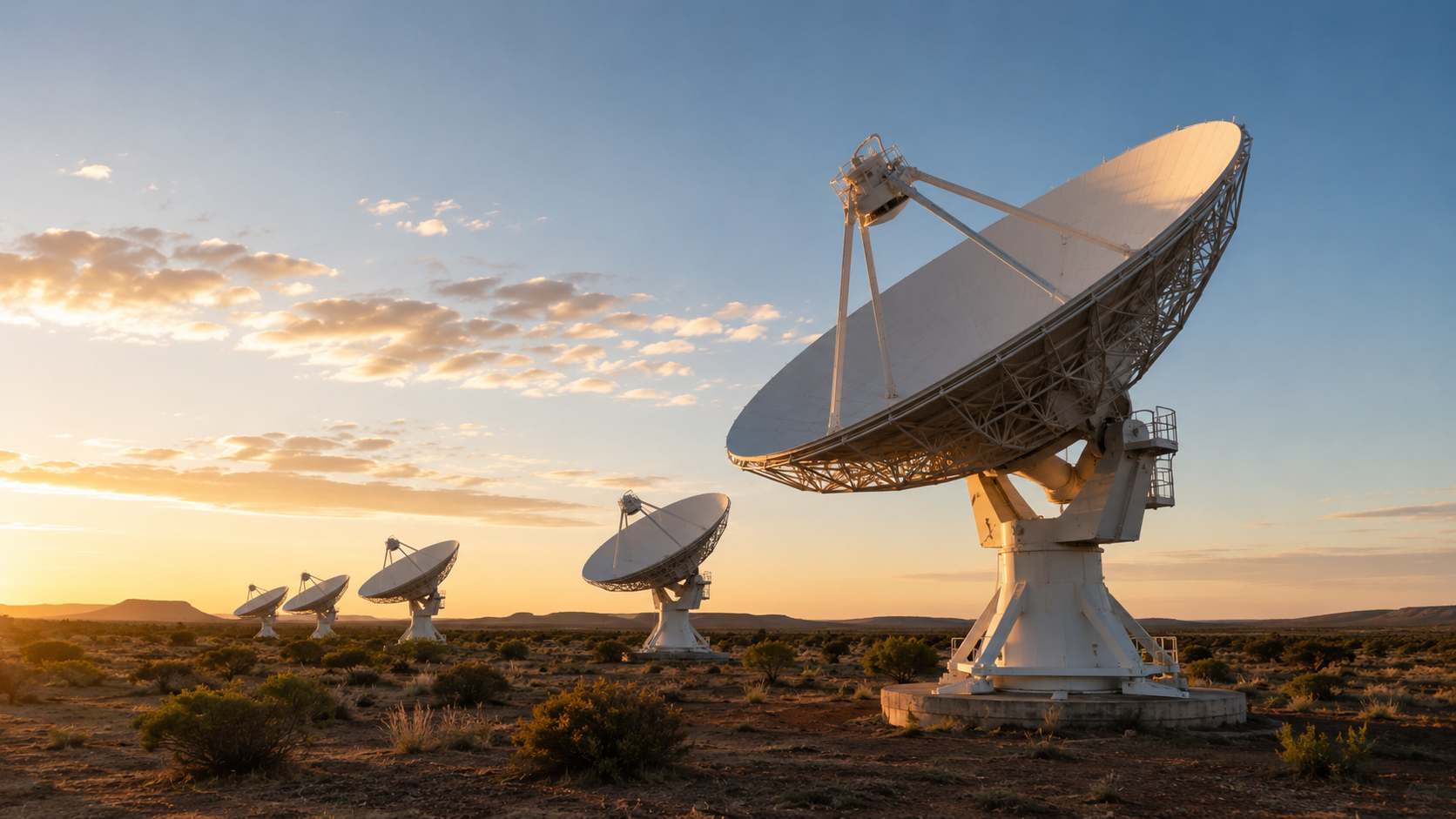
The researchers searched observations from the Yebes 40-metre telescope in Spain and the IRAM 30-metre telescope in Spain, covering more than 91 GHz of radio spectrum.
They identified 12 groups of spectral features consistent with erythrulose, representing 17 individual molecular transitions.
Six of the strongest sets were predominantly free from interference by other molecules, helping the researchers establish a robust identification.
This is especially difficult in G+0.693 because the cloud is chemically crowded. More than 180 molecular species and isotopic variants were included in the researchers’ spectral model.
This is not the sugar in your coffee
The word “sugar” normally brings sucrose or glucose to mind.
Erythrulose is different.
It is a relatively simple monosaccharide containing four carbon atoms and belongs to a group known as ketoses.
Its importance comes from chemistry rather than sweetness.
Sugars form an essential part of biology on Earth. They provide energy, contribute to cellular structures and form part of the chemical backbone of nucleic acids.
Ribose, for example, is a crucial component of RNA.
Scientists have previously discovered sugars including ribose and glucose inside meteorites and material associated with asteroids. That raised the possibility that some sugars present on the young Earth were not originally produced here.
Until now, however, astronomers had not directly detected a sugar in the interstellar medium itself.
It appears to form on tiny grains of space dust
The researchers also wanted to know whether erythrulose could realistically form under the extraordinary conditions inside an interstellar cloud.
Temperatures there are dramatically lower than those found in ordinary terrestrial chemistry.
Quantum-chemical calculations and astrochemical simulations indicate that erythrulose can nevertheless form efficiently on the surfaces of microscopic interstellar dust grains.
The proposed process begins with simpler two-carbon molecules, including glycolaldehyde and ethylene glycol.
Reactions occurring on icy grain surfaces can gradually assemble these smaller molecules into the more complicated four-carbon structure.
The simulations were able to reproduce approximately the amount of erythrulose astronomers observed in the cloud.
That is important because it suggests the molecule is not merely present by coincidence. Interstellar chemistry appears capable of making it naturally.
The bigger molecule was surprisingly easier to find
There was another surprise.
Scientists had previously searched for simpler three-carbon sugars such as glyceraldehyde and dihydroxyacetone without successfully detecting them in this cloud.
One might expect smaller molecules to be more common.
Instead, erythrulose appears to be at least eight to 17 times more abundant than the upper limits established for those three-carbon sugars.
That runs against a common pattern in interstellar chemistry, where adding another carbon atom typically makes a molecular family substantially less abundant.
The result suggests that the chemical pathways operating on dust grains may favour some comparatively complex molecules while bypassing apparently simpler alternatives.
Space may have supplied part of Earth’s chemical starter kit
The discovery becomes particularly interesting when considered alongside what scientists have already found in meteorites and asteroids.
Organic molecules formed in interstellar clouds can become incorporated into the material surrounding young stars.
That material can eventually become comets, asteroids and planets.
If complex sugars can form before a planetary system exists, some of the chemistry required for later biological processes could potentially be delivered to young planets rather than having to begin entirely from scratch on their surfaces.
Erythrulose itself also has useful chemical properties.
Under aqueous conditions, ketose sugars can rearrange into related aldose sugars. Laboratory research into prebiotic chemistry has shown that mixtures containing molecules such as erythrulose can participate in pathways leading towards ribonucleotides, the building blocks of RNA.
This does not demonstrate that interstellar erythrulose produced life on Earth.
It shows that one component capable of participating in prebiotic chemistry can arise without biology at all.
A new level of complexity between the stars
Erythrulose is notable beyond being the first interstellar sugar.
With 14 atoms, the researchers describe it as the largest non-cyclic molecular species yet identified in interstellar space. It is also the first detected interstellar molecule containing four oxygen atoms and only the second chiral molecule reported there.
That pushes observations into a new level of chemical complexity.
There are still major gaps between a sugar molecule and anything resembling life.
Cells require enormously complicated combinations of molecules, structures, energy sources and self-replicating chemistry.
No observation in this study closes that gap.
But it changes where one part of the story can begin.
The chemistry that eventually supplied young planets with biologically useful molecules may have started before there were planets to receive them.
Some of life’s raw ingredients could have been assembled in the darkness between the stars.
Source Information
Study Title: Detection of a four-carbon sugar in interstellar space
Authors: Izaskun Jiménez-Serra, Juan García de la Concepción, Herma M. Cuppen et al.
Journal: Nature Astronomy
Published: 13 July 2026
Target: Molecular cloud G+0.693−0.027 near the Galactic Centre
Telescopes: Yebes 40 m and IRAM 30 m
DOI: 10.1038/s41550-026-02905-7
Update: An author correction published on 14 August 2026 corrected the y-axis units in one figure from K to mK. The correction did not change the reported detection or conclusions.