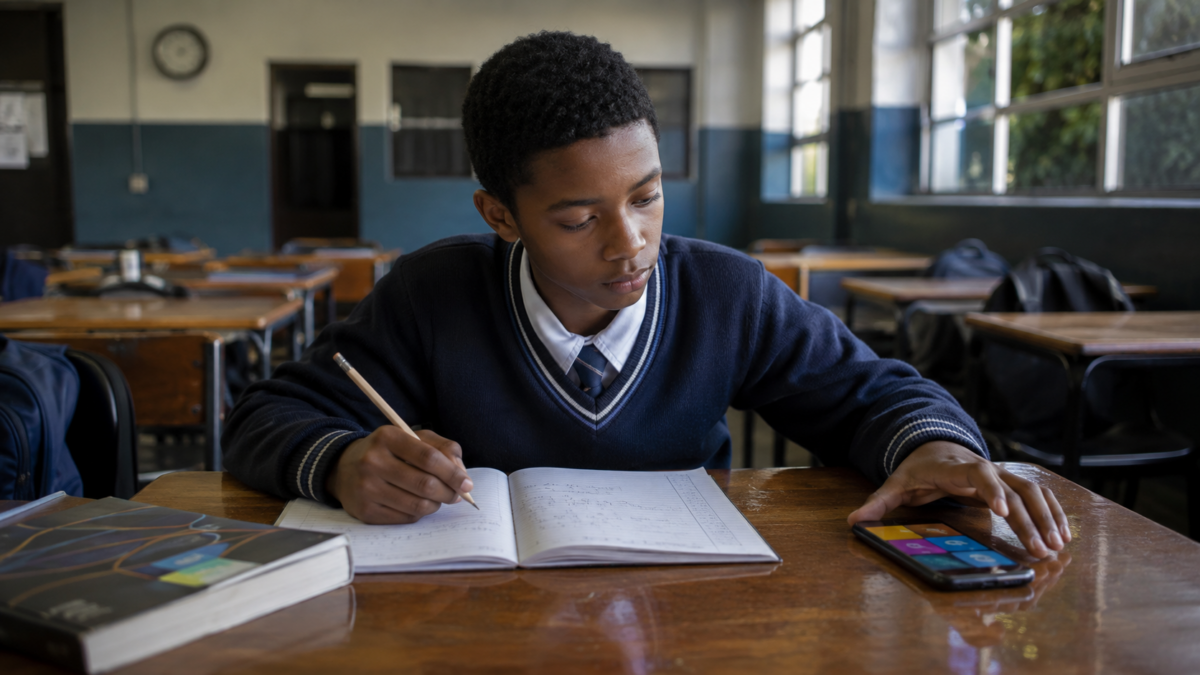









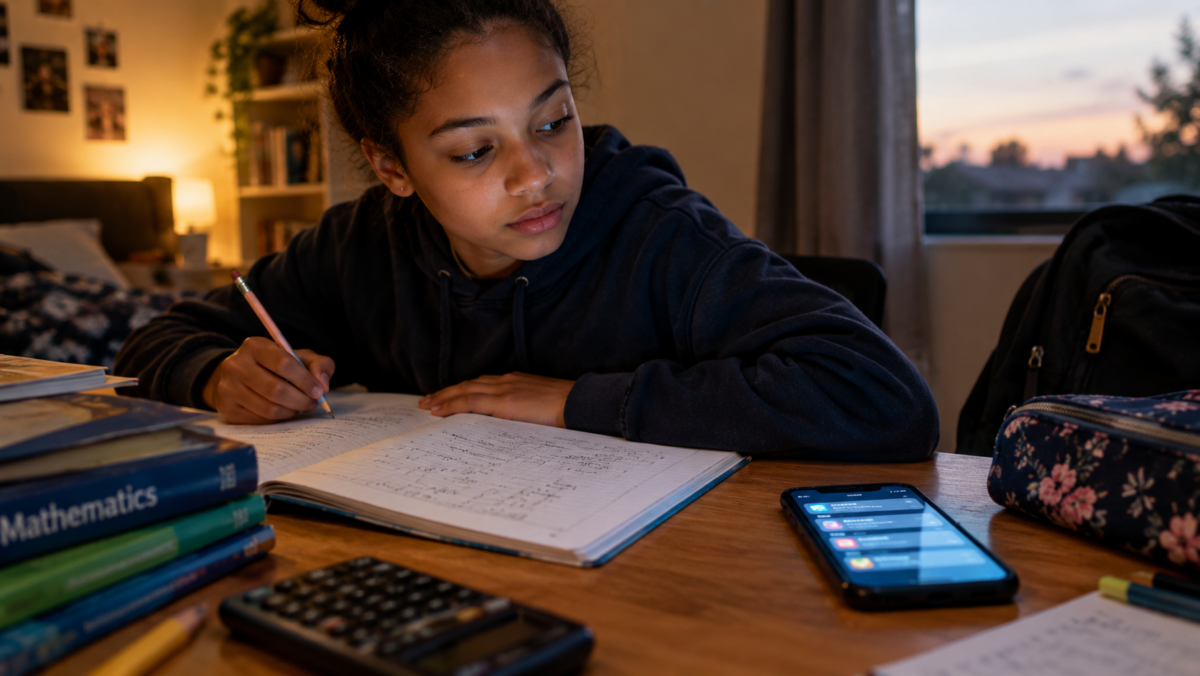
Giving a child access to social media a few years earlier may seem like a relatively small decision.
New research suggests the academic consequences can last much longer than the novelty of opening that first account.
A longitudinal study of 5,227 students found that children who opened a personal social media account in the early years of secondary school subsequently performed worse in standardised mathematics and language tests than comparable students who waited until later.
The largest differences appeared among children who started earliest.
Students who opened an account in Grade 6 scored around 0.22 standard deviations lower in Italian and 0.18 lower in mathematics by Grade 8 than matched students who delayed social media until Grade 9 or later. By Grade 10, the mathematics difference had grown to 0.27 standard deviations.
The researchers note that an effect of around 0.2 standard deviations is considered substantial in education research. Using one commonly applied benchmark, it is roughly comparable to six months of schooling.
The study followed academic performance over several years
The research, published in Nature Human Behaviour, examined students from Lombardy in northern Italy.
Researchers combined a detailed survey of students’ digital-media histories with standardised academic assessments completed during Grades 2, 5, 8 and 10.
This allowed them to compare academic performance before and after students began using social media rather than simply asking whether heavy social media users currently received poorer marks.
The students were separated according to when they opened their first personal social media account.
Those starting in Grades 6, 7 or 8 were compared separately with students who waited until Grade 9 or later. The researchers then statistically matched the groups on factors including earlier academic performance, parental education, family structure, economic circumstances, previous technology exposure and parental-control practices.
This matters because children who begin using technology earlier may already differ from later adopters in ways that influence their schooling.
The researchers therefore used a difference-in-differences approach designed to estimate how the academic trajectories changed after social media adoption.
The earlier students started, the larger the difference became
A clear pattern emerged.
Students who began in Grade 6 experienced the largest subsequent learning differences. Grade 7 adopters also performed worse than later users, although the effect was smaller.
Among students who first opened an account in Grade 8, the evidence was weaker, particularly for mathematics, and the researchers advise greater caution when interpreting those results.
The pattern also appeared cumulative.
Earlier exposure was generally associated with larger differences later in the school career, and the disadvantage did not simply disappear once the comparison group eventually joined social media themselves.
This challenges a common assumption that delaying access merely postpones the same effects until later.
The timing itself may matter.
Smartphones may be part of the explanation
The study cannot reduce the effect to one specific feature of Instagram, TikTok or another platform.
Social media use among these students was closely tied to owning a personal internet-connected smartphone, so the researchers treat the two as part of the same broader digital transition.
Their exploratory analysis points towards smartphone pervasiveness as an important part of the mechanism.
This measured how often smartphones intruded into moments such as homework, school, bedtime and immediately after waking.
Students reporting greater smartphone intrusion also tended to have lower Grade 10 mathematics and Italian scores.
The concern, therefore, may not simply be the total number of minutes spent online.
A device that repeatedly interrupts homework, fragments concentration or follows a child into periods that would otherwise be used for sleep can potentially affect learning even when no individual session appears particularly long.
English produced one surprising result
The researchers found no significant negative effect on English-language competence.
They suggest one possible explanation is that young people encounter large amounts of English-language content online.
For students whose home and school language is Italian, social media could therefore unintentionally provide additional exposure to English.
It is an important reminder that digital technology does not produce identical effects across every type of learning.
The same environment that distracts from mathematics practice may simultaneously expose a student to another language.
Why this matters for South African schools and parents
The study was conducted in Italy, so its exact estimates should not simply be transferred to South African learners.
South Africa has different schools, households, languages, levels of connectivity and educational inequalities.
But the underlying question is increasingly relevant.
Parents often debate how much screen time children should receive. Schools debate whether phones should be permitted in classrooms. Much less attention is sometimes given to when a child should enter the social-media environment in the first place.
This research suggests those may be different questions.
A teenager beginning social media at 15 may not experience it in the same way as an 11- or 12-year-old whose attention, study habits and daily routines are still developing.
The findings also suggest that simply banning phones during lessons may address only part of the problem if devices remain highly intrusive during homework, sleep and other important parts of the day.
Delaying does not mean rejecting technology
The study is not a randomised experiment in which children were assigned to receive or avoid social media. Its conclusions depend on longitudinal observational data and statistical methods, so unmeasured differences between early and late adopters cannot be eliminated entirely.
The authors nevertheless conducted extensive robustness checks and found their strongest results, particularly for children starting in Grades 6 and 7, remained consistent with a negative effect of early adoption.
That makes the practical message more nuanced than simply declaring social media harmful.
Children will eventually enter digital social spaces.
The question may be whether they need to enter them as early as possible.
For parents and schools, delaying that first account by a few years may feel restrictive in the moment.
If the new evidence holds across other countries, those years could also represent something increasingly valuable: uninterrupted time in which children can establish the academic habits they will need long after their first social-media profile stops feeling new.
Source Information
Study Title: Longitudinal effect of early social media use on standardized learning outcomes during school career
Authors: Marco Gui, Chiara Respi, Giovanni Abbiati, Cristiana Paladini, Sofia Ercolanoni, Francesca Milzani, Tiziana Pirola et al.
Journal: Nature Human Behaviour
Published: 3 August 2026