








Tapping a bank card takes seconds.
Counting out the same amount in cash can feel surprisingly different.
New marketing research suggests that difference has not disappeared, even after years of contactless cards, digital wallets and banking apps.
A large-scale study involving 32,371 participants found that paying with cash still creates more psychological discomfort than paying by card.
More importantly for businesses, the researchers found that this difference can affect how much consumers actually spend.
The study, published in the Journal of Consumer Research, combined 13 preregistered replications involving 65 products and 57 price points ranging from $1.09 to $400.
Its conclusion revives one of the oldest ideas in consumer behaviour for a world in which increasingly little money physically changes hands.
The way customers pay can change how spending feels.
Researchers retested an effect marketers have discussed for decades
Consumer researchers often refer to the pain of paying.
The idea is straightforward.
Buying something produces a benefit, but handing over money also produces a psychological sense of loss.
Cash makes that loss unusually visible.
A customer starts with several banknotes and physically watches them disappear from a wallet.
Card payments separate the purchase from that physical loss. A tap, swipe or insert produces the same financial outcome, but the money itself is less visible at the moment of purchase.
Earlier research suggested that this reduced discomfort could encourage consumers to spend more.
But payment behaviour has changed dramatically since many of those studies were conducted.
Consumers now routinely use contactless cards, smartphones, watches, banking applications and digital wallets. The researchers therefore wanted to know whether the original effect was still reliable.
They repeated the test 13 times
Christopher Bechler, Rhia Catapano, Szu-chi Huang and Oleg Urminsky conducted what they describe as the first systematic mega-replication of the cash-versus-card effect.
Across 13 large preregistered studies, they tested 32,371 participants using dozens of products and prices.
The broad result remained intact.
Cash was psychologically more painful to spend than card.
This remained true even among modern consumers who owned multiple cards and had access to digital wallets and other electronic forms of payment.
That scale matters because replication has become increasingly important in behavioural science.
An interesting result from one small experiment may disappear when researchers repeat it under different conditions.
Here, the researchers deliberately tested the same underlying phenomenon repeatedly across a very large combined sample.
The effect was stronger when real spending was involved
The researchers examined two different consumer outcomes.
One was the amount people spent.
The other was willingness to pay, meaning the amount consumers said they would be prepared to spend on a product.
Payment method affected both, but the effect was more reliable and larger for actual spending than for stated willingness to pay.
The researchers also found evidence explaining why.
Payment method changed the pain associated with paying, and that discomfort in turn influenced spending behaviour.
This creates an important distinction for marketers.
A customer can believe that a product is worth a particular price and still behave differently when the moment arrives to surrender the money.
Pricing therefore does not operate in isolation.
The checkout experience can influence what happens even after a customer has decided that they want the product.
The payment screen is part of the marketing experience
Businesses often treat payment as an operational process that begins after marketing has finished its job.
A customer sees the advertisement, evaluates the product, chooses to buy it and then pays.
The new evidence suggests that dividing the customer journey this way may be too simple.
Payment itself is part of the consumption experience.
A retailer that removes friction through contactless payment, stored card details or one-click checkout is not simply making the transaction faster.
It may also be reducing how strongly the customer experiences the loss of money.
This helps explain why online retailers devote enormous attention to checkout design.
Every additional step creates another opportunity for a customer to reconsider the purchase.
But the research suggests friction can also operate psychologically.
Even when two transactions cost exactly the same amount, one method may make the financial sacrifice feel considerably more immediate than another.
Payment habits change the effect
The effect was not identical for everyone.
One of the most important differences was how frequently consumers normally used cash relative to cards.
People’s existing payment habits influenced how strongly the mode of payment affected their pain of paying.
This is particularly important as different countries and consumer groups move towards digital payments at different speeds.
Someone who taps a bank card several times every day may experience a card transaction differently from a consumer who still conducts most everyday spending in cash.
Businesses should therefore be careful about assuming that every payment method affects every customer in exactly the same way.
Payment psychology can change alongside payment habits.
South Africa sits between cash and digital money
South Africa provides an especially interesting setting in which to consider the findings.
The South African Reserve Bank says cash remains the most popular means of payment in the economy, particularly for everyday transactions, even as cards, mobile wallets and other digital payment methods continue to expand.
Its national Payments Study, based on data from more than 7,500 respondents, found that cash remains particularly important for lower-value transactions while cards and digital methods become more prominent as transaction values increase.
This means South African consumers routinely move between two very different payment experiences.
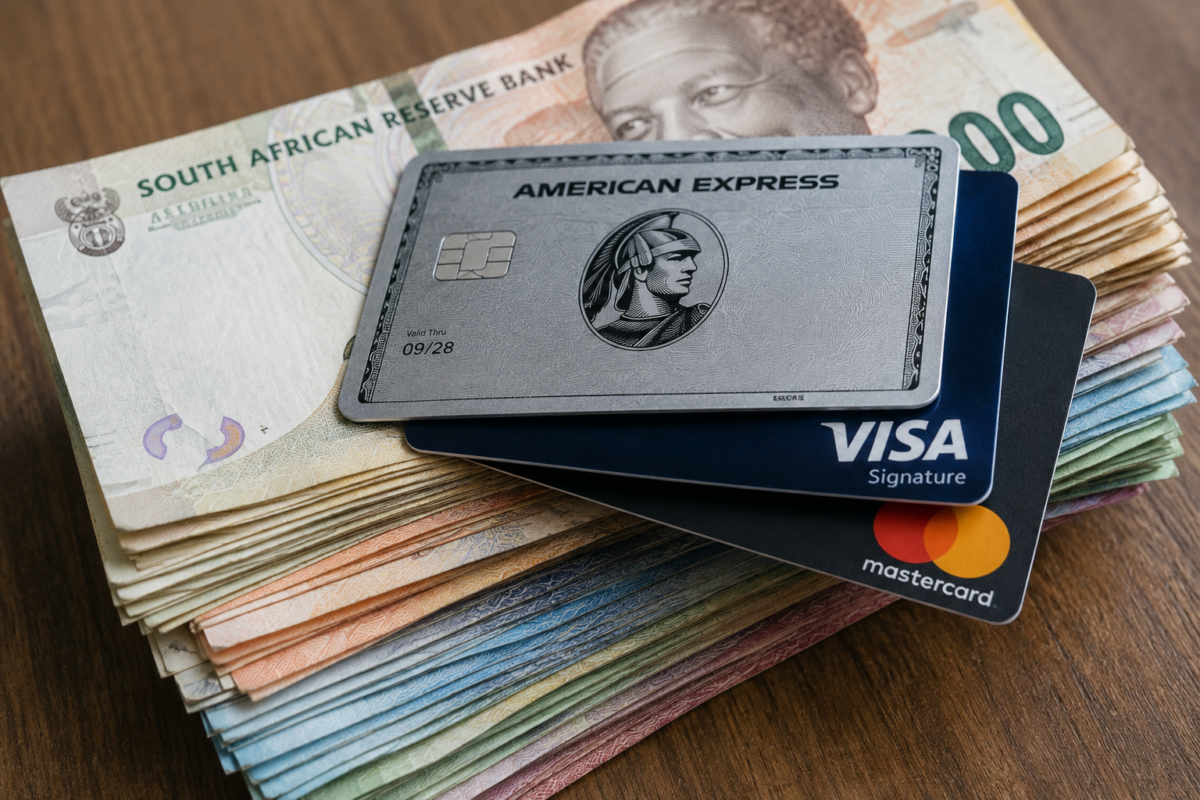
A R50 purchase from an informal trader may involve physically handing over a banknote.
A R5,000 online purchase can disappear behind a saved card and a few taps on a screen.
Economically, both are spending.
Psychologically, they may not feel equivalent.
There is a difficult ethical question for marketers
The findings create an obvious commercial opportunity.
If less painful payment methods increase spending, businesses have an incentive to make payment as seamless as possible.
But there is also a consumer-protection question.
A frictionless checkout can be genuinely useful. Nobody wants to enter the same card details repeatedly or stand in a queue while a complicated payment system processes a simple purchase.
Yet the same design can make it easier to lose track of how much money has been spent.
The strongest marketing strategy is therefore not necessarily the one that makes spending psychologically invisible.
Businesses still depend on customers being satisfied after the transaction has taken place.
A customer encouraged to overspend may generate additional revenue today while experiencing regret tomorrow.
That becomes particularly important for financial services, buy-now-pay-later products, credit providers and retailers selling high-value discretionary goods.
Cash may be doing something useful to our brains
Digital payments are unlikely to reverse course.
South Africa’s payment infrastructure is moving towards faster and cheaper electronic transactions, and the Reserve Bank expects mobile wallets and other digital tools to continue expanding.
That brings considerable benefits in convenience, safety and financial inclusion.
But the new research suggests that something subtle can disappear when money becomes less visible.
Cash provides immediate feedback.
You can see how much is leaving your hand and how much remains.
A digital balance provides the same information mathematically, but not necessarily with the same psychological force.
For marketers, economists and consumers, that is the useful lesson from the study.
How much something costs is important.
How paying that cost feels can matter too.
And as spending becomes as easy as tapping a piece of plastic or clicking a button, understanding that difference may become more important rather than less.
Source Information
Study Title: A Mega-Replication of the Effect of Cash Versus Card Payment on Pain of Paying: Magnitude, Behavioral Outcomes, and Moderators
Authors: Christopher J. Bechler, Rhia Catapano, Szu-chi Huang and Oleg Urminsky
Journal: Journal of Consumer Research
Published: 14 August 2026
Studies: 13 preregistered replications
Participants: 32,371
Products tested: 65
Price points: 57, ranging from $1.09 to $400
DOI: 10.1093/jcr/ucag027
South African context: South African Reserve Bank Payments Study and Cash Smart Strategy. The SARB reports that cash remains the country’s most popular means of payment while digital and mobile payment methods continue to expand.