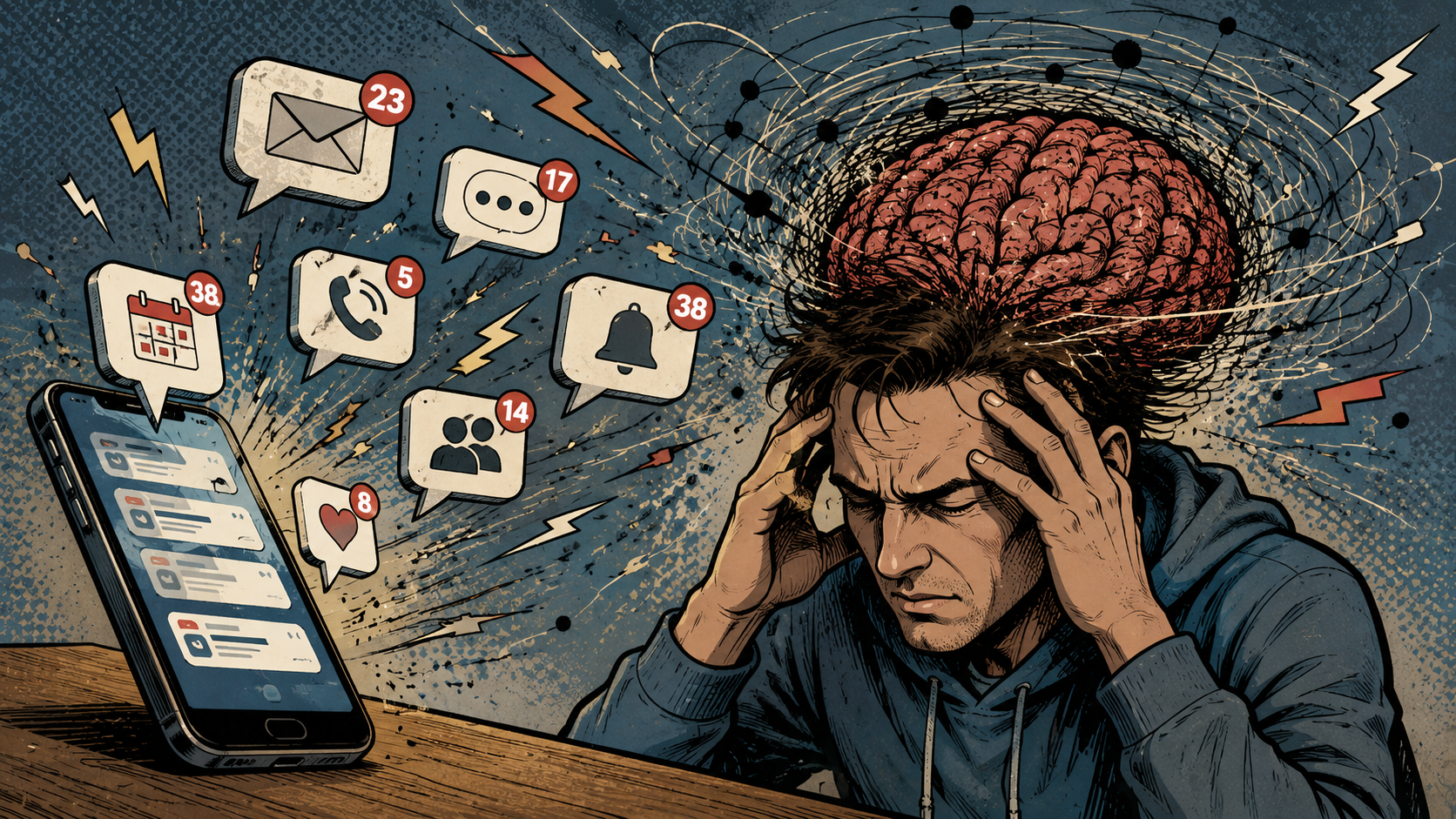









One second is barely enough time to notice a loading screen. Yet a peer-reviewed study published on 8 October 2026 suggests that tiny delays during online lessons may affect how much students learn. Across 81,891 learners, loading lags as brief as one to two seconds were linked to more distraction, fewer completed tasks and poorer results.
Writing in Nature Human Behaviour, Asaf Mazar and six colleagues examined what they call microdelays: brief pauses between one learning action and the next. Rather than treating website speed as merely a technical concern, the study asks whether interruptions can change educational behaviour.
Why a short pause may have a longer cost
Online learning involves repeated transitions. A learner reads a question, answers it, receives feedback and moves on. An unexpected loading pause interrupts that sequence at the moment the learner is ready to continue. Even when the delay lasts only two seconds, attention may move elsewhere and take longer to return.
This explanation is plausible, but the study’s contribution is empirical: the researchers examined real platform records instead of relying only on students reporting annoyance. Their findings suggest that the cost of waiting can include engagement and achievement, not simply elapsed time.
Two longitudinal field studies
The first study followed 26,707 US primary and secondary school students using online mathematics assignments. The second examined 55,184 aspiring coders, primarily in Latin America, using an online programming platform. Together, these groups comprised 81,891 learners.
The authors describe both studies as longitudinal and quasi-experimental. They analysed behaviour over time and used naturally occurring differences in page loading rather than assigning every participant a predetermined internet speed. The platforms providing data were ASSISTments for mathematics and freeCodeCamp for coding.
A central methodological choice was to examine within-person variation. Comparing the same learner’s faster and slower experiences helps account for relatively stable differences such as prior achievement, household circumstances and motivation. The authors also report that findings persisted under alternative statistical specifications.
That approach strengthens the interpretation that delays matter. It does not fully eliminate possible explanations involving task complexity, temporary distractions or changing network conditions. The results should therefore be understood as strong quasi-experimental evidence, not proof from a conventional randomised trial.
Four findings from the mathematics students
Among the 26,707 school students, slower loading was associated with fewer completed mathematics assignments. Students also took longer to complete assignments, suggesting that the effect was not limited to an isolated moment on screen.
The students were more likely to become distracted during tasks. This provides a plausible behavioural link between technical interruptions and the ability to finish work. When a platform stops responding, the learner has an opportunity to switch attention to something else.
Finally, the students earned lower scores. That finding makes the study relevant to educational outcomes rather than merely user experience. The accessible journal abstract does not provide a universal percentage-point reduction in scores, so it would be inaccurate to invent one.
The four outcomes together suggest that loading speed may influence both the process of learning and its measured results. They do not establish that every slow page caused a wrong answer or that every learner was affected equally.
Four findings from the coding learners
The second dataset showed a similar pattern in a different setting. When delays increased, the 55,184 coding learners spent less time actively engaged with their course and were more likely to multitask.
They also completed fewer lessons and were less likely to reach a key course milestone. A milestone is not identical to a school examination score, but it reflects progress through the learning programme.
These findings are important because coding lessons and school mathematics assignments involve different populations and learning goals. Both nevertheless depend on sustained attention across many interactions. The similar direction of the results suggests that microdelays deserve attention beyond a single subject.
What the figures mean
The combined 81,891 is the sum of the two samples, not the number of participants randomly assigned the same delay. The reported one- to two-second lags describe the brief interruptions associated with poorer outcomes.
Across the two datasets, the published abstract reports eight outcome types: assignment completion, time, distraction and scores in mathematics; engagement, multitasking, lesson completion and milestone attainment in coding.
For perspective, a hypothetical lesson with 20 transitions delayed by two seconds each would involve 40 seconds of direct waiting. That calculation is an illustration, not an observed study result. The concern is that interrupted attention could add a cost beyond those 40 seconds.
The publication summary does not provide a single effect size that applies to every outcome. Claims that each extra second reduces grades by a fixed percentage would therefore go beyond the verified evidence.
Digital inequality is also about experience quality
Educational access is often measured by whether learners have a device and an internet connection. Those remain essential, but two connected learners can experience very different levels of interruption. Older hardware, congested networks and inefficient website design can all contribute to loading delays.
If those delays influence engagement, then basic access statistics miss part of the educational experience. Research Today has previously examined a global study of 14,653 learners on the gap between AI adoption and learning. The research questions differ, but both caution against assuming that providing digital technology automatically improves learning.
Practical implications for schools
Schools can test learning platforms under realistic conditions, including the older devices and mobile connections learners actually use. They can also investigate whether unfinished assignments coincide with technical interruptions rather than assuming incomplete work always reflects motivation.
Platform designers can examine delays between questions, after submitting answers and when opening lessons. Preloading material, reducing unnecessary data transfers and supporting intermittent connections are plausible responses. However, these particular solutions were not tested as successful interventions in the two reported field studies.
Policymakers can consider whether digital education targets should include reliability and responsiveness, not only connectivity. A service that technically opens may still impose repeated interruptions on learners trying to complete tasks.
Limitations and transparency
The research used quasi-experimental observational data, not a randomised assignment of internet speeds. Within-person comparisons reduce some confounding, but they cannot rule out every changing factor. The findings also come from two specific learning settings and may not transfer unchanged to live tutoring, video lectures or reading lessons.
The authors disclosed that one researcher worked for freeCodeCamp and another founded ASSISTments, the organisations supplying the datasets. The journal states that the first author conducted the statistical analysis. These connections are relevant context, not proof that the findings are invalid.
The data statement says some school-level demographic information in the public dataset was altered to reduce identification risk, so reproductions using those variables may differ from published estimates. Coding-platform data are available on reasonable request.
Finally, an unexpected loading pause is not equivalent to a deliberate teaching pause. The study does not show that all waiting is harmful, nor that online learning itself is ineffective.
A small delay with a broad implication
The striking finding is that one- to two-second interruptions were associated with poorer engagement and outcomes in two large learning populations. The study does not establish how many marks a particular school could recover by speeding up its software. It does show why continuity and response time should be considered part of the learning environment rather than dismissed as minor technical inconveniences.
Source Information
Original study: Microdelays disrupt online learning.
Authors: Asaf Mazar, Geoff Tomaino, Abubakir Siedahmed, Ahmad Abdolsaheb, Neil T. Heffernan, Ziv Carmon and Angela L. Duckworth.
Journal: Nature Human Behaviour.
Published: 8 October 2026.
Study type: Peer-reviewed, two longitudinal quasi-experimental field studies.
Participants: 26,707 US mathematics learners and 55,184 coding learners, primarily in Latin America.
DOI: 10.1038/s41562-026-02598-y.
Data and code: Open Science Framework, subject to access and de-identification limitations.